
Fireside Files- Ask Us Anything: Life as an Elite Gymnast, Judging and Retirement | Ep. 11
What is life as an elite gymnast really like? In this Fireside Files episode, 2024 Paris Olympian Emma Nedov and co-host Arman Liew answer your questions. They cover whether elite gymnasts get…


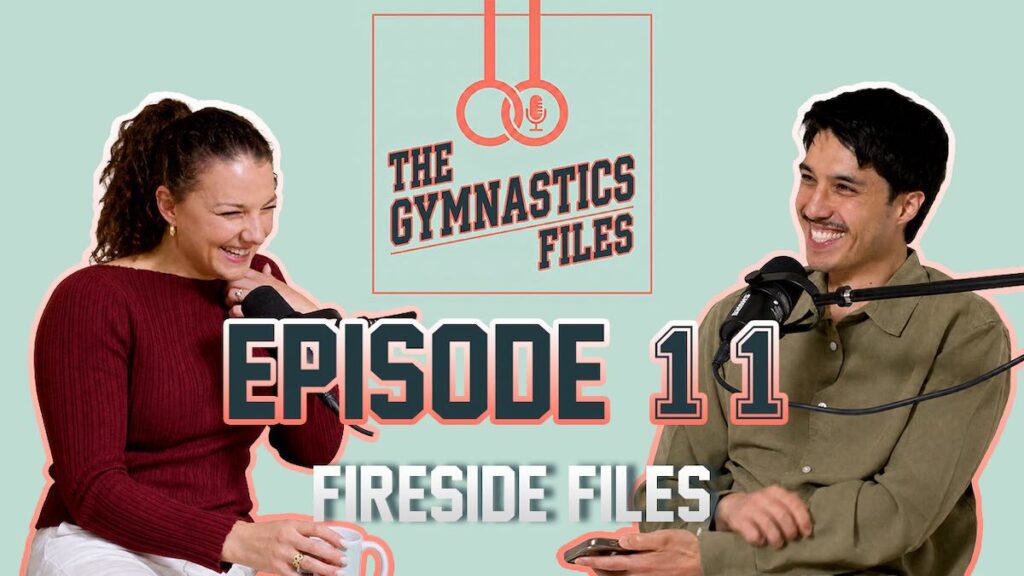
What is life as an elite gymnast really like? In this Fireside Files episode, 2024 Paris Olympian Emma Nedov and co-host Arman Liew answer your questions. They cover whether elite gymnasts get paid, why equipment can make or break a routine, whether judges are truly impartial, and how athletes cope with their identity after retirement. There are lighter moments too, from Emma’s opera past to the reality TV shows they’ve both turned down.
Do elite gymnasts get paid?
One of the biggest misconceptions about elite gymnastics is the money. Many people assume that making an Olympic team brings instant financial security. Emma’s answer is blunt: it doesn’t. Even as an Olympian, she says she doesn’t have superannuation.
For Emma, the bigger misunderstanding is how seriously the sport is taken. Because most people only try gymnastics as kids, few realise the workload behind it. The 5am starts and ice baths you see in motivational reels about entrepreneurs and pro athletes were her normal routine at 12 years old. For years, she wanted results to prove how hard she was working.
Why gymnastics equipment differs between competitions
Not all apparatus feel the same. Equipment comes from different manufacturers, including Gymnova, Spieth and Taishan, and each has its own feel. The bounce of a floor, the grip of the carpet, the set-up of the uneven bars and the feel of a vault table can all change from one brand to the next. Emma says Gymnova floors are harder to turn on than a new Spieth floor, and she’s happy to go on record saying she doesn’t love Gymnova.
Equipment also feels different when it’s raised on a podium compared with sitting on the gym floor, which changes a gymnast’s timing and rhythm. Major competitions announce their equipment supplier well in advance, so national programs can train on the same brand. Emma knew Paris 2024 would use Gymnova from when she returned to training in October 2023.
Why podium training matters
At a World Championships, Commonwealth Games or Olympics, gymnasts get just one session on the competition equipment before competition day: podium training. Emma used to dread it more than the competition itself. Once a competition is over, the result can’t change. After podium training, you have to reflect and go and fix things.
It matters for another reason too. Coaches finalise line-ups and judges start forming impressions from what they see in podium training and warm-ups. That’s why some gymnasts treat their 30-second one-touch warm-up as a full rehearsal, and Emma suspects Kaylia Nemour runs her entire bars routine in hers.
Are gymnastics judges impartial?
Short answer: probably not always, because judges are human. Arman points to the men’s vault final at the 2004 Olympics, where Romanian star Marian Drăgulescu fell on his second vault yet some judges still scored him remarkably high. He also notes that many countries are known for scoring more generously at their own national championships than gymnasts receive internationally. (If you’re new to how scores are built, our guide to how gymnastics is scored explains D-scores, E-scores and deductions.)
That’s one reason the sport is moving towards AI-assisted judging. Emma remembers being photographed in a series of poses at the 2019 World Championships to help train the system. The technology isn’t without controversy, though: at the 2026 World Championships, Ellie Black’s vault was reportedly credited as piked when it looked laid out. Emma expects AI to be stricter on shapes. Gymnasts are taught to over-split past 180 degrees so human judges can see it, but a machine may not need the exaggeration.
The most nerve-racking moment at a competition
For Emma, it’s the wait before presenting to the judges, standing alone with your thoughts while the panel finalises the previous score. Once the green light comes on, gymnasts have 30 seconds to start. On beam, she had a set pre-routine ritual and watched the clock out of the corner of her eye. On floor and vault, she simply stared at the clock.
Do elite athletes struggle with identity after retirement?
Emma did, and she’s spoken to many athletes who have too, from Olympic gold medallists in rowing and cycling to fellow gymnasts. She experienced it during her break from the sport, before her comeback for Paris. After years of throwing yourself fully into one pursuit, it’s natural to attach your identity to it.
Her view is that this identity shift doesn’t have to be seen as purely negative. Coming out the other side gave her a deeper appreciation for who she was as a gymnast. Arman relates from a different angle: having built a brand around food, he has found it hard to show audiences there’s more to him. A strong support system, they agree, makes all the difference.
The lighter side: holidays, opera and reality TV
Not every question was serious. Asked which three gymnasts she’d trust to plan a holiday, Emma picked Breanna Scott for their shared taste, Emily Whitehead for her organisation, and Simone Biles for the yacht-and-champagne potential.
She also shared the funniest moment she’s seen in competition: a lolly wrapper falling out of a teammate’s tracksuit pocket mid-warm-up during a strict weigh-in era. Then there’s the beam final at Nationals where she slipped, laughed and swore on live TV.
Some listeners were surprised to learn Emma once sang a solo at the Sydney Opera House as a primary school choir member. On the entertainment side, she was cast as a chaser on Ultimate Tag after quitting gymnastics, then walked away from a Big Brother casting because she didn’t want to play a character. Arman, meanwhile, has turned down Dancing with the Stars twice and The Traitors once.
Watch the episode below
ON THE MYTH THAT OLYMPIANS ARE PAIDI don’t even have super.
Key Topics
Transcript (click to expand):
Read the full transcript
Arman Liew: Hey guys, welcome to another episode of The Gymnastics Files. I think we’ve already hit double digits. We’ve had 10 episodes out, so this will be 11 or 12, depending on when we drop it. And I feel like we’re going to ask this every Fireside Files: how many weeks until the wedding?
Emma Nedov: One week.
Arman Liew: One week to go! Oh gosh.
Emma Nedov: What are we going to talk about afterwards?
Arman Liew: Literally. How’s everything going? Is Julian excited?
Emma Nedov: Yeah. I mean, the man expresses excitement without showing it.
Arman Liew: That’s one of the best parts about Julian. You never know whether he’s happy, sad or annoyed.
Emma Nedov: He’s usually just always happy.
Arman Liew: He is always happy. He’s actually great.
Emma Nedov: But no, it’s very exciting. It’ll be lots of fun.
Arman Liew: And it’ll be livestreamed on The Gymnastics Files Instagram, and you can ask questions during the night.
Emma Nedov: Yes, absolutely.
Arman Liew: No, we’re kidding. We are absolutely not doing that.
Emma Nedov: There’ll be flips for sure. Not from me, but from people in pants.
Arman Liew: I wonder if you could put someone’s floor music on and make them do a floor routine.
Emma Nedov: The bongo song? Dun dun dun dun.
Arman Liew: Three gymnasts would probably get up, because they all had that music, right?
Emma Nedov: My bridesmaid Sarah would get up and do it. That was her Level 10 routine.
Arman Liew: How good. Well, instead of all this chit-chat, we thought for this episode we’d do an ask-us-anything. Since we started, we’ve been getting lots of questions and comments on our posts and in our DMs. We’re very popular. Very, very popular. So we put a question box out and said, “Ask us anything,” and we got some very interesting ones and some general ones. Some are quite specific to you, about elite gymnastics, and on some of the judging and general ones we can both jump in and see where it takes us.
Emma Nedov: Okay.
Arman Liew: All right. We’ll start with this one, which I hope you have a great answer to. “You must put three Australian gymnasts in charge of planning a holiday. Who are or aren’t you picking?” It’s got a bit of a shady ending.
Emma Nedov: Three gymnasts to plan a holiday.
Arman Liew: A holiday you’d actually want to go on.
Emma Nedov: Bree, because Bree and I have similar taste in where we’d go and what we’d do.
Arman Liew: No hostels on that trip.
Emma Nedov: No hostels, no camping. Wait, out of current gymnasts?
Arman Liew: Yeah, let’s make it current gymnasts, because you’re very good friends with some ex-gymnasts, so that’s a bit of a cheat.
Emma Nedov: Okay, because I’d say Georgia-Rose Brown, obviously. She knows me very well.
Arman Liew: Wouldn’t she be good at planning a trip?
Emma Nedov: She would, actually. I would never put myself in charge of planning a trip. I still haven’t planned my honeymoon.
Arman Liew: I was thinking, lucky this question is about three other people planning the trip.
Emma Nedov: Okay, so Bree. And Emily Whitehead is really type A. She’s really organised.
Arman Liew: You do need someone organised.
Emma Nedov: So Emily. I feel like I’m missing one more person. I was going to gravitate towards Ruby, but I think that’s just because Ruby’s fun and I like having fun. But then I feel like I’ve just picked the three obvious ones.
Arman Liew: Maybe you have to pick a male gymnast.
Emma Nedov: Oh yeah. Okay, let’s start again.
Arman Liew: You can’t just go on a trip with three female gymnasts.
Emma Nedov: Should we go with Simone? Because I reckon we’d be on a yacht drinking champagne.
Arman Liew: All right: Simone Biles, Breanna Scott and Emily Whitehead. That sounds like a great girls’ trip.
Emma Nedov: I feel like I didn’t do that correctly. This could change, but let’s roll with it.
Arman Liew: Let’s roll with it. Thank you for that question. Next: “Out of you guys, who is most likely to offend someone during an interview?”
Emma Nedov: You.
Arman Liew: You reckon? Actually, yeah, but not in an offensive way. I don’t mean it to be offensive; it just comes out that way.
Emma Nedov: What did you say in the car when we picked up Jesse? We didn’t even know him that well yet.
Arman Liew: Oh yes. It was meant to be a joke, like, “Oh look, we’re going to discuss that pommel horse routine of yours from Comm Games.” And then I bit my tongue, because he didn’t laugh like I thought he would. He took it seriously, and I was like, oh, I shouldn’t have said that. But it wasn’t malicious.
Emma Nedov: No, it wasn’t. Accidental.
Arman Liew: Accidental.
Emma Nedov: And when Kate was on the couch saying, “I let the team down,” you said, “No, Emma did.”
Arman Liew: That wasn’t a joke.
Emma Nedov: So, you.
Arman Liew: Yeah, definitely. You’re actually so diplomatic, which is great in so many facets of what I’ve seen of you outside The Gymnastics Files. Thank you for that question. Next one: “What’s the funniest thing you’ve ever witnessed at a competition?”
Emma Nedov: A lot of the things I’ve witnessed were probably traumatic at the time and really funny later on. Like when we had Mihai, and we had to wear tracksuits for warm-up because we all had to lose three kilos in three days. We weren’t competing yet. Erin, one of our teammates, was last in the line doing a backward roll full twist, and a lolly wrapper fell out of her pocket onto the floor.
Arman Liew: Oh.
Emma Nedov: No one said anything. I was first in the line, so I just walked over, picked it up and put it in my pocket. But after that, everyone watched her like a hawk. If she did nine V-snaps instead of 10, she’d get yelled at. So it’s funny in hindsight.
Arman Liew: Wow.
Emma Nedov: What else was funny in competition? Oh, Nationals, I want to say 2015. I did a full turn in beam finals and my foot slipped. This was back when Fox Sports used to livestream it, so the cameras were on me, because I was going to win. My foot slipped awkwardly, I straddled the beam and fell off, and I started laughing and went, “Oh, F,” right at Peggy’s face. Anyway, I got back up and finished. I only had my dismount to go. Safe to say I didn’t win. I think I still came second or third. There’s a photo of me laughing after that routine. Other than that, there’s me slipping at the Olympics.
Arman Liew: Wait, slipping on the bars?
Emma Nedov: Yeah, but that wasn’t in competition. It got 22 million views.
Arman Liew: So many views. As a spectator, I’ve seen one funny one, and I’ve never seen it happen again. At Australian Nationals, each apparatus used to be on a raised podium, and they’d decorate around it with pot plants. I can’t remember which year it was, but a girl did a double tuck dismount off the beam, rolled, and her head literally went into a pot plant. I think she bonked her head on it. Ever since then, I look out for plant decorations at Nationals, and there’s never any.
Emma Nedov: Wait, if you watched podium Nationals in Melbourne, you would have watched me, because that was in Melbourne.
Arman Liew: It probably was in Melbourne. Were you the girl who fell into the pot plant?
Emma Nedov: I didn’t fall into the pot plant. I was the one who swore on TV.
Arman Liew: We’ll have to find this video. That poor girl. Maybe she retired after that.
Emma Nedov: What level? Junior or senior?
Arman Liew: I’m not sure if it was junior or senior. But it was men’s and women’s at the same time.
Emma Nedov: Yeah, we did use to do that.
Arman Liew: I’ll have to look through my archives.
Emma Nedov: Okay, good question.
Arman Liew: It is a good question. This is a good one too: “Who on the Australian team would you like to see get more recognition?”
Emma Nedov: Everyone.
Arman Liew: Everyone. Let’s say a male and a female gymnast you reckon should get more recognition. You know who I’m going to say? Bree.
Emma Nedov: I was going to say that too, and then I thought, well, we’ve said her a lot.
Arman Liew: It doesn’t matter, we’re going to keep saying her. She’s going to be the mascot of The Gymnastics Files. In the lead-up to Comm Games there wasn’t heaps of media about her, and as soon as she got her medal, everyone was like, “Ooh, Bree.” But she’s consistently been great. And Miela.
Emma Nedov: Miela Brown. Yes, so much potential.
Arman Liew: I told her at a photo shoot I did with SBS Sport in 2023 that she would make the Olympic team, because she’s such a gun on vault and floor.
Emma Nedov: That’s why I say everyone. Even Ruby, to some degree, doesn’t get enough recognition for what she does.
Arman Liew: Actually, the whole men’s side.
Emma Nedov: The whole men’s side. There are a lot of guys at the AIS who don’t get much recognition. I feel like Jesse gets a lot.
Arman Liew: He does.
Emma Nedov: Clay Stephens should perhaps get more. All of them, really. But if we’re talking up-and-comers, I’d say Maddie Fazio for the girls, and for the guys, maybe James Hardy isn’t spoken about a lot.
Arman Liew: You know what, James Hardy is a really good one. Commonwealth Games is a great example, and even Worlds. He went and won all those medals at Comm Games, then narrowly missed out on the vault final at Worlds. I don’t think he gets enough recognition.
Emma Nedov: Let’s go with that.
Arman Liew: James Hardy, Breanna Scott, the juniors and Miela. And everyone. Next one: “What’s the most nerve-racking thing at a competition?”
Emma Nedov: Everything. But the most nerve-racking thing is when you’re waiting to go and you haven’t presented yet. If they’re taking a long time and you’re just standing there with your thoughts, that’s really nerve-racking.
Arman Liew: I’ve always been curious about this. When you’re standing there, are you staring at the clock waiting for the green light, or looking somewhere else and watching for it out of the corner of your eye?
Emma Nedov: It depends on the apparatus. On beam, I was really specific about my little routine: a hand thing, thinking through my routine, and watching the clock out of the corner of my eye. On floor and vault, I’m just looking at the clock.
Arman Liew: Is it 30 seconds to start on every apparatus?
Emma Nedov: Yeah, once the green light’s on.
Arman Liew: Have you ever missed it?
Emma Nedov: No. Clay almost has. I think he actually did miss it at a World Cup once. It’s a lot easier now with the TV screens. We were in the era when it was transitioning, and they didn’t always have screens, so it could be hard to tell.
Arman Liew: Wow. What was he thinking about that he missed it? I always feel sorry for gymnasts standing there for what feels like hours while the judges deliberate on a score. Then on other apparatus, the score comes up as soon as the vault’s done.
Emma Nedov: Yeah, so fast.
Arman Liew: Great question. Next: “Are you excited to experience Worlds next year as interviewers?”
Emma Nedov: Yep.
Arman Liew: If we’d started The Gymnastics Files a bit earlier, I wouldn’t have been surprised if we’d been in Rotterdam. But next year we’re definitely gearing up for China, and we’re going to give Ian Gunther a run for his money with how much interviewing he did. We’re going to learn multiple languages so we can speak to everyone. Actually, we’re off to China next month, so hopefully by then we’ll be fluent.
Emma Nedov: Maybe we can collab with Ian.
Arman Liew: Oh, good idea.
Emma Nedov: Ian’s like, “Hell no.”
Arman Liew: Next: “Are there any differences in apparatus and floors from competition to competition?”
Emma Nedov: Oh yes. There are different brands of apparatus, like Gymnova, Spieth and Taishan, and they all feel different. Even the uneven bars are set differently; you can see a difference. The bounce on floor is different, even the feel of the carpet. Gymnova is harder to turn on than a brand-new Spieth floor. And vaulting tables. I can’t remember the brand we used at the 2018 World Championships, but even Simone fell on her butt. No one liked that vault.
Arman Liew: So at some Worlds and Olympics, when you see a bunch of gymnasts all fall on one apparatus, could it actually be the brand of equipment?
Emma Nedov: It contributes, especially if you get it in your head that you don’t like the apparatus. There’s also a difference between apparatus raised on a podium and apparatus on the floor. They all produce different bounce, which affects your timing and the rhythm of your skills. That’s why at a World Championships, Commonwealth Games, Olympics or Youth Olympics, you only get one touch on the competition equipment, and it’s really important you make the most of it, because you won’t use it again until competition day.
Arman Liew: Is that podium training?
Emma Nedov: Podium training. You’re training in the training gyms otherwise, and that doesn’t replicate the feel of the podium. In apparatus finals, you used to warm up out the back, come into the arena and go straight into your routine. They’ve since changed it, so now you come into the competition arena and get a touch before your routine. But back when you couldn’t, there were way more falls.
Arman Liew: Before a competition like the Olympics, do they tell you it’s going to be Gymnova, or do you walk into the arena and find out?
Emma Nedov: Oh no, they tell you. I’m pretty sure it goes out to tender. When I started training again in October 2023, we already knew it would be Gymnova.
Arman Liew: So the big gyms get that equipment in so you can all get comfortable with it. Wow.
Emma Nedov: Yeah, because the difference between Gymnova and Spieth bars and beam is really noticeable. And I’m happy to go on record and say I don’t love Gymnova.
Arman Liew: I think a lot of people would agree. I’ve seen a lot of people say it feels a bit off. That’s really interesting. Thank you for that question. That was a great one.
Arman Liew: Next: “Have you ever been jealous of another gymnast?”
Emma Nedov: Probably. I started when I was six, so of course I would have been. I’m more likely to say, “Oh, I’m so jealous, you’re so pretty.” But I’m sure if people made teams and I didn’t, I was jealous. That’s normal.
Arman Liew: You wouldn’t know that experience. You made every single team.
Emma Nedov: I don’t know about that. But yes, absolutely, I would have been jealous. I’m just not sure what of.
Arman Liew: No one made a song about you?
Emma Nedov: Oh yeah! My friends made a song about me by the pool at National Clubs in 2009, about me being the favourite and the best. That sounds so bad. I thought they were bullying me.
Arman Liew: That doesn’t sound positive.
Emma Nedov: They’re good friends. We’ll ask them about it. We’ll get them to sing it at the wedding.
Arman Liew: The musical entertainment at the wedding next week: the gym girls singing their Emma praise song.
Emma Nedov: Yes. But no, I definitely was jealous, maybe of skills. I remember learning a kip when I was maybe seven. A kip is such a hard skill to get, and if someone gets it before you, of course you’re going to be jealous. That’s all I really remember.
Arman Liew: You’re so in your own lane. It’s so good to be able to say, “I’m not going to let outside noise affect me.”
Emma Nedov: Oh no, I definitely let outside noise in. I had to do a lot of work to be more internally referenced rather than externally referenced. Not jealousy so much as comparison. It’s still something I have to think about now.
Arman Liew: In any facet of life, right? Next: “What’s something people would be surprised to learn about you?”
Emma Nedov: I don’t know, because I’m an open book and I’ve said a lot already. Someone texted me the other day saying, “Oh, I didn’t know you did opera singing.”
Arman Liew: I was about to say opera singing.
Emma Nedov: It’s not like I was up at the Sydney Opera House. Although I did do a solo at the Opera House when I was about 11. I was in the Turramurra Public School choir, in a little girls’ group of 10 called the Turra Ten, and I did a solo at the Sydney Opera House. My teacher was Mrs Holmes à Court.
Arman Liew: The Turra Ten. What a great name. We’ll have to ask your mum and dad next week if we can uncover that recording.
Emma Nedov: My mum will get on the mic at the wedding, I reckon. She sang happy birthday to me at my 30th.
Arman Liew: In an operatic voice?
Emma Nedov: Yes.
Arman Liew: And she can play piano, so she’s the musical entertainment along with the gym singers. Is she doing a speech?
Emma Nedov: No, my dad is. She didn’t really like performing.
Arman Liew: Damn, Jane Nedov.
Emma Nedov: What about you?
Arman Liew: Something surprising about me? Maybe that I still love gymnastics even after my traumatic teenage junior experience. But that can’t be a surprise if we’ve got a podcast called The Gymnastics Files.
Emma Nedov: I reckon you probably surprised every single person you know.
Arman Liew: Actually, yeah. A lot of my friends and family, especially my high school friends, were like, “Oh, is that why you weren’t around as much in Year 7 and 8?” So that’s surprising to some people. Next: “What’s the most misunderstood part of being an elite gymnast?” I can probably answer that one even though I wasn’t one: that you get paid. Common sense would say you’d be paid, because you’re training full-time hours and some of you are studying as well. How is it funded?
Emma Nedov: That’s really interesting, because it’s almost the flip side of what I’d say, which is that it’s a really serious sport. I was around a lot of non-gym people, and I don’t think I was ever taken seriously for the depth of gymnastics. At least in my experience, gymnastics is seen as a sport you do as a kid and don’t really pursue. Yes, you can go to the Olympics, but there’s an understanding that it doesn’t produce a career.
Arman Liew: People probably also assume that once you make the Olympic team, you become an instant millionaire because everything comes flooding in.
Emma Nedov: I’m waiting.
Arman Liew: Refreshing the bank balance every day, waiting for those zeros to pop up.
Emma Nedov: I don’t even have super.
Arman Liew: That’s the stuff I wouldn’t have thought of. I would have thought you go to the Olympics and come out with a seven-figure deal.
Emma Nedov: I do think people associate going to the Olympics and winning medals with having money. Definitely not the case. For a long time, I wanted the results to prove how hard I worked, because there was no real understanding of the difficulty of gymnastics. You do it as a kid, so it’s hard for people to comprehend the level of work involved.
Arman Liew: As a kid, people think you’re doing fun gym two or four hours a week. They don’t know that’s one and a half sessions in a day.
Emma Nedov: You know those motivational Instagram reels of adults getting up at 5am, sweating, doing their ice baths, really on the grind? Whether it’s entrepreneur founder videos or sports videos, that’s what we were doing as 12-year-old kids.
Arman Liew: Literally. People see those founder videos or people training for a bodybuilding comp, “get up at five, do this,” and they’re like, “Wow.” But that was your norm.
Emma Nedov: That was literally my norm. I remember going to the AIS and doing ice baths, and I hated them.
Arman Liew: It doesn’t sound fun.
Emma Nedov: Some of the girls were fine with them. I hated them. I’d do anything to get out. The coaches would come in to watch and make sure we did them, which, fair enough, we were kids. If I could skip it or cheat, I definitely would have. You had to go in up to your shoulders at the AIS, and I hated every second.
Arman Liew: Do they actually benefit you?
Emma Nedov: They’re supposed to, scientifically. If you ask me, no. It was set by the exercise physiologist, so it was proper recovery. But even though I hated it, you just had to do it. That was normal.
Arman Liew: There are always parts of training you don’t love. Next: “What’s the most outrageous brand deal you’ve ever done?”
Emma Nedov: I don’t really get a lot of brand deals. You go first and I’ll think about mine.
Arman Liew: I didn’t really like working with food brands, so I didn’t do heaps. I did one with Tesla, which was pretty cool, mostly because it had nothing to do with food. They wanted someone whose audience would want to drive a greener car. It was a couple of shoots by the beach. I’m not a cars person at all, as you’ve probably experienced with my great driving, so I had to practise a lot beforehand. Back then hardly anyone drove a Tesla, so someone had created an app where you could hire one for 24 hours. I hired it a couple of times with Justin, because he loves cars, and we’d just drive around so I could get used to an electric car. That’s probably my favourite, because it was so off brand for me.
Emma Nedov: The golf thing is pretty cool, but it kind of makes sense, because a lot of us female athletes hang out together and golf is becoming something we can all do. One time an agent invited me to the Lexus event at the Melbourne Cup after the Olympics. Julian and I went, and that was really fun. We got picked up from a hotel in a Lexus and driven there. We knew no one, and we’re not really in that scene, so it was an interesting experience. We ended up having so much fun. I think we moved over to the Mumm marquee, because loads of Olympic swimmers and some of my friends were there. That was outrageous because it was so cool. And I like Lexus. My parents have a Lexus.
Arman Liew: Lexus, come on, let’s get a campaign happening.
Emma Nedov: But that’s about it. I say no to a lot. I find it a bit stressful. Social media isn’t my best way of advocating for things, so when I have to produce content in exchange for something, I get nervous. What if I do a bad job?
Arman Liew: Of course, it adds pressure. I’ve never liked those events where it’s all influencers.
Emma Nedov: Chuck me in a networking event any day and I’ll thrive, because I go to make friends. At the Lexus event, I assumed I’d just go and make friends, but not many people were interested. They already had friends. Julian and I were like, “Oh, hi.”
Arman Liew: “Who is this girl? Send her to the other tent.” Next: “What’s a surprising brand deal or opportunity you’ve declined?”
Emma Nedov: No one’s ever come to me and said, “I’ll give you a million dollars to do OnlyFans.” I’d probably say no.
Arman Liew: Keyword: probably.
Emma Nedov: But I’ve never been asked, so there’s nothing that surprising to decline.
Arman Liew: What about the game show you went on? Was that an easy yes?
Emma Nedov: Ultimate Tag? Actually, I didn’t want to audition, because I don’t like running, and the brief basically said you had to like running. But I’d just quit gym and was hanging around the house, and my mum was like, “Emma, why don’t you go and do something?” So I did the audition and had a ball. I was originally going to be cast as a player, the people who get chased.
Arman Liew: Was Gronye a player?
Emma Nedov: Gronye was a player, yeah, our friend Gronye. Then there were the characters, who were the chasers. I was going to say no to being a player, because that didn’t sound fun at all. Then about a week before I had to give my answer, they called and asked if I’d like to be a character instead.
Arman Liew: Oh, great.
Emma Nedov: And I was like, yes, I’d rather be a main character. That was a ball, and it threw me into the reality TV world a little bit. That’s when I got asked to do a Big Brother casting. I actually went to the audition, and that’s when I realised it wasn’t for me.
Arman Liew: I feel like you would have done so well. The winner’s always someone Australia loves, and I think they would have really liked you. You could have won a million dollars.
Emma Nedov: Thanks. But in that casting I realised you have to play a character a lot. On Ultimate Tag I didn’t really have to. I was Supernova, but they shaped the characters around who we already were, rather than me shaping myself to fit a reality show. So that’s what I said no to. Thanks for reminding me. What about you?
Arman Liew: Also in the reality TV world: I’ve said no to Dancing with the Stars twice.
Emma Nedov: Why? You’d be so good! Although I’ve never seen you dance.
Arman Liew: You’ve just seen me do a boardroom dance or something. One, it wasn’t much money, and two, there’s a very regimented training schedule beforehand. You have to follow a very strict format, and I think I would have had to go to Sydney for it. So the first time I said no, and the second time I also said no. I think it changed channels after that.
Emma Nedov: How did they find you?
Arman Liew: I got a couple of emails. I think they found me through Instagram. They don’t want dancers. They usually get an AFL player and a comedian. They talk about the title tag they’d put under your name, and I think mine would have been “author,” because I’ve written some books.
Emma Nedov: Look at you! Next book: gymnastics.
Arman Liew: Releasing a gymnastics book soon: How to Make It to the Olympics. I also said no to The Traitors, which was an absolutely not. I don’t think you could do The Traitors, because they take your phone for the whole thing.
Emma Nedov: And I just would be—
Arman Liew: You’d be a traitor and you’d tell everyone, “Hello, I’m a traitor,” in the first five minutes.
Emma Nedov: “I heard I’m a traitor, but don’t tell anyone.”
Arman Liew: Because you make friends with everyone, you’d be like, “Look, I’m a traitor, don’t tell anyone.”
Emma Nedov: I’d get them to tell me.
Arman Liew: Actually, you would. You’d win The Traitors. But they’re really strict. You can never be left alone with another contestant. You go back to a hotel and you’re locked in your room. I don’t think you’re allowed to watch TV, and obviously you don’t have your phone.
Emma Nedov: How long is this for?
Arman Liew: Maybe a 10 or 12-day period.
Emma Nedov: Oh, I’d die. I had the best time filming Ultimate Tag, though. It was about a month straight. I’d just finished gym and just gone through a breakup, and I got to meet all these new people. It was during COVID lockdown, and it was filmed in Homebush in Sydney. Everyone from interstate did a lockdown beforehand and stayed in hotels there. It was so much fun. I made so many friends I still speak to now, and they live all over the world, because a lot of them are stunties or parkour athletes.
Arman Liew: So good. We could have been reality TV stars if we’d said yes. Next: “What’s something that happens in gymnastics that outsiders would find unbelievable?”
Emma Nedov: Maybe that we don’t wash our wrist guards. I had the same wrist guards for 15 years. I don’t think they even worked. I think they were a placebo. There’s loads of superstition. Or that every single training session, we do strength and stretching. They’re like an apparatus of their own. At least when you’re younger, you always do strength and flexibility, and then you go to apparatus.
Arman Liew: That’s a question I wanted to ask. In your quick one-touch warm-up, let’s say on floor, would you do your most difficult tumble, or save your energy and just do a layout?
Emma Nedov: It depends entirely on the athlete, and on your coach’s preference. I’d do my hardest tumble. I went through a period where our national coach wanted us to do all our skills and all our tumbles in the one-touch warm-up.
Arman Liew: In those 30 seconds?
Emma Nedov: Yeah. I’m pretty sure Kaylia Nemour does her entire bars routine in her one touch. It depends on how fit you are. I liked doing as much as I could, and I had a little one-touch routine on beam. I also remember hearing a story, and this could be a rumour, about a male gymnast who would warm up all these tumbles and then not compete a single one of them.
Arman Liew: Was it to trick the judges?
Emma Nedov: I don’t know if it’s true, but I’ve definitely heard it. The judges are watching to see what they’re going to get, and they’ll form an opinion based on what you show.
Arman Liew: Let’s backtrack. How important is podium training to the end result? The judges are there watching, right?
Emma Nedov: Very. That’s when a lot of decisions get made, by both coaches and judges. I used to dread podium training more than competition. Once competition’s done, you’re done; you can’t change the outcome. Whereas after podium training, you have to reflect and then go and fix things. I used to hate it. And at competitions, the judges watch your warm-up too, because if the first routine they judge is cold, they might make mistakes. So if that story’s true, I remember thinking it was kind of a good tactic.
Arman Liew: It keeps the judges on their toes. Fascinating. I should have just asked all these questions myself instead of putting a question box out.
Emma Nedov: Aside from funding, what’s the most fascinating thing you’ve learned about gymnastics from doing The Gymnastics Files?
Arman Liew: I kind of knew you all did strength training, but it wasn’t until Bree’s and Clay’s episodes that I realised how much. They both said their day is a session in the morning, a session in the afternoon, then physio three times a week, ice baths, strength and conditioning. I remember thinking, how do you have time for all of this? And then add part-time work or study on top of it. That was the most shocking thing. And the funding. Next: “Do you think judges are always impartial?”
Emma Nedov: Probably not. They’re human.
Arman Liew: I’d definitely say no, and I remember a key example. It’s on the record, and people have broken it down in videos. I think it was the 2004 Olympics, because it was still out of 10. Marian Drăgulescu, the Romanian gymnast, did an absolutely insane first vault in the men’s vault final. Picture perfect. I think he got around a 9.75. Everyone thought he had the title; he just needed to land his next vault. He fell, which is a 0.5 deduction, and there should have been a lot more deductions on top because he didn’t land it. But some judges were so set on him taking gold that they gave him around 9.5, which is like he landed it and then just fell over. People were like, how does that even work?
Emma Nedov: Wow.
Arman Liew: And if you compare domestic and international competitions, many countries are notorious for scoring a bit higher at their own Nationals than at the Olympics. People see someone score a 15 on beam at Nationals and a 12 at the Olympics and think, what happened?
Emma Nedov: There’s also talk that at the Olympics or World Championships, judges will naturally favour their own country.
Arman Liew: But they throw away the top and bottom scores, right? So the home country’s score is probably the one that gets thrown out.
Emma Nedov: Like I said, it’s human nature. I think that’s why they want to bring in AI judging.
Arman Liew: They did some of that at Worlds.
Emma Nedov: I think there was some debacle with Ellie Black’s vault.
Arman Liew: Yes. I think it was credited as piked when it should have been a layout.
Emma Nedov: I don’t know enough about it, but I remember seeing it on Instagram.
Arman Liew: Which is shocking, because I don’t think she’s done anything different on that vault. We’ll see.
Emma Nedov: I’d assume AI judging will be a lot stricter on your shapes. On a split jump, you have to hit 180 degrees, so we were always told to go above that so the human eye could pick it up. You’re always told to overextend so the judges see it.
Arman Liew: They’ve probably trained the AI to be so by the book that if Ellie Black’s body isn’t straight, it downgrades it.
Emma Nedov: This started at the 2019 World Championships. I have a video of Georgia-Rose and me doing all these poses so they could take photos. They photographed every gymnast who walked in the door doing poses, to train the bots.
Arman Liew: So there could be a video game soon where you pick you or Georgia-Rose Brown, compete, and see what you score.
Emma Nedov: Knowing me, I would have signed some consent form for that.
Arman Liew: We might see a big poster of you in China: a Chinese version of The Sims, gymnastics edition. Look at us giving away business ideas live on this chat. Next: “What’s something you spend way too much money on?”
Emma Nedov: My business, because I don’t actually spend much money on other things.
Arman Liew: I can attest to that.
Emma Nedov: Some would say I spend too much on it. Flights, or networking, which is sort of linked. People might say, is the event I’m going to tomorrow really necessary? And I’d say yes, definitely. We’ll see one day.
Arman Liew: There’s always a silver lining in every one of your events.
Emma Nedov: Snacks for you. You brought Nutri-Grain to my house.
Arman Liew: That was more for Julian’s welfare than anything else.
Emma Nedov: We don’t have snacks. We don’t buy unnecessary things just because they’re on sale.
Arman Liew: What do I spend too much money on? I’ve been to Japan a fair bit over the last few years, and they have a really good vintage designer market there. I really like buying jumpers, so I’ve bought a bunch, and then I don’t know what to wear them with. My friend’s a stylist, and we got together the other day and I said, “Help me wear these.” They were nowhere near full price, but I still spent a bit on them. That’s probably the only thing I’m a bit loose with money on.
Emma Nedov: I was going to say, you’re quite frugal. You’re very smart with your money. You didn’t buy popcorn for six months because it wasn’t on sale.
Arman Liew: I’m very frugal with groceries. I’m not going to not eat, but if there’s something I like—
Emma Nedov: Don’t put me in charge of groceries if you want to save money. I won’t look at the price. I’ll go organic, grass-fed meat. One time I bought apples from an organic grocer that were about eight dollars an apple, and Julian was like, “Oh my gosh.”
Arman Liew: Put that back. I’ll pay whatever price for organic, no frills. It’s more the fun stuff. Because I worked in food for so many years, I know what Coles and Woolies do: one week it’s on special at one, the next week at the other. So I only buy Dairy Milk chocolate when it’s half price. I used to love Cobs double chocolate popcorn, which they’ve discontinued. It used to go on sale every second week, so I’d buy five, and then it didn’t go on sale for six months, so I just didn’t eat it for six months. I ate the sweet and salty one, which I didn’t like as much. So I’m frugal like that. But eating out, no. Since meeting you, I’ve eaten out or bought lunch so much more than in the last five or six years.
Emma Nedov: There’s lots of firsts happening here.
Arman Liew: Talking more, spending more. Not a good sign. But we just happen to meet around lunchtime a lot, and we have to eat.
Emma Nedov: You make me a smoothie a lot.
Arman Liew: I do like a good smoothie.
Emma Nedov: This is going to link into our TikToks.
Arman Liew: Absolutely. We can teach our audience how to make one of my smoothies, which we’ll be having a lot more of now, because I’ve got 24 one-litre bottles of coconut water. This morning I met some friends for coffee and hadn’t eaten breakfast, and now that I’m trying to bulk, I needed breakfast. So I bought a smoothie I’d normally make myself, and I was annoyed I’d paid $12.50 for it. Next: “What would your 15-year-old self think of you today?” Would you have seen yourself as an entrepreneur?
Emma Nedov: Yeah, ever since I was a little girl. I either wanted to be a fairy princess or—
Arman Liew: We can still make that happen.
Emma Nedov: I will, next Friday.
Arman Liew: Actually, yes. We’ll make you a fairy princess next Friday.
Emma Nedov: But yes, I knew this is what I wanted to do. I went through patches where I thought maybe broadcast journalism, and I wanted to do an Oprah-style show.
Arman Liew: I can see you doing that.
Emma Nedov: At 15 I was doing gymnastics full time, so I knew I wanted to do gymnastics and then go into business. I always knew that.
Arman Liew: That’s so fascinating. That’s not what I was doing at all. In Grade 6 I wrote in the class book that I wanted to be an author and an illustrator.
Emma Nedov: We kind of are.
Arman Liew: In the stories we’re telling, definitely. Then I started legal studies in high school, loved it and wanted to be a lawyer. You needed something like a 99 to do law at Melbourne Uni, and I didn’t get that, so I did business, which I didn’t love. I specialised in HR and went into that. Fifteen-year-old me would definitely be surprised to see me on the couch with this random gymnast.
Emma Nedov: Thanks.
Arman Liew: But that’s the beauty of life, right? There’s a saying I love: God laughs when you make plans.
Emma Nedov: I wouldn’t say I had plans. I just knew what I liked and what motivated me. I definitely didn’t envision this, but I knew what my strengths were. You have to learn your strengths and weaknesses in elite sport, so I had a pretty good idea of that by 15.
Arman Liew: If I’d told myself as a kid, or even at uni, that I’d work for myself one day, I would have said no way, because I wouldn’t know what to do. But when you trust yourself, have a bit of confidence and take some risk, but not too much, I think you surprise yourself.
Emma Nedov: I’d probably be surprised I don’t have kids, because my idea was that by 26 I’d be married with kids. Now I’m 30.
Arman Liew: Life has moved further back. A lot of people are having kids in their late 30s now.
Emma Nedov: At 15, I’d also probably be really surprised that I didn’t make the 2016 Olympics, because I was going to quit after that. And at 15 I knew I wanted to be in business, but I didn’t want to be anywhere near gymnastics. I thought I’d finish gymnastics and go off and be a businesswoman, nothing to do with gymnastics.
Arman Liew: A lot of gymnasts leave the sport and do something very different, like physio, medicine or accounting. But a lot stay in the sport, mostly coaching. What other pathways are there? Judging?
Emma Nedov: Exactly. I thought that to be an entrepreneur or a CEO, or whatever I wanted to do, I couldn’t do it in gymnastics. So I think 15-year-old me would be really impressed.
Arman Liew: You’ve got a great story. Next: “If you had to go on a reality TV show, which would you choose?”
Emma Nedov: Love Island. No, I’m joking. I like watching Love Island, but I’d suck on that show. They wear such skimpy bikinis.
Arman Liew: This might be a generalisation, but I think a lot of people go on that show to get famous and get brand deals.
Emma Nedov: Surely. I’ve dabbled with the idea of going on Survivor.
Arman Liew: I’m just trying to think if you could survive on a coconut for two weeks. For practice, I’ll give you coconut water and that’s all you’re having for the next two weeks.
Emma Nedov: And you don’t have a bed.
Arman Liew: You don’t have a bed, you’re outside. QP’s going to be living better than you.
Emma Nedov: I don’t think I’m cut out for that. What reality show do you think I’d be good on? Maybe The Real Housewives of Sydney?
Arman Liew: No. You’d be entertaining, but I can’t see you being malicious.
Emma Nedov: Oh God, no.
Arman Liew: I used to watch a lot of reality TV. I can see you and Julian on The Amazing Race.
Emma Nedov: Oh my God, we should do that! Someone also suggested The Block.
Arman Liew: You and Julian would be the first team to go over budget and make a loss.
Emma Nedov: Julian would be measuring something, and I’d have already stuck it on the wall. We should definitely look at The Amazing Race. That’d be so fun.
Arman Liew: I’ve always wanted to be asked to do Celebrity Apprentice. I’d love the business challenges and raising money for charity. But I think it’s been axed for a few years now.
Emma Nedov: Oh, never mind. Shark Tank! I could see you being a shark.
Arman Liew: They’d ask about my history, and I’d be like, “Hmm.” Maybe in a few years we’ll both be sharks. But you’d be a really bad shark. Someone would pitch a self-growing mushroom business and ask for 20%, and you’d offer 30.
Emma Nedov: I’d feel really sorry for them.
Arman Liew: You’d invest in everyone’s idea until Shark Tank starts making a loss. None of the other sharks would get a chance.
Emma Nedov: What’s so funny is I always said I wanted to make a lot of money so I could invest. Actually, one time a guy I was coaching on the Simple Health Protocol, a farmer, told me all about sequestering carbon into mushrooms.
Arman Liew: What’s sequestering carbon?
Emma Nedov: Bear with me, people listening. It’s about the carbon footprint: you basically take carbon out of the air and put it into mushrooms.
Arman Liew: Do you eat the mushrooms?
Emma Nedov: I think so. But he was talking to me a lot about it, asking how I could help.
Arman Liew: So you were a shark without knowing it. How funny.
Emma Nedov: So, no Shark Tank for me. You would make a good shark, though. You’re very methodical.
Arman Liew: We’ve been learning that about each other with some stuff we’ll share in the near future. I think you have to be like that in certain aspects, not in a malicious or cruel way. At the end of the day you want everyone to succeed and you want the product to succeed, and if it’s not going to be a good product, you don’t lead someone on. There are always people who really believe in a product that isn’t going to work. Not you, I’m telling you that. I think we have room for one more question, and it’s a good one to end on: “Do you think elite athletes struggle with their identity after retirement?”
Emma Nedov: I did. And I’ve spoken to a lot of people who’ve experienced the same thing. I wouldn’t say everyone does, but from what I’ve experienced, and from people I’ve been around in all different elite sports, from Olympic gold medallists in rowing and cycling all the way to little old me, it’s common. I experienced it before I went to the Olympics.
Arman Liew: Because you had that gap after 2020. I think it’s natural. It might take some time to find your footing, and that’s where a really good support system helps.
Emma Nedov: Oh yeah, 100%. That was key. In elite sport, like anything, you get really attached to the label you put on yourself.
Arman Liew: You’ve had that label for many, many years, whatever sport it is. Whether you like it or not, you’re going to have it.
Emma Nedov: Big time. I also think that identity crisis is looked at really negatively. But when you come out of it, it’s kind of nice. I gained a lot more appreciation for the identity I had in gymnastics as a result. It would be difficult to succeed at something and not attach a lot of your identity to it, because you have to throw yourself into it fully to get the outcome. Do you find you identify with food?
Arman Liew: I’ve got that identity with food.
Emma Nedov: It’s also based on what other people say about you.
Arman Liew: Oh, absolutely. I’m not an elite athlete, but I built a brand around food, and it’s very difficult to move away from that. I’ve always been strategic with the brands I work with. I don’t want to only work with food brands, because there’s more to me than that, so I’ll do travel or things like that. Doing this is a really good way to show my own audience a part of me I haven’t shared before. When you have any social media following, a lot of people feel like you owe them your whole life story. I feel like your audience knows your whole life story, which is great. But it’s been nice to introduce this side.
Arman Liew: That was an interesting mix of questions. There’s not much I didn’t know about you, but I think our audience will learn some new little tidbits. I think we should do a question box every time before a Fireside Files. We get a lot of comments on TikTok and Instagram asking things, and what better way to answer them?
Emma Nedov: And ask questions for our guests as well. Depending on when this comes out, we’ve just had Kate on. It would be really great to hear what you guys want to hear from them.
Arman Liew: Absolutely. And we always forget to say this, but we’ve got TikTok, Instagram and a website, so come check us out. On our website we give insight into every athlete we’ve interviewed, and there’s a full transcript, because I know not everyone wants to watch or listen to us. They can read what we say.
Emma Nedov: Read all about it.
Arman Liew: And on TikTok we’re going to be dropping some fun videos to show that we are humans.
Emma Nedov: I think they’re funny. I hope you guys think they’re funny.
Arman Liew: It was a lot of fun doing them.
Emma Nedov: So much fun.
Arman Liew: Mabine is such a machine. We’ll have to get her on so everyone can meet her.
Emma Nedov: We can do a meet-and-greet with the team, once we have a team.
Arman Liew: Once we have a team, absolutely. Thank you so much for watching. Don’t forget to like, comment, subscribe and send us a DM. No, don’t do that. Actually, you can if you want. We’re very appreciative of your support. We’ll see you next week for another episode.
Emma Nedov: Thanks, guys.