
Heath Thorpe Interview: Burnout, Quitting Gymnastics and LA 2028
Australian gymnast Heath Thorpe joins The Gymnastics Files to talk about stepping away from elite gymnastics in 2026 and why he’s still undecided about a comeback for the LA 2028 Olympics. The…


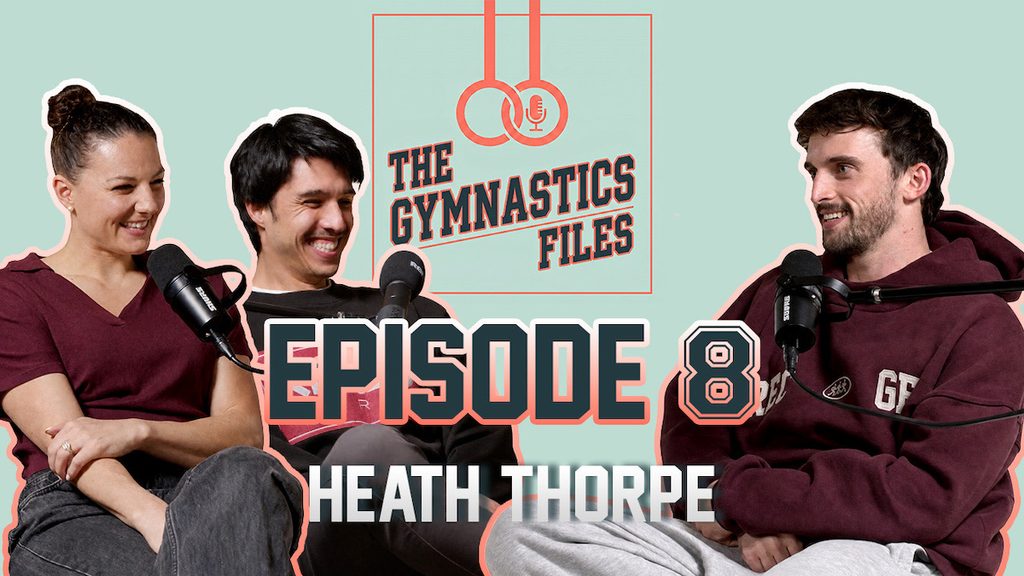
Australian gymnast Heath Thorpe joins The Gymnastics Files to talk about stepping away from elite gymnastics in 2026 and why he’s still undecided about a comeback for the LA 2028 Olympics. The 2023 Australian all-around champion opens up about burnout and mental blocks on high bar, the 2023 World Championships selection that led him to the National Sports Tribunal, and the straddle jump full that was briefly added to the men’s Code of Points before being removed.
Heath also explains how Olympic qualification works for Australian men’s gymnastics, what it’s like competing in the German Bundesliga, the reality of athlete funding in Australia, and how gymnasts can build a personal brand beyond their results.
Watch the video below
ON NOT MAKING THE 2023 WORLDS TEAMBut I went through that experience of giving everything to the sport and still not qualifying.
Key Topics
About the guest
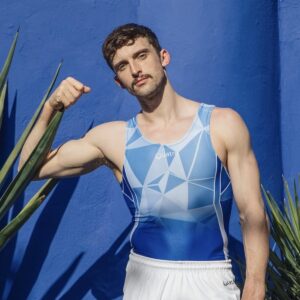
Heath Thorpe
Heath Thorpe is an Australian gymnast and the 2023 Australian all-around champion in men’s artistic gymnastics. A high bar and floor specialist, Heath has reached finals at FIG World Cups and the World University Games, and has represented Australia internationally throughout his senior career.
Born in Victoria, Heath Thorpe started gymnastics at Geelong before training in high performance programs in Melbourne, Brisbane and Sydney, as well as in Belgium. He’s known for bringing artistry to men’s gymnastics, including the straddle jump full he submitted for the men’s Code of Points. He has also competed in the German Bundesliga gymnastics league and worked as a gymnastics broadcaster at the World Championships and the Paris 2024 Olympics.
Off the competition floor, Heath Thorpe is a content creator with a large social media following and an advocate for athlete funding and fair selection in Australian gymnastics. In 2026, he stepped away from elite competition and is still deciding whether to pursue Olympic qualification for LA 2028.
Transcript (click to expand):
Read the full transcript
Arman Liew: Today’s episode of The Gymnastics Files is sponsored by Amy Lee Active. Follow her on Instagram or visit her website for easy everyday recipes with a healthy twist. Thank you to all our sponsors, who really help contribute to our athlete fund and the day-to-day operations of The Gymnastics Files. Hey guys, welcome to another episode of The Gymnastics Files. We are very lucky to have Heath Thorpe here, all the way from Sydney via the ACT. Is that where you were last night?
Heath Thorpe: Yeah, a little stopover in Canberra.
Arman Liew: How was that?
Heath Thorpe: It was Canberra. It was Canberra. The two hours I was there was enough. So now we’re here.
Arman Liew: Perfect. And we can breathe a little bit easier. I think she was a bit worried that she insulted Canberra in her interview.
Heath Thorpe: Oh, really? I’ll one-up you, don’t worry about that.
Emma Nedov: I made a similar comment. It was like, “Canberra, I hate Canberra.” No, we don’t hate Canberra the state.
Heath Thorpe: We just don’t love… Well, Canberra’s the city, my love. But yes, we spend a lot of time at the AIS in Canberra, and that’s all we see. So that’s our relationship with the city. Not much else there.
Emma Nedov: No, gosh, no. At least you didn’t have to deal with Block 22.
Heath Thorpe: It’s gone now. Knocked over, never to be seen again.
Emma Nedov: Kind of sad. Anyway.
Arman Liew: Such great memories there. Look, Heath, you’re no stranger to the gymnastics community. You have opened so many doors in many, many ways. But for our listeners, and to give everyone a bit of a reminder, we might bring it back to the start and get to know how you started in gymnastics. Where did you start? Because when we were talking earlier, I had no idea that you were actually a Melbourne boy, via Sydney, via somewhere else. Was it Brisbane?
Heath Thorpe: Yeah, Brisbane, and a bit of Germany.
Arman Liew: Wow. So an actual globetrotter. But let’s start from Lara. Did you start gymnastics here?
Heath Thorpe: Yeah, so I grew up in Lara, which is not as much of a rural town as it once was, but it’s between Geelong and Melbourne. I started gymnastics when I was about seven or eight years old at Geelong Gymnastics Centre, which is now the Geelong YMCA. I’d done a bunch of sports growing up in a rural town, as you do, but my auntie was a gymnast, and my best friend all through primary school was a gymnast. He encouraged me to go and try it, and I remember doing one class and that was it. I’ve been doing it ever since. I moved into the high performance program in Melbourne, not too far from here, when I was about 11 or 12, then the Brisbane high performance program when I was 16 or 17, and then Sydney when I was 21. Then I was in Belgium for a few years training there, and now I’m back in Sydney. So it’s been a little bit all over, but what a journey it’s been.
Arman Liew: Wow. So you were in Melbourne and then Brisbane in your teen years. Was there a reason behind the move? Did you want to experience a different gymnastics atmosphere?
Heath Thorpe: From memory, I think we just wanted to try something different. The juniors from Queensland at the time were the strongest in the country, and we felt like it was time to move and try something else. That was really great. Then unfortunately that program closed down when I was about 21, and that’s when I made the move to Sydney.
Arman Liew: Out of all those places, any favourites? Was there one where you really enjoyed the culture, the coaches, a bit of both?
Heath Thorpe: I think Sydney, holistically, for my life, I enjoy the most. I feel the most rounded there. But also, shout out to Hongwei, who’s my coach there. He’s the sweetest older Chinese man, and I have so much time for him. I think that’s where I’ll absolutely be finishing off my career, with him.
Arman Liew: Nice. Let’s touch on that, because you came out with an announcement a couple of months ago about how you weren’t trying for the… was it the Commonwealth Games?
Heath Thorpe: Kind of. I announced it before the selection was made public, but I actually competed in the selection process, and I wasn’t selected. Off the back of that decision, I was like, okay, it’s time to take a break. Pretty much from the start of this year, I was experiencing what is easiest to describe as burnout. I was competing in the World Cups and the Commonwealth Games selection trials, and honestly, for the first time in a long time, I wasn’t enjoying gymnastics at all. I felt like I really didn’t want to be there, for a multitude of reasons. Not being selected for Comm Games was my push to say, all right, then I’m going to take a break while I have the opportunity. I knew even if I was selected, I was going to take a break after Comm Games, so it was just a matter of when. It’s been a different stage in my career, a hiatus, which has been nice and a bit bittersweet. I’m still figuring it out, but I’m definitely enjoying myself and being able to do some things other than gymnastics.
Arman Liew: But many people follow you on social media, and you’re still doing some skills in the gym.
Heath Thorpe: Yeah, I’m still staying fit and going in when I feel like I want to, which is pretty often. But I did just start working full-time as well, so I’m juggling that and seeing where it fits, and working on some other projects here and some overseas, which hopefully I can share soon.
Arman Liew: You’ll hear it here first.
Heath Thorpe: You’ll hear it here first. But gymnastics, we know it. It’s easy for us to stay fit through it. I’d prefer doing that to a bunch of deadlifts in a gym, to be honest. No shade to those who love CrossFit or whatever, but it’s not my thing. I much prefer being able to swing on high bar and stay fit, so that’s what I’ve been doing here and there. It also gives me the flexibility to choose what I’m going to do, rather than it being daunting, like, “Oh my gosh, I just had a year off and have to build all this back.”
Emma Nedov: We keep saying hiatus. So you’re definitely coming back?
Heath Thorpe: To be decided. Honestly, it switches every day. I feel very 50-50 about it. I got to this year and it felt like the beginning of a different chapter in my life. I just turned 26, which in the grand scheme of things is young.
Emma Nedov: But in gymnastics…
Heath Thorpe: Towards the latter end, yeah. I started having goals outside of the gym, financially, and I have a partner now, friends, family, career-wise, and it started to conflict a lot with gymnastics. I started to get frustrated that I had all these skills and values and qualifications outside the gym, but I wasn’t able to use them and, honestly, monetise them, because of the time I was dedicating to gymnastics. I know you guys spoke about this a bit on the pod, about finances and funding and how hard it is. Last year I pretty much went balls to the wall with the sport and got to a standard where I think if I hadn’t fallen at World Championships, I would have been contending for a final, if not potentially a medal. That whole year was a great experience. I made finals at World Cups and at the World University Games, and pretty much hit my peak. Then I got to the new year and found that nothing at all had changed materially. My funding hadn’t really improved. You go to a World Championships and you have one shot, and if it doesn’t work, you have to wait until the next year. So it was a really hard pill to swallow: I did all of this. Money isn’t the biggest thing, but feasibility and sustainability in the sport are. It’s hard to stay afloat and to juggle and wear all these different hats, as modern-day athletes have to. So I took time to focus on the other things and lean into that, and we’ll see. I told myself I wanted to give myself six months to build some foundations, financially and in other areas, so I could make a decision based on what I want to do, not out of necessity. I think I’m hitting those goals and building towards that, which will give me options come the new year. So time will tell.
Arman Liew: Which is quite sad to look at it that way, because you’re underselling yourself a little bit. In your results in 2025, and even before that, you weren’t just attending competitions. You were making top eight on high bar, vault, some of your really standout pieces. It doesn’t seem fair that you worked so hard for a full year and came back to that. You did say finances aren’t the be-all and end-all, but how are you going to live?
Heath Thorpe: Yeah, you have rent, you have things to do. We had this conversation in the car, but even for myself, being in a very unique position where I’ve been able to monetise my career on social media, I still felt like I was going to come out of the sport with no financial foundations and have to start from scratch. Potentially continuing to 2028, or even 2032, I was confronting the reality that I could be 32 with pretty much no super, and come out of it with no finances, not even able to consider buying a house. So for me, something had to change. This has been the era where I’ve been trying to bring some avenues in that allow me to continue if I want to, and not feel like that at the end of the sport. But it requires a lot of work. And as I said, that’s for me in a very fortunate position, with a profile on a platform. It’s still a big hustle.
Arman Liew: With elite athletes and elite gymnasts, you shouldn’t have to choose between “Am I going to train? Am I going to focus on my recovery?” or “Do I have to work to be able to keep doing this?” So I think it’s really admirable that you’ve chosen this for the moment, and whether that changes in six months or not, the answer’s still the same. You’ll know.
Heath Thorpe: Yeah, I think so. Knowing myself, I’ll get competitive when things come around and I’ll want to do it. But as I said, it’s about making sure I can do it.
Emma Nedov: I also admire that you’re 100% leaning into setting the ground rules so you can go back to gymnastics 100%, should you choose to. Sometimes, and I got stuck in this at one point, you try to make it work for your life. You try to live a life while also being an elite athlete. But you’re an elite athlete 24 hours a day. You don’t just switch that on and off because you need to get a job. So hopefully others will see that you’ve gotten yourself to a point where you go, “I can still achieve success in gymnastics, but right now I have to be smart and think about my future as well.”
Heath Thorpe: Yeah, I think so. And success means different things to different people. For me, realistically, I actually haven’t done a Comm Games, but other than that, the only thing I have left is wanting to qualify for an Olympics. We know there are such limited spots in Oceania, given where our team sits. Qualifying a team is a goal, but it’s definitely an audacious one, given how strong everyone else in the world is. So realistically, if we weren’t a qualified team, I’d have to qualify through the World Cup series, where I’d have to be top two in the world on an apparatus, outside of those already qualified through their country, or I’d have to be the top all-arounder in Oceania. So it’s definitely not just, “Oh, I’ll go back and see how it is.” For me, if I don’t feel I could realistically qualify for LA, I’m not going to go back, because I’ve done so many great things in the sport and I loved doing them, but I’ve done enough of that in essence. If I’m continuing, I want to be competitive to a medal standard, or at least an Olympic qualification standard. So it’s reassessing what’s important to me. But it’s an age-old question. Even when I feel like I’ve done a great job of giving myself options for when and if I finish, you still face that identity crisis: who am I beyond my results and my value in the sport? And beyond the identity piece, your day-to-day shifts from “I have this competition to prepare for, these skills, these numbers” to “I have autonomy, and that means I have to make decisions.” So it’s been a very reflective period, and it keeps going back and forth every day, but I’m allowing that to evolve.
Emma Nedov: If we take it back a little, in 2024 we were at Oceania together, and you were trying to qualify for the all-around spot for Paris. That was so heartbreaking. Do you think that was also a moment where you thought, “I’m not going through this again unless I definitely know”?
Heath Thorpe: Even with Oceania, that came off the back of a turbulent time for me with gymnastics and selections. I decided to move to Belgium for a while. I trained in Belgium right up until Oceania and even moved back to Belgium for a period afterwards. In short, I gave everything to that training period that year.
Emma Nedov: Emotionally and financially. And I’ll never forget being in New Zealand, a segue for one second, where you finished the competition and immediately did this incredible post on social media. I was like, how does this guy maintain his social media? We all saw how hard you were working because you did a really good job of showing it. So add that on top of your training.
Heath Thorpe: Exactly. For me, it was also about surviving in Belgium. My social media was, and still is, very much a platform for my monetisation, so I felt like I had to do that as well. But I went through that experience of giving everything to the sport and still not qualifying. That was fine at the time, a bit of a hard pill to swallow, but knowing you did everything is great. I don’t want to try again and not give everything, because then it feels like a waste of time. So I have to be in a position where I can do something similar. It doesn’t mean moving overseas, but it means giving it 100% to make it feel worthwhile. At Oceania, I think I was 0.6 or 0.7 off qualifying, so an average of 0.1 on every apparatus. Ultimately, I’m happy Jesse got it, because he was definitely the best person to compete. But selfishly, of course, you’re sitting there thinking, “I was so close.”
Emma Nedov: Of course.
Heath Thorpe: I always say I prefer to lose to someone I know is better than me, because that always sits better. If you feel they’re genuinely the deserving person, it makes it easier to process. So I’m glad it was Jesse. It felt clear. Jesse was always the top all-arounder, so it’s nice to know he got there.
Arman Liew: When we spoke to Jesse, he taught us about men’s gymnastics and what the goals are for LA. If we turn it to you, very realistically, you know men’s Australian gymnastics better than anyone. What do you think Australia’s chances are? Because from how we’ve been speaking, it sounds like the World Cup route or the Oceania route is the more likely way.
Heath Thorpe: I think it’s more likely. Maybe I’m a little pessimistic, but I like to consider myself a realist. It’s not impossible. I’ve seen the potential there, but gymnastics and elite sport isn’t about potential, it’s about actualising it, and that requires so many things on so many levels from so many people. It’s definitely not impossible, but if I’m sitting back thinking about coming back to compete, it’s probably not something I would rely on. It would be a great bonus if it happened. Part of my decision is seeing how they go at World Championships in a few weeks, how they score and where they sit. I think it’s probably going to take around 240 to 241 to qualify in the top 12 next year, and we’ve been sitting around 236 to 237 with mistakes. So not impossible, and those countries scoring 240 are making mistakes as well. Time will tell, in short. We definitely have the talent there, and if we can make it all come together, it’d be an awesome thing for the sport. But I think athletes are probably starting to think about the alternative routes now.
Arman Liew: With those alternative routes, do the athletes have more of a say? Or is it your coach saying, “Look, you’re really strong on high bar and floor, so we’re going to put you into the World Cups on these apparatus and see how you go”? Or is it Gymnastics Australia saying, “These are the athletes we want to put in”?
Heath Thorpe: If you’re looking at the World Cups for 2028, which would start in February, our selection process would probably start in February next year and go for over 12 months, and you’d have the opportunity to put up scores they deem competitive. Honestly, for a World Cup, it would probably only be high bar for me at that standard, because on vault you need two vaults and the vaulters are just crazy. Floor is potentially something I could work on, but high bar is the more realistic shot. The difficulty comes if I go for World Championships next year and we’re still hoping to qualify a team. Then you have to fit into the team equation. If it were just the World Cups, I would just do high bar, but to fit onto a team, I’d need to do two or three other apparatus on top of that. That World Championships would be in October, and the World Cup series would start in February, so there’s not much turnaround time. So it’s a question of whether you take away from building your best event for the World Cups to fit onto a World Championships team, where there’s also a qualification route, but it’s a bit harder. There are so many variables, and I think we’ll have a clearer picture after this World Championships of where we sit and where people feel comfortable aiming.
Emma Nedov: One thing we’ve definitely learned from three or four interviews is the strategy that goes into these things. I don’t think it’s discussed publicly very often. It’s discussed very internally while preparing. The difference between preparing for a team and preparing yourself as an individual athlete is very, very different. You lean on different levels of difficulty on different apparatus. So it’s interesting hearing that come out more and more. And as you get older, the gamble of going all in on gymnastics has more consequences than when you’re younger and in school or uni and don’t have those real-life circumstances. It makes the Olympic dream even bigger.
Heath Thorpe: Yeah.
Emma Nedov: And on the flip side, it’s more extraordinary when you achieve it. But it also makes you ask, “Is it worth it?”
Arman Liew: Absolutely. And the strategy side is really important, because you could be focusing on, let’s say, high bar and vault. What happens if another Aussie gymnast is focusing on the same two apparatus? There has to be strategy at the start of the cycle: “Am I going to be an all-arounder? Do I want to focus on bars, vault and floor?” And if someone else wants to do that too, it becomes another internal competition over who fits the team.
Heath Thorpe: Even for the Commonwealth Games this year, the early conversations were very much, “It makes sense that Heath will be the specialist on the team, because of high bar, and you have these other events that can support.” Then, as part of the burnout, I started having mental blocks on high bar, and it went down a bit. Interestingly enough, Tru stepped onto the team, and his pommel was phenomenal, but only one apparatus. So it got to the point where Tru and I probably couldn’t fit on the same team, and that only became obvious a few weeks before the end of selection. That’s a real twist, and you can’t always predict these things, but you’re sitting there 12 months in advance trying to. It’s complicated. Even with the all-around, there’s an idea in the back of my head: maybe in 2028 I go for the all-around again at Oceania. But that would probably only make sense if Jesse qualified through World Championships next year. While we have other great all-around athletes, like Riddham and Jimbo, sitting comfortably around the 77 to 78 zone, Jesse’s an 81, 82, 83 on a good day. That’s a clear difference. If he qualified early through a World Championships and that Oceania spot opened up, then maybe I’d only need to aim for a 78 all-around rather than an 82. But if he doesn’t, and not to put pressure on you, Jesse, then it’s likely going to be his spot. So there are all these different things, and you’re having these thoughts and conversations about your own teammates as well. It’s always tricky and complicated, but gymnastics is very much a numbers game, and I’ll always look at the numbers. It’s never anything personal. But there’s a lot of internal dialogue and strategy.
Emma Nedov: I feel like I did not do this. I was like, “I’ll just do it.”
Heath Thorpe: Maybe that worked in your favour, though, because even with the women’s team, so many unexpected things happened in the lead-up to Paris. If you’d sat there 12 months before and looked at everyone, you might have thought it wasn’t going to happen. But you were just like, “I’m going to give it a go.” And that’s sport. Sometimes things fall into place.
Emma Nedov: I didn’t think I was going to make it.
Heath Thorpe: And that’s not to take away from your achievement at all. But when we had Georgia and all these other girls at their peak, the question was, where would you fit? Then they went out for different reasons, and voila. So maybe it’s a good thing you didn’t sit there and think too much.
Emma Nedov: I do remember, when we were younger, there were fewer decisions on us as athletes. As you get older, you’re thinking about this stuff. You know the scores and the results. I imagine you’re in charge of a lot of your program.
Heath Thorpe: Yep, hugely.
Emma Nedov: Whereas when you’re younger, you follow what your coach says quite a bit, and they’re the ones who know all the scores. I remember my coaches knowing a lot of the scores, and I did not care. In fact, I thought, “I’m not looking at those. They make me nervous.” But the reality is that as you get older, you have to take accountability for that, and it becomes a whole different ball game.
Heath Thorpe: It’s definitely more of a mental game than a physical one at a certain point, and even more so when you’re older.
Arman Liew: I just want to touch on something you said about being in charge of your own program. Does that mean you take ownership of how much you train? Or is it more that you see a skill and think, “I want to try that”?
Heath Thorpe: It becomes more collaborative with your coach as you get older, but ultimately you’re the one doing the gymnastics, so you have to want to do it. When it comes to skill selection, my coach can tell me to do a skill, but if I have no desire to do it, I’m not about to hop up and do a triple back off high bar, because it’s scary and dangerous. But if I want to do it and he agrees, we’ll try it. Programming is more around numbers, and it becomes a conversation rather than your coach saying, “Let’s do this,” and you doing it. You know your body better as you get older, because you’re the one experiencing it. So it becomes more like, “I think I should do this this week,” and it’s usually a tick, and sometimes there’s a bit of pushback. At 26, you’re very autonomous in what you do. But that comes from a relationship of trust with your coach, because they have to believe you understand yourself best. It becomes more of a co-working situation rather than the dictatorship we’ve sometimes seen.
Emma Nedov: Did you discuss it with Hongwei before you decided to take a break?
Heath Thorpe: It’s so interesting. The decision was made, but it almost felt like it was made for me. I haven’t really spoken about this, but in the lead-up to the Osijek World Cup, a few things happened. I was supposed to do a World Cup series, two competitions, I think in Baku and somewhere else, and there was conflict in the Middle East. The day I was flying out, the flights were cancelled, pretty much as I checked in. So my four World Cups dropped to one. Again, finances aren’t everything, but the way I’d strategised the year, I was going to go to the first two World Cups and hit the DAIS scores I needed to get the $32,000 a year. As soon as it dropped to one, that wasn’t possible anymore because of how the DAIS policy is structured, so I was going to have to wait until World Championships. I think that flipped a switch in my head: “This doesn’t feel like there’s much point in doing this competition, but I still need to go and do it.” We had a little meet-and-greet with some girls in the gym earlier, which was very cute, and mental blocks came up. I said there’s always a scale of fear and desire, and as you get older and the desire becomes less, the fear is going to outweigh it. It’s really hard to get yourself to do what you need to when you know the risks and the mental and physical toll it takes. After that happened, I got to the competition and started getting mental blocks, and they started manifesting through all my skills. Two days out from World Cup qualification on high bar, I started having panic attacks, which I hadn’t had in years. I’d gotten to a really great place in my gymnastics where I wasn’t anxious, but I felt like I couldn’t do the gymnastics. That was one of the hardest things for me, sitting at a World Cup thinking, “I could probably make the final, maybe push for a medal here, but I just can’t do it. There’s nothing in my being that wants to do this right now.” Then there’s the conversation of, “Comm Games is coming up. This is a selection event. You’ve already missed all these. You’re missing a score.” All these things started building up, and I think it was a flow-on effect of my body and mind saying, “You need to take some time away, because this isn’t working for you right now.” So we had the conversation about stopping, and Hongwei agreed. He said, “This is clearly not enjoyable for you. You’re coming into the gym and it’s not fun, and you’re getting to these competitions you’ve worked so hard for and you can’t get yourself to do it. So let’s take a step back.” He was very supportive, and he still is. He’ll often tell me in the gym, or call me and ask, “When are you coming back?” But he says, “You’re old enough that the skills are going to be there. It’s all up here. It doesn’t matter if it’s the start of the year or 12 months down the track. If you’re right mentally, you’ll be able to get to the level you need to, and we just have to support you to get there.” I’m very grateful for him. He’s very understanding these days of who I am and what I need as a person.
Arman Liew: If we segue from skills, you’ve been a pioneer with your artistry. It’s so nice to see that on the men’s side, and I think you were definitely the one who set the standard. I see a lot of younger boys on my feed doing split leaps and straddle jumps, which is really great to see. But I was a little confused by everything I saw online, because there wasn’t much explanation. You were awarded a skill in the Code of Points, and then it got removed? How does that work? I remember seeing it come out in all the main international gymnastics media, and I was like, wait, how does that work? Did you offend them or something?
Heath Thorpe: Great question. It was a bit of a giggle. Sorry, it’s not funny, but you have to laugh or you’ll cry. For context, it was a few years of submissions. In 2022, I submitted a tour jeté half into the men’s Code of Points, and it got rejected.
Emma Nedov: I remember you did that, but I don’t remember what they said.
Heath Thorpe: You were retired at that time. Internally, the feedback I got was that it was too balletic and meant for girls, pretty much. That was the internal dialogue from certain people making the decision. So that got pushed back, and it was pretty hard. They weren’t accepting any leaps into the code. So I kept doing it for fun and for my own style. Then the new Code of Points came around with a new technical committee, and it went down to eight skills, and they added the scale requirement. Until they offered more variability, I was taking a 0.3 neutral deduction, because I cannot do a scale.
Emma Nedov: So you can’t do a scale, but you can do those phenomenal leaps?
Heath Thorpe: I have no balance or ankle stability. I actually did one at state championships early in 2025 and fell. I lost a full mark.
Emma Nedov: Do you have a video?
Heath Thorpe: I will somewhere. I can try and find it. But I was like, okay, I’ll take the 0.3 deduction until they add more options, and they did: a jump full to stomach, a back handspring to stomach, a few different things. Around that time, there was a conversation of, “Hey Heath, if you wanted to submit a leap or jump again, we’re open to it.” There was a stag full added to the Code of Points at the time, but it later got removed because it got too complicated for judges based on foot positioning.
Emma Nedov: They need to bring in some WAG judges.
Heath Thorpe: There’s been a lot of back and forth. But we got to Osijek at the start of the year and submitted a straddle jump full, and they were like, “Awesome, this is great, this is what we wanted. We’re giving it a B.” So it didn’t technically get named, because you need a C or higher to have your name in the Code of Points.
Emma Nedov: Oh, rude.
Heath Thorpe: Yeah, but it was kind of honorary, so I was like, whatever, that’s fine, as long as I got a skill. They were super happy with it, and all was well. Then at Oceania Championships, I had to compete it again, and it was fine, but it came with a note: “Just remember, this is only a provisional rating.” I thought, okay, but I’ve never seen a provisional rating get dropped. They said they’d reassess it in June. June came around and nothing happened. By this point, national team gymnasts in Spain, the US, Italy and Canada were competing the skill, and some Aussies as well. It fulfilled the artistic requirement and it was a B for your non-acro, so it made sense. Anyway, these US athletes get to podium training at US Championships, and they’re doing the skill. Then I got a message from one of them saying, “Hey, we just got told at podium that this is no longer a skill in the Code of Points.” I was like, I didn’t hear that. What’s happened? So I started messaging around and asking different judges, and long story short, a few judges in the US confirmed that the technical member present had said World Gymnastics had decided not to value it as a skill. Nothing official ever came out. It was just kind of under the table that it wasn’t approved in the end. So it existed in the Code of Points for two months, and now it’s gone. But it was obviously effective, given how many people were doing it. The feedback I heard was that they weren’t expecting that many people to do it.
Emma Nedov: Isn’t that the whole point of submitting a skill?
Heath Thorpe: It’s the whole point of submitting a skill. But it has to be done in a very refined way, and they’re always critical that it needs to be a very masculine version. Maybe they felt it contributed to a vision of the sport they don’t want publicly. But if you had a skill that was only a B value and was picked up by this many gymnasts around the world this quickly, I think that speaks to the innovation people want to see in the sport. Give athletes the autonomy to do the skill. We’re not saying everyone should go and do a jump or a leap. But it’s there, and if you’re good at it, it looks nice as a corner transition and suits what World Gymnastics wants. So I think there must have been some butting heads within the technical committee about who wanted it and who didn’t, and it sounded like when it got to the round table, maybe a majority didn’t. At an FIG competition, someone is designated as the technical committee head of competition, and they get the say on whether it’s valued as a skill. So maybe they wanted it, then brought it back, and the others didn’t. But alas, RIP.
Emma Nedov: Oh my gosh. Interesting. Perhaps there’s an opportunity to bring it back with the next Code of Points.
Heath Thorpe: Frankly, I could just annoy them and keep doing spinning leaps, because they haven’t said anything to me about a reason not to. So I could just keep doing it.
Emma Nedov: In fairness, if someone came into WAG and tried to bring in that silly handstand with your arms out…
Heath Thorpe: The Japanese handstand, yeah, on the press.
Emma Nedov: Yeah. If someone tried to bring that in, I think you could say ban it.
Heath Thorpe: Well, no one would do it.
Emma Nedov: True. It shouldn’t matter.
Heath Thorpe: No, it shouldn’t. There are plenty of skills in the Code of Points that one person did and no one ever did again.
Emma Nedov: So it’s interesting that they were like, “Oh no, we didn’t think so many people would end up doing the leap. We don’t want the leap.”
Heath Thorpe: That’s mostly hearsay from what I heard around. I don’t know the actual reasons, but if they’re not going to release anything official, it’s going to be presumed. So that’s on them.
Arman Liew: Gosh. And a tour jeté for female gymnasts is not an easy skill. The fact that you were doing it, I feel like they should have put it in the Code of Points and given it an F or something.
Emma Nedov: You do it way better than me. I remember having a tour jeté in my floor routine, and at one point our national coach said, “Just please try and do your best to make it look nice.” I would have killed for your tour jeté.
Heath Thorpe: I think we asked for it to only be a C back in 2022 as well. But you just keep submitting, and it’s Russian roulette with who you get from the technical committee at the competition. Denied, accepted, denied, accepted.
Arman Liew: Oh gosh. Well, we’re hopeful we can see some skill in the future again.
Emma Nedov: I feel like the LA Olympics would be a really great time. Just whip out the leap. That’d be fab.
Heath Thorpe: If I get to the LA Olympics, let’s say when I get to the LA Olympics, and compete floor, if it’s not my focus, I’ll show as many leaps as possible.
Emma Nedov: 100%. Just do it to the floor music, do something different.
Arman Liew: That might turn into the gymnastics version of Raygun.
Arman Liew: Oh gosh. If we go into some of the more, I wouldn’t say uncomfortable, but if we look at your career, there were maybe a year or two where there was a lot of chatter on Reddit. Let’s rewind to 2023. I especially remember Reddit going absolutely bonkers. That was a big year for you for many reasons, but the highlight was that you won nationals. And then for the big competition after that, you were not named on the team. Correct?
Heath Thorpe: Yes, 2023. I won the Australian all-around, so I was national champion. That was fab. Loved that. I never thought I’d be an all-around champion, but here we were. I was getting very excited and ready to go to World Championships, and then I was not named to the team. Even further, I was told I would have to compete for the reserve spot as well. So there was a possibility that I’d won Australian Championships and wouldn’t even be a travelling alternate. Me being me, I was like, frankly, I think this is BS, and I’m going to challenge it. And we did just that. We went to the National Sports Tribunal, which is the Australian equivalent of the Court of Arbitration for Sport, and presented our case. It was partially upheld, which meant they agreed with one of my three arguments: that weighting wasn’t applied properly. Similar to what we were talking about with the 2028 World Cups, we had a selection window of about 12 months, and there was no clear direction on how events were weighted. I argued that I’d won Australian Championships, the most recent competition, so it should be given the most consideration, rather than my competitions at the start of the year, which were developmental. They agreed with that, but it only acts as advice or guidance. It’s not legally binding. So, without being dramatic, within one to two hours of receiving that notice from the National Sports Tribunal, I got an email saying the team had been selected again, and it was the exact same team, with no further reasons stated. I could have gone back again, but by that point I’d spent almost $20,000 in legal fees.
Emma Nedov: That was not good.
Heath Thorpe: Fortunately, I was able to fundraise most of it back from the gymnastics community, so thank you to everyone who donated, because I would have been screwed. It was also causing tension within the team, knowing it was getting so close to Worlds and the team hadn’t even been announced. These people are my teammates.
Emma Nedov: But surely that wouldn’t have been the intention, to disrupt the team.
Heath Thorpe: It was a moral ground for me. I deserved to be on that team, and I’ll stand by that to this day. I’ll say that with my whole chest. But at the same time, it was obviously going to cause internal tension while the case was going on and people were waiting to hear whether they were on the team. And given my profile, once it went public, I knew there was going to be a public reaction too, which was quite large. So that was that. To answer your probable question, I still don’t really have reasons. I think they said the targets for World Championships had shifted, and they were focusing more on individuals and wanted to qualify through the individual route with apparatus specialists. But at the time, I had one of the top scores on floor, my high bar was coming along well, and I had one of the top all-around scores. So I still think I should have been there.
Emma Nedov: For you as an athlete, and what you must have felt through 2022 and 2023, it’s like up and then a crash, and then 2024, up and then a crash. And we’re only in 2026 now. So it makes sense why you’ve been feeling the way you have.
Heath Thorpe: I remember we had lunch earlier in the year over a few wines, and you said, “I still think you’re experiencing an extension of what you’ve been through over the last few years.” No one had really acknowledged what I had to go through just to chase my goals. When I reflect on it now, it makes a lot of sense. There were a lot of selection difficulties for me in 2021, 2022 and 2023. I remember 2021 Worlds. I applied to compete because it was during COVID, and we got an email saying they weren’t sending a delegation because the borders were closed, but if athletes happened to be overseas, they could apply. I was in Germany at the time doing the Bundesliga, the professional league, and I was given an exemption to be there. I’d finished third all-around at the Australian Championships that year and medalled on a few events, so I put my name in. It made sense: I was the only one overseas, I could get there, and I’d fund the coach and myself. And it came back with a no.
Emma Nedov: Even with self-funding?
Heath Thorpe: Even with self-funding, and being top three in the country.
Emma Nedov: In 2021. Why was there a World Championships? Sorry, stupid question.
Heath Thorpe: Because it was technically an Olympic year, but it wasn’t supposed to be. 2020 was supposed to be the Olympic year, so they had a World Championships pretty shortly after the Games. That also would have been a great opportunity, because a lot of athletes were taking a break. But I got told no, straight up. Ultimately, I had a meeting about it, and there wasn’t much justification based on performance. So one can assume it was personal opinion, but that was that. Then the 2022 Commonwealth Games was more complicated. We had Australian Championships and then straight away Oceania Championships, and Australian Championships was the last official selection event. I had a technical mistake where I lost about five marks on pommel, so I went from second in the all-around to about seventh.
Emma Nedov: How did you lose five marks?
Heath Thorpe: Short routine, because my dismount didn’t count. So I dropped, but then at Oceania Championships I scored a PB, which was a pretty high score for me and among the other Australians. Then we got an email an hour after that saying I hadn’t made Comm Games either. That one was a bit more understandable because of the selection events. But after 2021 Worlds, then missing 2022 Comm Games and 2023 Worlds, I was like, girl. I’m doing all this. Sport is tricky, especially gymnastics. It’s hard to select, and there are so many variables. But sometimes you know you deserve to be somewhere, and when you can stand on that and believe it and it still doesn’t happen, that’s when it’s disheartening.
Arman Liew: Was 2023 Worlds more important because it was before the Olympic year? If it had been the same scenario in 2022, do you reckon you would have fought so hard?
Heath Thorpe: In 2022, everyone wants to go to a Commonwealth Games, but it doesn’t hold any Olympic qualification, so it’s more of a bucket-list item for athletes. 2023 Worlds had Olympic qualification. If you finished in a certain place in the all-around, you would qualify for the Games. Ultimately, I don’t think I would have qualified, based on what the scores ended up being. But at the time, being the highest-scoring all-around athlete, I felt I deserved a shot at the all-around qualification.
Arman Liew: Because with the all-around qualification spots, all the teams that have already qualified are taken out. If you assume the top 12 teams, that’s already 24 people out of it, so the chances are quite good.
Heath Thorpe: Even more so, it’s based on qualification. It can go as far down the list as it needs to in order to fill the eight or nine individual all-around quota spots from countries that aren’t qualified. So you don’t even necessarily need to make the all-around final. For Paris, I think it went down to around 50th place at World Championships, or close to it. So it goes pretty far down the list. And Clay was actually less than 0.1 off at that World Championships.
Emma Nedov: Yeah, I think he was top…
Heath Thorpe: He was a reserve for that. So I think he would have outscored me that day anyway, based on what he did. But nonetheless, it was an avenue to qualify, and I think if you’re national champion, you deserve the opportunity to qualify through it.
Emma Nedov: I know that happened to Georgia Godwin. She won national championships and didn’t make the Worlds team. I can’t remember when.
Heath Thorpe: Yep. She was national champion and didn’t make the team.
Emma Nedov: Same for me. Not to bring it back to me, but I also won and didn’t make the Games. I distinctly remember that. Back then, no one even bothered disputing stuff. But she fully won nationals and didn’t make that team, and at the time everyone was like, what the hell?
Heath Thorpe: Individual bias aside, when it comes to a strategy for a country and rewarding athletes, if an athlete can be the top gymnast in the country at Australian Championships and still not make the benchmark event, I think it’s incredibly discouraging. It also raises a lot of questions about the purpose of these selection events. You want reward where merit is due, and I think it’s important to have those placeholders. I know in other countries, if you win the national championships, you get an automatic spot at World Championships. There are pros and cons to it all.
Emma Nedov: I don’t know that anyone’s figured out the perfect formula yet.
Arman Liew: It really depends on the cycle as well. You could have one cycle with a bunch of really good all-arounders, and another with a bunch of specialists, where it might make sense to look at not necessarily the World Cup route, but owning the apparatus. That’s a means to get to the Olympics as well, if you make the apparatus finals. You’re right, there’s no fine print for it.
Emma Nedov: It’s so hard. I think we’ve tried to move away from that more biased judgement about who should make the team, because that existed for a little while. There were key people who had a say in who made teams. Anyway, who knows what’s going to happen from here. But it is interesting hearing from you how you perceived it, because naturally no one knows but you.
Heath Thorpe: And even so, I don’t really know.
Emma Nedov: And I really admire your ability to create content and build what you have on social media. You do a great job of giving people an insight. But I think it’s important to note that it’s a bit of an insight.
Heath Thorpe: I’m sure the conversation will go into social media, but I always give the advice that there are elements of your life or your story that you need to heighten, and others you need to protect. I absolutely give insights, but there are reasons for the insights I give. If it doesn’t serve a purpose that’s good for you, or for the greater good, there’s not a whole lot of point in sharing it.
Arman Liew: And you’ve got a very loyal following, which is really great. It’s a testament to the brand you’ve created around that. You incorporate gymnastics, and we’re switching gears now to personal branding, but when we were talking earlier off the record about sponsorships, a common theme was that gymnastics is quite a difficult sport to get sponsorships in. You’ve proven that you don’t have to just do gymnastics-related collaborations or brands. You can go outside the box, which I think makes everyone a bit more marketable. You can go very specific, but unless you’re a Simone Biles or Suni Lee, it’s quite limited.
Heath Thorpe: Yeah. I always remind athletes, and it’s something I’m passionate about, helping athletes build those brands: the average Joe doesn’t know if you’ve done two twists or three twists, but they know if you’re marketable and if you’re a personable brand. Your gymnastics results speak for themselves, but they’re not going to pay the bills for the most part. Even the top gymnastics results don’t pay the bills. So you have to find another way to tap into audiences beyond the insular gymnastics audience, because it’s so small. You have to go into general audiences and market yourself. It’s something I try to encourage everyone to do, but it’s a skill to be learned, that’s for sure.
Emma Nedov: Oh, it’s not easy. I remember after Oceania thinking, “Oh, I’m going to have to post on my Instagram,” and I looked, and you’d already done a post. And I was like, how did he do that?
Heath Thorpe: I think we were at doping control, and I was crying, writing this post: “Thank you, everyone, I gave it my best.” And you were like, “You’ve already posted?” And I’m like, yes, while waiting to pee and cry.
Emma Nedov: That’s why he has upwards of 150,000 followers.
Arman Liew: Any follower is a bonus, right? As long as they’re loyal and quality, that’s better than having 10 million followers where you show them a product and get one sale, and it looks very cosmetic.
Emma Nedov: And what we’re all passionate about is getting gymnastics out there. That’s a fundamental part of what you’ve done and what you do. And as you figure out whether you’re going to keep doing gym or not, even though you’re not currently competing, you can still say, “I’m a gymnast.”
Heath Thorpe: Hugely. I think I’ll always be a gymnast. Maybe not an elite gymnast, but it’s going to be prevalent in my life, because beyond the results and the branding, it’s a means of movement and identity and community. I think that’s something that’s changing with the newer generation, which is nice: we don’t resent the sport when we leave it, and we have an ongoing relationship with it. Hopefully. I think it’s important to see what it gives you beyond the medals.
Arman Liew: Let’s touch on what you talked about, living in Belgium and competing in Germany, the Bundesliga. We had a conversation the other day on an episode, and I thought that was soccer. So I was like, are you sure that’s right?
Heath Thorpe: There is a Bundesliga for soccer. It’s all sports. It’s called the Bundesliga.
Emma Nedov: There’s another gymnast from Australia who’s currently in France doing it. And I thought you were laughing because you thought the name was funny.
Arman Liew: No, I was thinking, why is she talking about football references here? But it’s all sports under it, and you were competing in that. Is that something you can just choose to do? And is it self-funded again?
Heath Thorpe: I think it was 2021, during COVID, and I was bored, stuck in the country. So I thought, maybe I can do the Bundesliga. At the time, the only exemptions to leave were for professional sport. It didn’t matter how much you were getting paid, but if you were getting paid, it counted as an exemption. So I sent a bunch of emails with a video to all these Bundesliga clubs, got a few bites back, and about eight weeks later I was living in Germany for about four months. I always say closed mouths don’t get fed, so put yourself out there. I’ve tried to encourage other athletes to do it, and I think they should. Ruby Pass competed in the Bundesliga final last year. Her new coach got her over there for one of the competitions, which is awesome. But I’d love to see more do it full-time. You can pretty much reach out, and there are different leagues, the top league, the second league, the third league, and they’re all different standards. I was competing in the second league, which meant I could water down my routines and have a bit more fun, which was important for me at the time, because you’re competing every weekend.
Arman Liew: I was about to ask how often you’re competing.
Heath Thorpe: You do about seven competitions in a row. And it’s battle style, one-on-one. You have three apparatus in the first half of the competition and three in the second half, and at any point you can be put onto any of the three apparatus. Someone will compete, you won’t see their score, then your team will strategise and send you up. So it teaches you a whole different ball game of being ready and performing under pressure, because the only score that matters is the person you’re up against. Technically, the team with the highest cumulative score could lose because they didn’t strategise well enough for the battles.
Emma Nedov: It’s so fun. But how on earth do you get paid?
Heath Thorpe: The Bundesliga is a German league, and it’s pretty much all clubs competing against each other. The exception to the rule is that you can have two international gymnasts on your team at competitions. So clubs pay athletes to come over. In the second league, it’s not huge money, about 700 to 1,000 AUD per competition. But it’s fun, and if you do seven, that’s $7,000, and you have enough to fund your trip to Germany and live there for a few weeks or months. That’s great, and I think more athletes should do it. Anyone can. You pretty much just have to reach out and be selected.
Emma Nedov: Do you have to speak German?
Heath Thorpe: Mein Deutsch ist nicht sehr gut, aber ich spreche ein bisschen.
Arman Liew: We’ll have to put that through a translator.
Emma Nedov: I was trying to learn German on Duolingo for ages.
Heath Thorpe: Ruben taught me, because Ruben is German.
Emma Nedov: Well done. That sounded very German.
Heath Thorpe: I would not lie. Germans watching, please do not comment.
Emma Nedov: Okay, so we were speaking off camera just before about funding, and there are some new funding systems happening. Do you want to give a high-level version of what that looks like? It’s been a relevant topic in all of the conversations we’ve had, and it’s something Arman and I are very passionate about helping with.
Heath Thorpe: I’m not sure how public it is, but it’s definitely been approved internally and it’s being communicated to athletes. You don’t have to go into the detail, okay. You guys discussed DAIS funding a little, which comes from the Australian Institute of Sport and is standardised across all sports based on results and categorisation banding. This is separate to that. Essentially, the plan is funding from a national sporting organisation that’s incentive-based. There are tiers, so if you medal at something, you get X amount, and if you make a final somewhere, you get X amount. That’s great, because with categorisation, the higher podium bands can only be achieved at certain competitions. For me, missing out at Worlds last year meant I had to show up at the World Cups, and then I couldn’t compete there, so I missed it again. If you miss that, it’s all or nothing. So having something else come in, even on the smaller side, that’s incentive-based and can be achieved at Australian Championships and domestic meets alongside international competitions, I think is a really great thing. It also means our Australian Championships mean something, not just for selection, but as a funding opportunity. I’ll see what it looks like when it comes out, and I’m sure it will be made public in due course. Anything to help is beneficial. But ultimately, the funding itself is not sustainable outside of professional codes, and that’s not just gymnastics. I have conversations with swimmers and rowers, and if they’re not privately funded by sponsors or the NSO, it’s the bank of family or some other means. You can be an Olympic gold medallist in any sport in Australia and you’re going to be on about $50,000 a year.
Emma Nedov: Oh, yeah.
Arman Liew: When you talk about this new initiative rolling out and mention nationals, does that mean if you meet certain score or placing requirements, you get a lump sum of money, irrespective of anything else?
Heath Thorpe: Yes. It’s a lump sum based on previous benchmark-event international scores, which they use as a guideline. If you achieve that domestically, I think three times on the lowest band, you get an amount of funding. There are tiers to it. If you achieve it internationally, you get a bit more than domestically, and there are a few different things in there. I’m pretty sure the athletes got their first round of funding from it just last week.
Emma Nedov: I think across the board in Australian sport, funding is being addressed, because athletes have been making noise about it for quite some time. I think you get paid now if you make the Olympic team. $5,000, I think.
Heath Thorpe: It’s something. And honestly, it doesn’t sound like much, but as an athlete doing only the sport, I said to someone the other day, there’s something so humbling and unique about being overseas representing your country and your account going into overdraft. It’s such an odd experience. If I got $5,000 for being on a team and my account wasn’t in overdraft, that would be great.
Arman Liew: It is something. But then you hear about athletes whose sponsors or countries are actually funding them. We talked about British Gymnastics and how they really honed in on funding around 2010, and the results are speaking for themselves, giving athletes a break from having to choose between X and Y. So it’s a really big step that they’re doing this, and I think it’s great to have benchmarks for athletes who might not even have the chance to compete internationally, so they can still get something. I remember someone, like an Olympic official, came out earlier this year and said athletes…
Heath Thorpe: At the AOC, yes, and then she had to come out and clarify that’s not what she meant.
Emma Nedov: I feel like that came across incorrectly.
Heath Thorpe: Yes. But either way, it definitely started the conversation.
Emma Nedov: It did. It’s one of those tricky things. From my perception, DAIS comes from the AIS and is usually based on, “Are you an athlete we should pay because you’re going to get us a result?” And this funding looks like more of a recognition and reward.
Heath Thorpe: DAIS is based on a previous result, but the incentive of the funding is that you can achieve it come the Olympic Games. So you still have to hit that standard, and it’s in such specific scenarios that it’s quite hard to achieve. I think this allows for more developmental funding, which is always a good thing. But in any non-professional sport, we’re really talking pennies in terms of funding. Ultimately, it doesn’t change the feasibility of the sport for someone. Whether they receive an extra $5,000 for making an Olympics or not, that’s not the make-or-break of whether they can pursue it. If they’re able to do it without working, it’s often coming from family money, which is no issue at all. But I do think in Australia we lose a lot of really good talent because people can’t afford the sport. So the conversation and the funding need to continue to improve. But anything’s better than it was two or three years ago.
Emma Nedov: Totally. I’m going to throw a spanner in, but hearing you talk about it, I think it makes elite sport in general all the more, I’m going to use the term beautiful, that people don’t do it for the money. I’m not saying that’s a good or bad thing, but the reality is people do elite sport for the passion.
Heath Thorpe: For the love of it.
Emma Nedov: For what they can do, what they can show, what they can ultimately prove to themselves and do for their team. I think both of us, and you as well, Arman, with your work and what you’ve achieved in life, can speak to the fact that you don’t do it alone. And I think that’s such a beautiful thing about elite sport.
Heath Thorpe: It is. It’s so rare to have a passion you’re willing to do anything for, at the sacrifice of anything. That in itself is beautiful. But imagine if athletes had the money. If we’re achieving this with nuts and bolts, what would we achieve if we had funding and security and weren’t financially stressed?
Emma Nedov: Oh, totally.
Heath Thorpe: But the greater public don’t know this.
Arman Liew: No. It’s very interesting. When Australia gets a gold at the Commonwealth Games or a team qualifies for the Olympics, it’s everywhere. We’re bragging about it. But no one knows that underneath it, none of these athletes are getting the big financial support that could really benefit them. I want to circle back to the World Cups. I’ve seen a lot on my feed in the last year, posts like, “My child is going to compete at the Paris World Cup. It’s self-funded, it’s going to cost $20,000,” asking friends, family and strangers to contribute. When you were doing World Cups, was a lot of it like that, self-funded?
Heath Thorpe: It depends. There are World Cups and World Challenge Cups, which are a different tier. The World Cups, as of recently, have been funded by Gymnastics Australia for artistic, so we don’t have any out-of-pocket costs. That’s a different conversation if you have to take weeks off work or away from other earning opportunities, but at least we’re not paying for it. But for the Challenge Cups, yes, people are paying $15,000 to $20,000. I did the Paris and Hungary Challenge Cups in 2023 off the back of not being selected for Worlds, and it was projected to cost $13,000 to $14,000. There were more competitions I would have loved to do, but I couldn’t afford them. That’s an issue, because you’re sacrificing experience that could benefit you in the long run because you can’t afford it. If you can’t afford it, you ask family, and if family can’t afford it, it goes to crowdfunding. And it puts additional pressure on athletes, because they feel they owe results to the people funding them. Like, “Wow, my auntie just gave me $5,000 to go to this, and we crowdfunded another $10,000.” Obviously the people putting money towards it don’t care about the result, but intrinsically it’s additional pressure. So these things cause so many different issues.
Emma Nedov: I think you’ve also touched on something with individual sponsorships, and why a lot of companies and brands don’t always like to sponsor just one person, because of the risk of falls or injury. And when you’re an individual getting paid to do what you do, if you go to a comp and make a mistake, you have this subconscious pressure. It’s something I don’t think many people think about.
Arman Liew: But the proof is in the pudding. You see so many athletes, gymnasts included, have a really good run, then a competition that doesn’t go well, and a year later the sponsor’s not mentioned in their Instagram bio anymore. They don’t see it as, “It’s a sport, these things happen.” It’s not done on purpose. You’re not going out there and falling thinking, “Great, I want to lose my Red Bull sponsorship.”
Heath Thorpe: That’s even more reason to encourage athletes to go beyond being an athlete in terms of branding. A lot of traditional sponsorships in sport, and I can speak to this, have bonuses and clauses where they want you to achieve X, Y and Z. If you’re branding yourself as an influencer, and I use the I-word loosely because I hate it, or a lifestyle creator or sport creator, they don’t care about your results. They care about engagement on social media. I think that takes some of the pressure off and opens up another avenue. But similar to people assuming we get paid millions of dollars for sport, I think there’s a skewed perception of how much people earn in Australia from social media, compared to the US. We see athletes with these brand deals, but if they’re funding their day-to-day and their sport, they’re probably barely breaking even. So it’s about helping people understand that you can be doing all these things at once, and it looks like you’re making an uber amount of money, but the reality is that if you’re funding your sport, you’re probably just breaking even.
Arman Liew: And it doesn’t help when stories come out like, “Simone Biles just bought a new car,” or had one stolen.
Heath Thorpe: Her car got stolen, so she had to buy another one. She said three masked men broke into her Chicago house and stole the Porsche.
Emma Nedov: Wait, didn’t she just buy a new Lamborghini?
Heath Thorpe: She bought it, I think, because the last car was stolen. Come on, Porsche, get your stuff together.
Emma Nedov: How can you even steal that car? Anyway, she’s a whole other ball game, because she’s iconic, and what she’s achieved is crazy extraordinary.
Heath Thorpe: And honestly, she should be earning that, in my opinion. Well deserved. People see a gymnast earning tens of millions of dollars, but Simone is literally in a calibre of her own. So I don’t know why people think it’s a fair comparison, because no one’s there. But these perceptions of being online definitely skew all of our opinions. Sport’s a hustle in Australia, gymnastics or not. It’s really hard.
Arman Liew: Let’s hope this new initiative makes a positive change, because every dollar helps, and athletes won’t have the pressure of having to compete overseas to access some of it.
Heath Thorpe: Exactly.
Arman Liew: It’s a step in the right direction, which is what we can ask for at this time. Fingers crossed. I feel like we could keep going, and I’m so fascinated by so much of your life outside of gymnastics. Give us a bit of an update. What are you working on now? Travelling, life?
Heath Thorpe: As I said, I started full-time work, which has been interesting. It’s for a national sporting organisation, in content, so it’s very much up my alley. Because of that, they’re very supportive and understanding of the idea of me going back and how that would work. That’s been a good thing to step into, but being available from nine to five is so new to me, and I’m definitely adjusting to that. But they’re great. I was also just away on a project, and time will tell what that is. It’ll be fab when it comes out. And with GYCO, we have the competition tomorrow, where I’m working across levels three to seven. Initiatives like that are where I can also get other athletes out, pay them for their time and give them exposure to branding and to being heroed. We need to hero our athletes more. So that’s something I’m working on, and I’m hopefully launching another business early next year, which is exciting. I’m very much in my career era outside of the gym right now. But it all ties back to gymnastics in some form. So I’m building on that and, as I said, laying some foundations so I feel okay going back to the gym if I want to. And I’m just enjoying Sydney life. I want to have a hot girl summer. By that, I mean just being on a boat and partying, because I have a beautiful partner. But just enjoying being young. I haven’t had a chance to be young and just have some fun, you know?
Emma Nedov: It’s a real thing. It’s funny having conversations with people now about when they were 18, 19, 20. I didn’t live that. I didn’t go out, in a way.
Heath Thorpe: But just enjoying it and seeing what the season brings. Things seem to be naturally pushing me and falling into place. I’m not too spiritual, but it seems like the universe is sending messages, so I’m leaning into that and enjoying using the skills gymnastics has given me. A lot of the things I’m able to step straight into would never have happened without the sport. So while I’m not competing right now, I’m still benefiting from being a gymnast and using that. Striking while the iron’s hot, having fun and seeing where life takes me.
Emma Nedov: Which I think is so cool, because that’s the whole point. The whole point of doing any elite sport, let’s say gymnastics, isn’t just to hit your goals in gymnastics. It’s so that you have a bloody enjoyable, brilliant life.
Heath Thorpe: I agree. Not no one, but at least you yourself aren’t going to think about the medals you won or didn’t win. It’s about how you reflect on the sport and how it stepped you into the next part of your life. But I think that only comes from being well-rounded, understanding it’s not going to be forever, and setting yourself up to at least ease the transition. Not that I’m necessarily in it right now, but it’s the first time I’ve been confronted by it, and even with all that, it’s still a lot. So stay in school, kids, and post on social media. Don’t worry about people looking at you, because they’re seeing your posts, scrolling and forgetting about it. It’s not that deep. Put yourself out there and, ultimately, just enjoy what you do. That’s what I’ll say.
Arman Liew: We try to end all of these with some fire questions, which keep changing.
Emma Nedov: Oh, one thing we haven’t really touched on, because we’ve gone super in-depth on funding, is food. Because naturally, that’s Arman’s whole world.
Heath Thorpe: True. Also my partner’s. He’s a foodie. I’ll show you his Instagram page afterwards.
Emma Nedov: We’re all going to Sydney on the yacht, and maybe you can get it for free. Yacht dinner in Sydney, done. Okay, so you’re not training right now. Why don’t you run us through a day on your plate when you were doing gymnastics, and then any differences now, if there are any?
Heath Thorpe: I had a really interesting relationship with food when I was competing. I noticed that tracking wasn’t very healthy for me. I’m very obsessed with numbers, to the point where it gets too much.
Emma Nedov: Between you two and your numbers and results.
Heath Thorpe: Literally. In short, I found that if I was tracking, I was obsessing and overthinking, so I stopped. The easiest way to do that was to be educated about general nutrition. For me, it would be breakfast before training, whether that’s cereal or toast, then coming back from training and having another breakfast, then a snack about an hour later, then lunch an hour or two after that, then a snack an hour or two later. Then training, snacks during training, eating afterwards, and then dessert. So I was eating a lot when I was training. When I did track the numbers, we were talking about 4,000 calories a day. But high-quality food: very high protein, less saturated fat, slower sugars where I could, while also knowing those things aren’t bad, just in moderation. Lots of protein, and protein straight after sessions to recover quickly, was the biggest thing that helped me. I’m probably eating less now, naturally, because I’m not burning as much energy and I’m not as hungry. But I love my chocolate, I love my sweets, I love my quote-unquote junk food, and I was having that during competition season as well. My food habits are spontaneous, I guess, but informed by an underlying education. There’s no such thing as bad and good foods. It’s what your body needs and fuelling it right, whether you’re an athlete or not. So I haven’t really thought much about food since I stopped training.
Arman Liew: Such a good and healthy mindset. And with your partner being a foodie, I hope you’re well fed at home.
Heath Thorpe: Oh, he doesn’t cook enough. Respectfully, he does not cook enough. He’s always out filming his food content, so I’m responsible for cooking my own food. That’s okay.
Emma Nedov: I don’t like cooking.
Arman Liew: Neither do I. Come here any time, and we’ll whip out the pizza oven for you.
Emma Nedov: I’m going to have a cookie after.
Arman Liew: Please. All right. In your opinion, what’s the hardest MAG apparatus?
Heath Thorpe: Maybe I’m biased, but I’m going to say high bar. Pommel is incredibly competitive. I think being the best pommel worker in the world is probably the hardest title to win across the apparatus. But it’s really concentrated with top workers, and I don’t know if that speaks to the ease of it or not. I sucked at it, so it was hard for me no matter what, but some people find it easier. Rings is obviously impressive, but it’s often isolated to ring specialists. There are a few outliers, but it’s almost a sport of its own sometimes. Then floor and vault. Men’s vault is getting pretty crazy. The Iranian guy, Mahdi Olfati, just did that insane vault, stuck it twice at the Asian Games, and didn’t even get gold.
Arman Liew: That’s why I’m not going to try it.
Heath Thorpe: But I’d say high bar. The level of release moves, and the margin of error is so small.
Emma Nedov: Terrifying.
Heath Thorpe: It is terrifying. You’ll see an Olympic final where it’s not uncommon for the majority of athletes to fall, just because of the pressure and the nature of the skills. So holistically, pressure, skill set and versatility, I think it’s the hardest apparatus. But I might just be saying that because it’s my best, so I want to make myself sound better.
Arman Liew: We’ve been asking our female guests why Australian female gymnasts aren’t really doing Yurchenko double twists, because it feels like the one vault that would really help the team.
Heath Thorpe: I can answer this. I don’t think it’s an issue exclusive to Australia. Internationally, there’s a trend of countries lowering difficulty on vault, because it’s the apparatus where if you can get by cleanly with a few Yurchenko fulls and one-and-a-halfs, it’s not going to make a huge difference. The margin of gains is on beam and bars now. That’s what I see, at least.
Emma Nedov: But as a team, if you have three double twists… there are a lot of teams that do.
Heath Thorpe: Not particularly. Obviously the USA, China now, and Japan are getting there. But France had a bunch of Yurchenko fulls at the last comp. Italy, some of their athletes are injured, so they don’t have Yurchenko doubles at the moment. The Netherlands doesn’t have Yurchenko doubles at the moment.
Emma Nedov: Go us.
Heath Thorpe: So it’s not an issue isolated to Australia.
Emma Nedov: So let’s flip that: rings.
Heath Thorpe: Why we don’t have good rings, per se. Well, you said it. It’s our weakest apparatus. The only athletes consistently on teams with strength elements are Jesse and Jimbo at the moment. But rings has become so similar to beam, and even floor in WAG with artistry. The way they evaluate and deduct strength skills means they’re often not worth it. If your body’s not on a flat plane for a certain amount of time, your skill probably isn’t going to be credited, and you’re going to lose 0.5 or 0.3.
Emma Nedov: Which happened to Jesse.
Heath Thorpe: Yes, at World Championships. For myself, I’ll do the same rings routine I’ve been doing since I was about 17, and then someone will hop up and do a Maltese and an Azarian, and I’ll score about 0.3 higher, because there’s less to deduct in the routine I’m doing, even though it’s exponentially lower in difficulty. I think that’s been very prevalent in the last two to three years. But even before that, to be fair, we didn’t have a lot of strength-based athletes. Maybe, with rings almost being its own sport, we haven’t had enough depth as a country to specialise someone on rings. I’m not really sure. It’s a bit of a puzzle. It’s similar to when you’re an athlete and an injury moves around the body. That’s Australia with our weakest apparatus. It used to be pommel, now our pommel’s fixed, and it’s moved to rings. I think it’s just the nature of having a new crop of gymnasts.
Emma Nedov: Okay, love that answer.
Arman Liew: So good. All right, last one. Is there a MAG or WAG gymnast you admire, now or since you were younger?
Heath Thorpe: It’s probably changed a little bit. MAG at the moment is Tang Chia-Hung, from Taiwan, on high bar. He’s pretty much the GOAT of high bar when he hits. Phenomenal lines, great skills, just beautiful gymnastics. I love watching him. WAG at the moment, and she’s coming back, is Suni Lee. I just love her gymnastics. I’m biased as a friend, but beyond that, she has this star power for the sport that I love. There’s something so fab about her walking out onto the floor. It’s Suni Lee, and even if she doesn’t do her best gymnastics, all eyes are on her. I think that’s such a rare quality. Simone is obviously another one, and Rebeca and Jade Barbosa as well. I think they’re the big three of WAG that I love to watch. When I was growing up, it was Shawn Johnson and Aliya Mustafina, without a doubt. And on the men’s side, Zou Kai from China, because he was doing full-twisting Jaegers, which is what I ended up doing and what I wanted to do. But I’m also such a big gym nerd that I literally watch everyone.
Arman Liew: This is so good to hear. Are you going to be watching the World Championships?
Heath Thorpe: Usually. Funnily enough, when I didn’t make 2023 Worlds, I was like, well, I’m going as a journalist. I was on the floor as a journo, interviewing the athletes and teams, and that was so fun. I did the journalism and broadcasting for the Paris Olympics as well. I just love watching it, and it’s even better when you get paid to talk about it. I’ll probably be up watching subdivisions and finals, partly because I want to see the scores and decide, legitimately, whether I should come back, but also because I love the sport. It’s so cool to watch.
Emma Nedov: Whiteboard.
Heath Thorpe: Oh, it’s not a whiteboard. It’s Excel spreadsheets with averages, trust.
Arman Liew: We’re talking about doing some live watching and recording it, and if you’re around, we’d love to have you for the MAG stuff, because we’re learning.
Heath Thorpe: I’ll help you out.
Arman Liew: Perfect. We’ll have to tee that up at 1am. We’ll be on Skype. Oh my god, Skype. I just said that because I don’t know what it is now. Teams? Zoom? A Teams meeting feels weird. FaceTime?
Emma Nedov: Skype. Consumer Skype is no longer available.
Arman Liew: There you go. We’ll work something out. Like we say with all our guests, we could keep talking with you, and we’re definitely going to have you back in February or March. I don’t know why I said those months, but we’re going to have you back. We’re very grateful. You’re a very busy man, you’re here for a very quick trip, it’s almost 10pm and we’re chatting, and we’re really grateful you made the time for us. We’re going to be following your journey and seeing what happens, and we’ll do a check-in in six months. We wish you all the best with it. You’re making so many waves for so many gymnasts, whether you know it directly or not, and it’s really great to have someone like you doing that.
Heath Thorpe: I appreciate that. Thank you so much.
Arman Liew: Thanks, everyone, for listening to another episode of The Gymnastics Files. We’ll definitely have Heath back again at a certain period.
Emma Nedov: An undisclosed period.
Arman Liew: An undisclosed period. And we’ll see you guys next week for another episode.
Emma Nedov: Thanks, Heath.
Heath Thorpe: Thanks, guys.
Arman Liew: Thank you.
Thank you to our sponsors!
This episode is sponsored by Amy Lee Active .

This episode is sponsored by Amy Lee Active
Looking for healthy meals that don’t take hours to make? Amy Lee Active shares easy, everyday recipes with a healthy twist, made for busy people who still want to eat well. Follow along on Instagram for new recipe ideas, or head to the website to find your next go-to meal.
Thank you to all our sponsors, who help fund our athlete features and the day-to-day running of The Gymnastics Files.