
Jesse Moore on Commonwealth Games Gold, His Senior Career, and Chasing 2028 and 2032 | Ep. 3
One mistake early in a routine can wreck an entire all-around if you don't know how to reset fast. We sit down with Australian MAG star Jesse Moore, fresh off the Commonwealth…

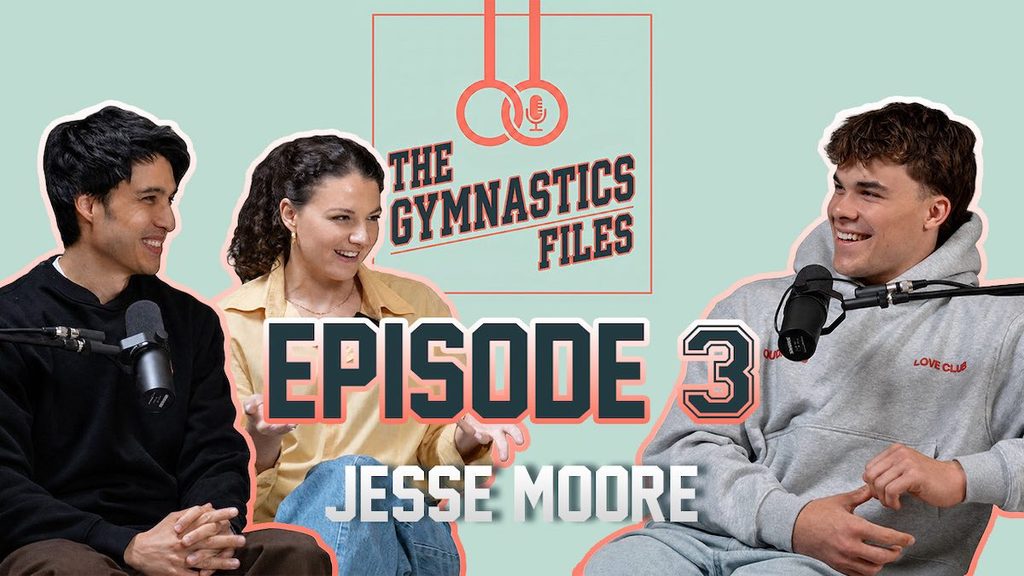
One mistake early in a routine can wreck an entire all-around if you don’t know how to reset fast. We sit down with Australian MAG star Jesse Moore, fresh off the Commonwealth Games, to talk about what actually goes through your head after an early error, and how you claw your way back into medal contention. Jesse gets into the mindset that keeps him moving from event to event, why a “perfect meet” is basically a myth, and what it’s like to be tagged a gold medal prospect when most of the pressure comes from inside his own head.
We also get into the stuff fans argue about constantly but rarely get explained properly- judging credit, why a skill that looks completely fine on TV can still get downgraded, and how that ripples into difficulty, element groups, and final scores. Jesse breaks down why rings might be the most brutal event out there, the strategy behind team lineups and smart downgrades, and what it’s like chasing something bigger than an individual final when the whole team’s pushing for it.
Then we look ahead- the LA 2028 team dream, how Worlds qualification actually works, how athletes pace themselves across a full quad, and how new upgrades get built and tested long before anyone sees them on the big stage. We also get into the unglamorous side: 40 to 48 hours of training a week, physio study on top of that, funding, sponsorships, staging camps, jet lag, and traveling internationally with celiac disease. If you want an honest, athlete’s-eye view of elite men’s gymnastics in Australia, this is it.
Watch the video below
On the Australian's Bronze team medalI didn’t have the best comp, but I think there was a few mistakes from the other guys aswell. I definitely think we could have pushed for Silver.
Key Topics
About the guest
Jesse Moore
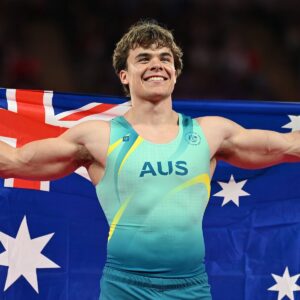
Jesse Moore is an Australian artistic gymnast and 2026 Commonwealth Games parallel bars champion. Born in Ashford, South Australia, and now training out of the Australian Institute of Sport in Canberra, Moore represented Australia at the 2024 Olympic Games and has since become the country's leading men's all-around competitor.
At the 2026 Commonwealth Games in Glasgow, he won gold on parallel bars along with bronze medals in the team and individual all-around events- Australia's first men's individual all-around medal at the Games in 16 years.
He's also a multiple-time Oceania Championships all-around gold medallist. With senior international experience now behind him, Moore is aiming toward the 2028 and 2032 Olympic Games.
Transcript (click to expand):
Read the full transcript
Emma Nedov: Hey guys, welcome to another episode of The Gymnastics Files. Today we have a very, very, very special guest — actually, our first guest. So we have none other than Jesse Moore. Hey Jesse.
Jesse Moore: Hey guys, how’s it going?
Arman Liew: So glad to have you on. When we were talking about who we wanted our first guest to be, we knew we needed someone who’s such an integral part of gymnastics in Australia. I actually said to Jesse when we first met — I probably would have continued gymnastics if I’d had someone like him to look up to as a kid. So we’re super stoked to have you here, hear more about what’s to come, what your goals are, and some of the things people might not know. You’ve just come off Comm Games, and it was a really great campaign for you. Let’s jump into it and start the interrogation.
Jesse Moore: Let’s do it.
Emma Nedov: All right, starting with Comm Games since we’re fresh off the back of it. Huge success — bronze in the team all-around, and gold in parallel bars. How are you feeling?
Jesse Moore: Pretty stoked. I was telling you guys before, that wasn’t my best comp. So going into the P bars final at the end — my last opportunity to really do myself proud — I just left it all out there. Really wanted that gold, and I got it, so I’m pretty stoked.
Arman Liew: It was so impressive because you and Felix Dolci from Canada had a similar process in the all-around — early small errors that, from an outsider’s perspective, might have looked like you were out of the running. But you both came back and walked away with medals. What was your mindset there? Because after that first small error, you still had five apparatus to go. If I were in that position, I probably would have gone and gotten a burger and left the competition.
Jesse Moore: I knew that even with a couple of mistakes, I’d still be in the running — obviously everything else had to be pretty good. But something I’ve learned over the years is anything can happen out there on the competition floor. I’ve had plenty of experience falling on an apparatus and having to move on to the next. That’s what doing all-around teaches you, as opposed to specializing — it teaches you how to just move on. So it wasn’t a great start with a fall on pommel, but it gave me license to go through the rest a bit more freely. Nerves were out of the way. I reckon I could’ve come away with the gold in the all-around too, but again, anything can happen — and credit to Felix, that was an incredible comeback.
Arman Liew: Before Comm Games there was a lot of media attention on medal predictions — news outlets, SBS Sport, even Reddit and social media. You were tagged as the gold medal prospect for all-around, coming off an outstanding Nationals campaign. Do you think that added pressure subconsciously? Did you feel like you had to come away with gold?
Jesse Moore: Not really, because I think most of the pressure I feel is pressure I put on myself. I want to win, I want to represent Australia as well as I can — so yeah, it was there, I noticed it, but it was mostly internal. If you want to be the best, that’s kind of what you have to deal with. I hadn’t really been in that position before at an international comp like Comm Games. It was different, but I tried to just go about my business.
Jesse Moore: As I said, it wasn’t my best comp, so maybe it did get to me a little. That’s something I’m looking forward to working on going into the future.
Emma Nedov: It’s interesting hearing you say that, because I think there’s an expectation that a competition should go perfectly — no falls, no mistakes — when in reality it’s about who makes the most out of whatever happens. It’s like watching Cirque du Soleil — if a performer makes a mistake, they just keep going and act like nothing happened. We do the same thing in gymnastics, except you’re being judged on everything. It’s rare to get through an entire all-around without some kind of slip-up. And pommel is probably the hardest event to start on.
Jesse Moore: Yeah, starting on pommel’s not fun. It’s similar to beam in that if you’re shaky, it’s not going to go well.
Emma Nedov: Starting on beam is the worst. Give me vault or bars any day.
Jesse Moore: I don’t like starting on rings — for some reason we always start on rings. I don’t know why that is. I’d say floor is the one you can just give everything to, and then settle in after that.
Arman Liew: Is there an apparatus in men’s gymnastics that’s historically high-scoring, the way vault is sometimes seen as a bit of a “safe” high-scoring start for women?
Jesse Moore: Not particularly — it depends on the athlete. If you’re good at an apparatus, you’ll score higher there. For me, rings is my weakest — a lot of the strong guys do really well on it, but I’m not that strong, so I’m typically sitting around a 13 on a good day. I actually made the rings final at Comm Games.
Arman Liew: I was about to ask about that — I watched it live and was so puzzled by your score. I kept looking back thinking, did you not get credited for something? Everything looked really good.
Jesse Moore: I was in the back gym and I knew I didn’t really have a shoulder rings routine sorted, so I thought, I’ll just go out there and have a bit of fun. I’d been working on my strength and warmed up a back planche — which definitely wasn’t ready to be in a routine — but I thought, why not, I’ll have a crack. It wasn’t great in the routine. It might have looked okay, but the judges thought otherwise. There was no real pressure on me to win a medal there, so I just went and had fun with it.
Arman Liew: That’s such an interesting thing for our listeners to hear, because so many people — myself included — watched that and thought it looked like a great routine with high execution, and then saw the score and wondered why the difficulty was so low. It comes back to how much power judges have in what they credit. You experienced this before too — we talked in an early episode about your switch ring, where you were told not to include it because they weren’t going to credit it.
Jesse Moore: Yeah — that happened at Worlds last year in the all-around final. Rings was second-last for me, and my main strength skill was meant to be a Maltese. During the final my shoulders were about ten degrees too high, so they credited it as a planche instead, which I think is a bit silly — a planche is here, a Maltese is up by the rings, so I’m not sure how they landed on that.
Emma Nedov: What’s the point difference between the two?
Jesse Moore: A straight planche is a C, and a Maltese is a D. Because of that downgrade I also missed the element group requirement, so I got deducted for that too. That was pretty devastating.
Emma Nedov: These little things happen, right? You watch and think, why’d they get such a low score for that skill — and there’s a reason behind it that you’d never guess from the outside.
Arman Liew: It’s such a dangerous game to play in any sport — going back after a fall and thinking “I would have placed third if I hadn’t fallen.” At the end of the day, if you hit your routine, great, and if you didn’t, there’s no point relitigating it. It was really impressive for the team to come away with bronze — it had been a bit of a drought for men’s gymnastics in terms of team medals specifically, not individual skill level.
Jesse Moore: In terms of the comp itself, it was still far from our best, honestly. I didn’t have my best comp, and there were a few mistakes from the other guys too — I think we could have pushed for silver. But getting that bronze is a weight off the shoulders. We’re pushing for that full team spot for LA, so it’s a nice stepping stone toward that. It’s an extremely young team though — I’m the most experienced, and then you’ve got Jimbo, who’s been to a couple of World Championships, but the other guys are pretty fresh on the scene. It’s interesting being in that leadership position — something I still have to learn how to do. I’m really excited to work with this team and see what we can do at Worlds this year too.
Arman Liew: Leadership is something you’ve had to step into for men’s gymnastics the way others have for WAG. Is that an added pressure? You might not have had your best routine, but you’re also who the rest of the team is looking up to — you can’t just fall apart if that’s your instinct.
Emma Nedov: I think it’s more added responsibility. Gymnastics is perceived as such an individual sport, so learning to shift into a team mindset — wanting to do your best for yourself, but also for your team — takes some adjusting to. At 23, that’s a real responsibility to take on. But I guess the beauty of it is that by focusing on doing your own best, you end up leading by example anyway.
Jesse Moore: Yeah, that’s something I’ve got to figure out more over the next few years. On the team side, a lot of people don’t realize how heavily a team environment influences performance in gymnastics — it makes a huge difference having a team around you rather than being purely individual. I think we’re starting to build that culture on the men’s side in Australia, and that’s part of what excites me about working with this team.
Arman Liew: It’s interesting you both bring up the team aspect, because a lot of the media chatter around Australian gymnastics as a whole points to it being one of the few countries that really leans into team culture, versus countries where it’s more “we want this person to win bars, this person to win pommel.”
Emma Nedov: You’ve got to build the culture and the team first, and then you can strive for individual results. It’s risky to put all your eggs in one basket. And from an outsider’s perspective, thinking about relatability and the commercial side of the sport — teams are followable not because of one or two standout people, but because of what you collectively do.
Arman Liew: That’s a great way to look at it. Touching back on the team side — you were in a pretty unique position in Paris as the sole male gymnast there.
Emma Nedov: He was basically the male add-on to the women’s team.
Jesse Moore: Pretty much. I shared a bit of that team environment with the girls, which was nice. A lot of my life I’ve trained and competed alongside my friends and teammates, so going into a competition like that somewhat on my own was different — that’s peak competition, where you’re striving to be. It would’ve been awesome to share that with other people working toward the same thing, but it gave me a lot of time to just focus on myself and what I needed to do.
Emma Nedov: And that experience feeds into what you’re contributing to the team moving forward. This is actually part of why we knew we wanted you as our first guest — not necessarily intentionally, but you’re creating pathways for other men’s gymnasts to come through.
Arman Liew: A hundred percent. It’s been a long time since we’ve had someone this relatable that others want to look up to — not a knock on other male gymnasts, but your success has really put a spotlight on Australian men’s gymnastics internationally, whether consciously or not.
Arman Liew: Looking ahead — you’ve mentioned the goal of a full team in 2028. What would that take? For listeners who don’t know the Olympic qualification process, what actually needs to happen?
Jesse Moore: Olympic team qualification is at next year’s Worlds — top 12 as a team, and 13th to 15th get three individual spots. So we’re aiming for top 12, which will be tough — top 12 in the world as a team is a huge achievement. But if we don’t get 12th, there’s a fail-safe where we can try for that 15th spot and send three guys. We’re on the way up — you can see the trajectory from the start of this cycle to now. There’s still a lot of work to do, but I’m going into it optimistically. I think we can really have a crack as a team and hopefully come away with something.
Arman Liew: We had an interesting conversation about pacing yourself through a cycle so you peak at the right time. Are you pacing for 2028, or for next year’s Worlds as the decider?
Jesse Moore: For us, if we really want that team spot, it’s next year’s Worlds. If things don’t go our way there, there are other avenues through World Cups and continental spots. But it’s our goal, so we might as well go for it — if we fall short, there’ll be other opportunities that follow.
Arman Liew: That’s really interesting, because as a spectator you’ll sometimes see routines that aren’t at full difficulty and wonder why — why didn’t they go for the harder skill, why’d they downgrade the dismount. It’s easy to assume that’s laziness or playing it safe, but there’s real strategy behind it.
Jesse Moore: Yeah — you’ll see a lot of downgraded routines in team competition, because you want to hit your routine and have your score count, so a lot of guys won’t take that risk when it’s for the team. A lot of people don’t realize how much strategy goes into it — where you place people in the lineup, who goes first, who goes last. If the first three hit, the last person has license to really go for it.
Emma Nedov: That’s so interesting, because if you go back 20 or 30 years, the strategy was usually that whoever went last was aiming for the highest score — there was actually a study on the ’92 and ’96 Olympics showing whoever competed last for a team would historically score highest, even if earlier routines were arguably better. Coaches would strategize lineup order around that. It’s a lot different now.
Emma Nedov: It’s the same as choosing your competition subdivision — you want to be in the last one. What subdivision is Australian men’s gymnastics in for Worlds?
Jesse Moore: I think we’re in the last one — with Japan, US, Great Britain, and some strong individuals too. Strong subdivision, but I love that, we’ll be with a lot of top guys, so it’ll be a fun competition.
Arman Liew: You’ll get great viewership out of that. We’ll do our live commentary on that whole subdivision.
Emma Nedov: As if we’d influence the judges in any capacity. That’s really exciting — the women’s subdivision is subdivision two, which is earlier and a bit tougher. There’s always this narrative that judges are stricter in the earliest subdivisions and looser by the end.
Arman Liew: We’ll do a comparison this Games and see if that hypothesis actually holds. But that strategy is such an interesting thing to hear about — maybe whoever goes first is the most reliable, to build confidence for the team, and then the last person has less pressure if the first three already hit. It’s very much the same team as Comm Games plus the reserve, which should help going into Worlds after such a strong campaign.
Emma Nedov: Do you work with a sports psychologist? Given you mentioned that a lot of the Comm Games pressure was internal — I’d imagine once you start doing well, there’s added external expectation on top of your own. Is that something you work on with your psychologist?
Jesse Moore: Yeah, mostly it’s about managing my internal pressure on myself, and managing high-pressure moments or nerves going into routines. One thing that’s worked for me is the idea of fear state versus challenge state. When you’re nervous, you tend to lean toward a fear state — wondering whether you’re going to make the routine. What I’ve tried to do is shift that into a challenge state — really talk to myself about, why not hit this routine, and try to challenge myself instead. I’m still learning how to do it well, but it’s helped.
Emma Nedov: Isn’t it interesting how much that shift in language matters — fear versus challenge. It could still go wrong, but framing it as a challenge to rise to instead. That’s a really cool lesson.
Arman Liew: It gives a much more complete picture of an athlete. Between now and 2028 or 2032, are you looking at changing your routines or adding new skills, or is it more locked in at this point in the cycle?
Jesse Moore: I’m definitely looking at upgrading. It’s a process — it takes time, and you don’t really know when something’s ready until it’s ready. I’ve been looking at upgrading my high bar specifically — currently a 5.6 difficulty, looking to get to a 6.0. I actually landed it for the first time the other week, which felt pretty good. That’s something I’ll be pushing leading into World Cups next year, along with a few other upgrades over the next couple of years.
Emma Nedov: That’s an interesting process, right — you have to actually go compete the upgrade at World Cups first, see how it goes, see what works. It’s not like you just upgrade it in training and then whip it out cold at the Olympics.
Jesse Moore: Correct. And at the end of the day it’s the final score that counts, so it’s a question of whether it’s actually worth it.
Arman Liew: Which is such an interesting concept in gymnastics — you could do a harder skill and take bigger deductions, when doing the easier, safer skill might actually score better overall. For our listeners, make sure you’re following Jesse on Instagram, because he posts a lot of his training clips — it’s genuinely impressive to see the whole process, falls included. For you, going past 2028 and 2032 — would you keep going?
Jesse Moore: As long as my body and mind are still up for it, why not. I really love this sport, so I’d love to keep going — depends whether I can still walk, honestly.
Emma Nedov: I think it’s pretty cool that the possibility even exists. And I guess it also comes down to whether it’s financially viable.
Arman Liew: Which leads into our next set of questions — I think this’ll be an ongoing theme with all our guests, because funding is a big issue for most gymnasts, in Australia and elsewhere. Competing overseas is often self-funded or only partially funded — even a flight to Europe is something like $3K, before hotels, and then there are comp entry fees people don’t even realize exist. It all adds up.
Jesse Moore: Sometimes it’s covered, sometimes not.
Arman Liew: Is there an opportunity for you to work with brands to generate some income for yourself? Are you working with any brands right now?
Jesse Moore: Yeah, I currently work with True Protein — I do a few posts a month, and they send me product and a bit of money. That’s been pretty helpful.
Emma Nedov: That’s great, especially since they’ve scaled back a lot of their sponsorships recently.
Jesse Moore: Yeah, I’m glad they kept me on.
Arman Liew: True Protein’s a great brand — I do a lot of high-protein baking, and they’re one of the few that actually bakes well. Is there a dream brand you’d love to work with?
Jesse Moore: Obviously one of the big ones, like Nike, would be pretty cool — though understandably hard to get, since we compete without shoes and typically without shirts.
Arman Liew: Gymnasts, or athletes in any sport really, need some kind of income pathway. How many hours are you training a week, factoring in weights and recovery?
Jesse Moore: Around 40 to 48 hours.
Arman Liew: So training is basically a full-time job on its own. And you’re studying physio part-time on top of that — not a hands-off degree either, there’s prac work, assessments, treatment. When you go do World Cups next year, is that self-funded?
Jesse Moore: I think those ones will be covered. I’ve been weighing up whether to do the Uni Games as well next year — Korea would be an awesome place to go, but that one typically isn’t funded, so that would be a decent chunk of money out of my own pocket. It’s one of the few opportunities we get as Australians to compete all-around overseas, since World Cups aren’t all-around. Leading into Worlds, it’s something I’ll have to weigh up — whether it’s worth it.
Arman Liew: Do you know if they’ve released Uni Games dates yet?
Jesse Moore: Not sure — last time I went it was around July.
Arman Liew: So many competitions end up in European countries, which as an Australian means a minimum 20-something hours of travel. Korea being 10 hours away and in a similar time zone is nothing in comparison. It was interesting hearing you talk about staging camps — not just for training before Worlds, but acclimatizing to the time zone.
Jesse Moore: I’ve gotten better at it. One technique is just staying up as long as possible on the first day, even though it’s hard — that first night is critical to how it sets me up. When Worlds was in Jakarta last year, that was closer to Australia, which was nice. Talking to some of the other guys from different countries, hearing them complain about their travel — you have no idea.
Arman Liew: A lot of the northern hemisphere countries have it easy time-zone-wise, and travel between Europe and the US is only eight to ten hours depending on where you’re going. Jakarta was one of the rare moments where we had barely any time difference. Next year’s Worlds is in China, which should also be close.
Emma Nedov: We actually hosted Worlds in Australia back in 2005, and did really well.
Arman Liew: I did radio commentary for that one — high school work experience, barely any listeners, but I was there for one of the big Australian wins that year.
Arman Liew: Some interesting fact we found out about you recently — you’re celiac. How easy or difficult is that to navigate at overseas comps?
Jesse Moore: It can be pretty tricky. Sometimes it’s just chicken and rice every dinner — does the job, but gets a bit boring after a while.
Emma Nedov: We had a lot of allergy issues in Paris — Ruby almost ate something with dairy and egg on the plane, Kate ate gluten and got really sick, and you did too.
Jesse Moore: Yeah, going back to Paris — I ate gluten in the dining hall and got sick on the first day, up all night throwing up.
Emma Nedov: Even the Olympic Village, where you’d hope everything’s clearly labeled gluten-free, vegan, allergy-safe. Do you know what caused it?
Jesse Moore: It was pasta that was labeled gluten-free and wasn’t.
Arman Liew: You have to be so cautious — it’s just tricky to find reliably safe food sometimes.
Arman Liew: One of the most-asked questions we get about anyone is simply — what does this person eat in a day? What does a day on Jesse’s plate look like to fuel that level of training? Is there room for fun, or is it strict chicken and rice?
Jesse Moore: There’s always room for fun. Because we burn so many calories doing what we do, I’ve done a DEXA scan and an RMR test — resting metabolic rate — and every time, I’ve been told I’m underfueling. Pretty common for gymnasts, so we basically need to eat a lot to keep the fire burning. I usually start with oats, frozen berries, a bit of honey — good start to the morning, plus coffee. We train at 9am, and I’ll get some electrolytes in during that session since it’s long and demanding. Lunch is usually eggs on toast, then a protein shake or one of the bars we’ve got around. After the second session I’ll grab a chocolate milk from the fridges at the AIS, and on bigger days there’s weights after that too, plus more protein. There’s not a lot of room for snacking through the day, so dinner tends to be a big portion — my go-to is spaghetti bolognese with gluten-free pasta.
Emma Nedov: What’s fascinating is how close together your training blocks are — that’s pretty unique to how the AIS runs things, versus leaving a big gap in the middle of the day.
Jesse Moore: Having a dining hall right there at the AIS helps a lot if you don’t have time to go home and back. Towards the end of the week you do start feeling delusional in training, it gets harder — but I actually like having that smaller gap, getting everything done in the middle of the day, which leaves space in the morning or afternoon to be productive elsewhere.
Emma Nedov: I guess if you were still in school that wouldn’t really work.
Jesse Moore: Not at all — go to school first, kids. I actually rocked up late and left early every day back when I was training in Adelaide and still in school. Looking back, the other kids must have thought, who is this guy who just comes and goes whenever he wants.
Arman Liew: After Comm Games and the Olympics, I bet people understand those late arrivals and early checkouts a bit better now. Are you doing physio uni in person or remotely?
Jesse Moore: I have to go in — at the moment it’s Wednesday, Thursday, Friday on campus, which is a lot on top of training.
Emma Nedov: And you’re working too, aren’t you?
Jesse Moore: Yeah, I do have a job — I’ve taken a bit of a break from it for now, but we’re pretty flexible with shifting training times when needed, which has made fitting in uni a lot easier.
Emma Nedov: Multifaceted human being — elite sport, study, work, sponsorships, social media. People probably don’t realize how time-consuming editing videos is too.
Jesse Moore: I actually really don’t like filming stuff in the gym — I just want to do my job and get out of there. It’s handy having someone like James Pacquie, who’s a wizard with a camera and loves filming, making content. The AIS also has a media person who comes in now and then, which helps.
Emma Nedov: Hardest apparatus to do well on?
Jesse Moore: Rings. I hate rings.
Arman Liew: Which male or female gymnast inspires you most?
Jesse Moore: That’s tough — growing up in Adelaide, training at my gym alongside Sam Offord, now president of GA, I always looked up to him — a Comm Games medalist and a physio too, and just a genuinely good guy. Also looking up to Clay and Chris, being from Adelaide and watching them train — particularly Clay, coming back from three ACLs and an Achilles, that’s pretty inspiring stuff.
Emma Nedov: What do you reckon is Australia’s weakest men’s apparatus?
Jesse Moore: Rings.
Emma Nedov: Yeah, we don’t really know why, but rings is hard for us.
Jesse Moore: It takes a long time to develop that strength — some people are just built differently for it. It’s not just strength either, there’s technique and positioning involved that took me ages to get my head around. I’ve only recently started being able to properly do something like a Maltese. I’ve had a history of shoulder issues too, which doesn’t help. But you see guys like Jimbo pushing hard on rings now, which is great to see.
Arman Liew: And in turn, what’s our strongest men’s apparatus right now?
Jesse Moore: Based on Comm Games, it was pommel — which is a major shift, since pommel’s always been one of our weakest. We had a pommel specialist on the team this time, and a few of us are averaging around 14s there now. It’s strange because pommel used to be a real weak point for Australia.
Emma Nedov: I feel like it used to be high bar.
Jesse Moore: Yeah, for a long time, with Tyson Bull. But based on Comm Games, I’d say it’s pommel right now.
Arman Liew: Our listeners should know this — you’ve got a skill named after you on pommel. Did you compete it at Comm Games?
Jesse Moore: No, it’s too hard — it’s rated a G.
Emma Nedov: I did not know that.
Jesse Moore: I did it in Doha last year. It’s like a Bezugo-into-a-Busnari move on pommel, then back down — honestly it’s almost impossible to explain in words.
Arman Liew: We’ll put a clip of it into the episode. Is it a strategic call, when to attempt something that difficult?
Jesse Moore: It was such a weird experience — that was my last World Cup that year, so it felt like my last real opportunity to submit and compete it. It was the second skill in my routine, and afterward I basically blacked out and couldn’t remember the rest of the routine, but I made the final and did it again there. I competed it a few times that year — Nationals, Uni Games — but I fell on it a couple of times at Uni Games, and after that it just wasn’t quite worth it for me anymore.
Arman Liew: Have you seen anyone else attempt it?
Jesse Moore: I’ve seen people train it, and a few guys were working on it before I got it officially named — so it was a bit of a race to get it locked in first. I haven’t seen anyone compete it yet though.
Arman Liew: One last question before we wrap up — any up-and-coming men’s gymnasts, junior or senior, we should be keeping an eye on for 2028 and 2032?
Jesse Moore: I could list a few. True has a lot of potential on pommel and is looking at incorporating parallettes into his training too — very exciting, still very young. Britain’s a great all-rounder, currently at college, really excited to see what he can do. And Elijah Wu, who won juniors — I’ve seen some of what he’s working on, and he looks really switched on. Excited to see what he does over the next few years.
Arman Liew: Will he move up to senior soon?
Jesse Moore: Not totally sure — maybe another year in juniors — but the more depth we can build in the team, the better step forward it is overall.
Arman Liew: Jesse, thank you so much for being our first guest. We genuinely couldn’t think of anyone better to have on first.
Emma Nedov: You’re doing something extraordinary, and you’re such an inspiration to so many people.
Arman Liew: Whether it’s conscious or not, you’re giving people a real look into the sport outside of just the four-year Olympic cycle. It’s a really exciting time for Australian gymnastics, especially on the men’s side, and we’ll be cheering you on at Worlds — hopefully toward that full men’s team in 2028. Thanks so much for coming on, and thanks for listening. We’ll hopefully have Jesse back on again after Worlds. This episode’s actually going live before Worlds, so everyone will be watching to see if that pommel skill makes an appearance.
Jesse Moore: I’ll give you a tip — it probably won’t be.
Arman Liew: Who knows. Excited to see your routines anyway. Thanks for listening, and we’ll see you guys next week.
Emma Nedov: Thanks, guys. Thanks, Jesse.
Arman Liew: Thanks, Jesse.