
Emma Nedov and Arman Liew on Olympic Selection, Funding, and Why We Built The Gymnastics Files | Ep. 1
Episode one, we live!

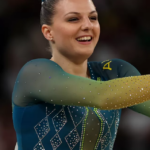
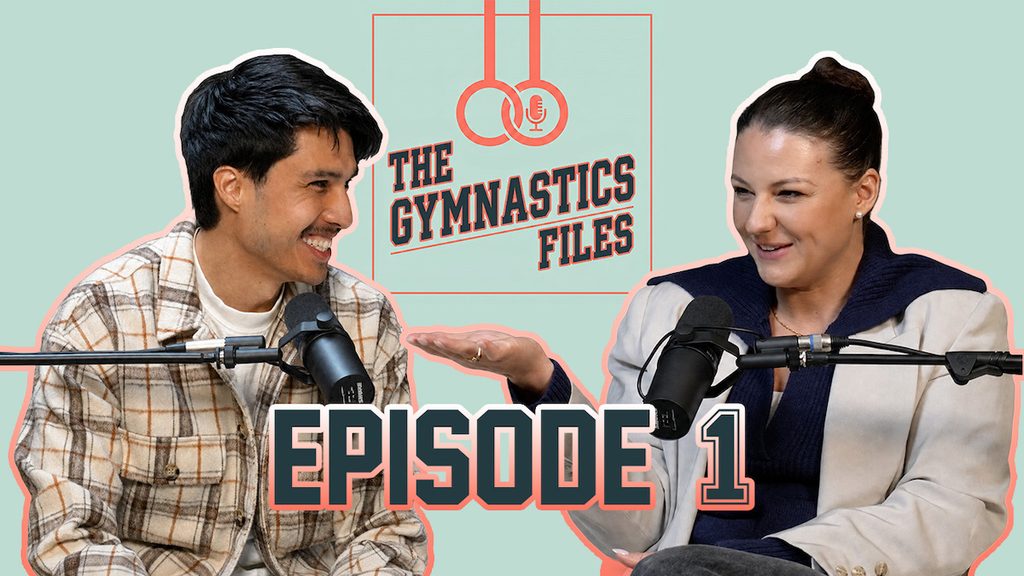
In the very first episode of The Gymnastics Files, co-founders Emma Nedov and Arman Liew explain why they built this podcast- and dive straight into the parts of elite gymnastics fans rarely hear about.
Emma, a 2024 Paris Olympian, walks through how Olympic selection actually works behind the scenes, including a last-minute change to her beam routine she chose not to tell her own coach about.
The pair also unpacks the money side of the sport: who really pays when a young gymnast gets selected to compete internationally, why medals in Australia don’t come with prize money, and how national funding categories work.
Watch the video below
Emma Nedov, on removing a skill from her Olympic beam routine two days before competing.“I actually did not tell my coach. I was too scared.”
Key Topics
Transcript (click to expand):
Read the full transcript
Arman Liew: So welcome to episode one of hopefully many episodes of The Gymnastics Files. Emma, you don’t really need an introduction, but I feel tell our listeners who you are.
Emma Nedov: That’s hilarious. I would argue the opposite actually. Okay. I’m Emma Nedov. I am a 2024 Paris Olympian. I represented Australia, obviously in gymnastics, ’cause that’s what we’re here for. And do a variety of other really fun things nowadays. And yourself?
Arman Liew: Sure. So I am Arman Liew. I did gymnastics when I was younger, but have moved into the food realm, so I have a food blog — The Big Man’s World, which I’ve been doing for over 10 years now. And yeah, do a lot of healthy recipes, desserts, all that sort of jazz. But this is something different that we are starting together and, yeah, I’ll throw it to you first and say, Emma, why are you here?
Emma Nedov: I get this message while I’m in Vegas last, what, three weeks ago now. So obviously I have such a passion for gymnastics. I’m very grateful for what gymnastics has opened up in terms of opportunities for my life. And I really wanna use my experiences to both propel my life into these really high ambitions, but also help other people. And so I’m sitting in Vegas where I had done a motivational talk for a gymnastics gym over there, and I get this message from The Big Man’s World, which obviously has 1.3 million followers, going, “Oh, hi, Emma. Let’s catch up. I’ve got a background in gymnastics. I’ve got this idea of something I wanna do.” And I’ve said to my fiancé, Julian, “Oh my God, look at this message. This is amazing.” So we catch up for coffee, and next thing we’re starting a podcast. Because we both have this passion — sport is underrepresented, underfunded, and we both have a level of understanding in business. You’ve obviously experienced so much in creating your food blog. I’m out there in the community trying to tell everyone how awesome gymnastics is. And so let’s put these skillsets together and let’s build something great. Let’s build a podcast, let’s build a website, and let’s make gymnastics known and relatable.
Arman Liew: Absolutely. Honestly, when we had the conversation, I felt like it was something that you and I had been thinking about for the past five years. And then we’ve connected, we’ve come together in such a small amount of time. We’ve gone, “This is what we wanna do. This is the vision.” So I’m gonna throw it back to you — what’s the vision? On my end, I’ve been doing food blogging for over 10 years now, and at the very start I’ve always been like, I want to give back in some way to something that I’m really passionate about. I did gymnastics up until I went into high school and then I stopped, because I wanted to be cool — I wanted to be like one of the guys that played AFL or cricket. I stopped when I really should have continued because I really loved it. But I’ve always followed gymnastics, men’s and women’s. About 2022, 2023, I was in a position with The Big Man’s World where I was like, “Look, I feel like I wanna give back in some ways.” Initially the first thing I thought of was maybe sponsor Gymnastics Australia or give a donation to them, which after looking at their balance sheet — which is publicly available and it’s very positive — I didn’t really see any direct way that they were giving back financially to these elite athletes. So my next angle was to directly sponsor a few athletes and support them in a monetary way. But then, speaking to my accountant, he was very much like, “Sure, you can do that, but to make it above board, you’d need to be getting something back from them.” And I really can’t see a gymnast with The Big Man’s World on their leotard. So that’s when I thought, similar to you, there really isn’t anything here that speaks to the athletes, really gets to know who these people are that are representing the sport. So I was like, maybe it’d be good to start a project with an elite gymnast that has this background. I went to nationals, I went to a couple of the state competitions, and I wanted to do my research and be like, who would be someone good to do this with? And I think it came down to basics — who would I wanna be friends with, ’cause then that makes it so much easier. I reached out to a good friend of mine, Justin, who you were connected with on Instagram, and I said, “Tell me about Emma. How do you know her? Can you do an introduction?” And this is where it was born. If we peel back the layers and say what is The Gymnastics Files and what we want it to be — we wanna give a voice to as many elite athletes as possible, especially the ones in Australia. We had a lot of great media attention with the Commonwealth Games, but then it’s sort of radio silence after that. Do we have to wait another four years to put some focus on these athletes? The Gymnastics Files is where we wanna interview a lot of them, get to know these guys properly instead of the generic “Why did you start gymnastics? What are your goals?” There’s so much media out there that already shows that. So why don’t we ask them the questions like, “What have you struggled with?” Or, “What skills are you working on?” Or “Where do you wanna see yourself at the 2028 games, 2032 games?” And how we can give back to these athletes is we wanna have an athlete fund of sorts — we will hopefully generate revenue from this, and we’ll make it our promise that every dollar that we raise, we will give back to the athletes. A percentage of that will go to them to fund them a competition, or if they’re deciding between “I need to work or I need to train,” if this can help them out a little bit.
Emma Nedov: When we sat down and we had a coffee, and you told me everything that you’ve just outlined — gosh, I have been, for the past year really, that I’ve knuckled down. One of my goals is really to commercialize and get some funding into gymnastics and just show people how incredible our sport is. But then the ironic thing is, as a consumer or someone as a fan that watches it, they’re always the tickets that sell out first. It’s the most watched sport during any main televised event. Human bodies do what they do — a big goal of mine has been to highlight that a little bit more. I didn’t have the ability to jump straight into something big. I don’t have the experience like what you’ve had. And so when you sat down, I was like, “Oh my God, this is amazing,” because I’ve got the on-the-ground experience. I’ve just come from being a gymnast for way too long — 23 years, which is ages for a gymnast, right? You just don’t hear about that.
Arman Liew: I feel like the everyday person that watches it, is a fan, would not know that. There’s so much media out there about you making you out as if you’re a pensioner that went back into the sport — you were 28 when you went to the Olympics, which doesn’t sound old, but in gymnastics terms, you assume that once you turn 16, 17, 18, it’s like, all right, you’re done.
Emma Nedov: Oh, easily. It’s incredibly unique to have the opportunity, because naturally it’s very difficult to train — I was training about 16 to 18 hours a week, and that’s just in gymnastics. Outside of that, you’re still a gymnast and earn money. So back to your point around, do I sponsor athletes, do I make a donation to Gymnastics Australia — I actually think there’s an opportunity to showcase, for just human beings, many opportunities. Maybe not the flips — everyone loves a flip — but not so much to take the flips into the real world. Whatever your career path is. And it feels like we don’t harness that enough, which is unfair, because as you said, when you watch something like the Olympics or the Commonwealth Games — we just did so well at the Commonwealth Games, which hasn’t been so good in the past few cycles, and they’ve just come out and done this.
Arman Liew: And I guess the other side of the coin is that was a few weeks ago, and it’s like radio silence. What sort of happened? Have these gymnasts been getting sponsorship opportunities? Have they been given funding from the government? And the answer’s probably no, right?
Emma Nedov: There’s just nothing really out there. I think at one point — and I actually don’t know what’s true or not in this scenario — I do remember in 2018 I snapped my Achilles, so I didn’t make that Commonwealth Games. But they got around about, I want to say $10,000 for a gold medal on an apparatus. I actually don’t know where that category fell, but I knew that of friends that won gold medals, they got I think it was $10,000. But I do believe if you had a lot of gold medals — silver medals, bronze medals — no monetary value attached. Which is interesting in Australia that’s the case, ’cause I’ve read online that in China or Romania, Russia even potentially, it is incentivized to get medals, which is why some gymnasts really hone in on apparatus.
Arman Liew: “You know what? I can go and get a gold medal and be able to support my family.” So that was at one point the case in Australia, but not anymore. $10,000 doesn’t seem like a lot, but it’s something. ‘Cause you’re absolutely right, it’s almost a little bit backwards — you would think that you would wanna work so hard and it rewards your hard work, but it’s almost like the flip side, where you’re paying to do hard work. ‘Cause if it’s coming out of your pocket or your family’s, which I think a lot of the case is — your peak training is probably between 13 to 16, 18, right? Which is Australian law — there’s only limits on how much you can work, where you can work, and couple that with a full-time school schedule, a lot of these gymnasts would be at school. So wow, that’s so interesting. And also, you’ve also been working on a couple of other things to build this up as well, right?
Emma Nedov: This is just my theory — it’s something that we like to watch, AFL, all of that, and only so often do you see people doing cartwheels on the oval. It’s probably very rare that you’re gonna see someone above 40 doing cartwheels in the park. So I feel like sometimes there’s a bit of a missing link. It seems a bit like more of a performative sport. So I looked at options for how can we make this more accessible, more relatable? Because from my perspective, that will then generate a little bit more commercial value and funding. Hence why we’re sitting here now going, “Hey, let’s build this.” And let’s bring awareness to our sport. So I’ve got NYRA, which is basically an offshoot of a gymnastics bag business that myself and one of my best friends, Georgia Rose Brown — now the Singapore national coach — started when we were 18, because why should just Simone Biles be allowed to make dollars from doing gymnastics? But very quickly we realized that running a product business is very difficult, and if it’s not your full-time job and you don’t have the financial backing, it’s a bit of a side business. However, I always had aspirations to run a successful business in some regard, and our bags did really well. What it showed me is there is an interest, there is a market. Our bags were really quite niche — made for the 14 plus in gymnastics, unisex, both WAG, MAG, tramp even, any sport. So I’m developing a brand called NYRA, stands for Not Your Regular Athlete, where I wanna create products that are actually designed specifically for sport, getting trialed and tested by the actual gymnasts. I’d love for it to go into other sports too, because I wanna bring gymnastics into the relatability of other sports — dance, diving even, there’s a lot of similar products that might be used. And I’ve had a lot of experience being an elite athlete, and then how to also attempt to build somewhat of a brand. I built up a little bit of a platform in the nine months of my return to gymnastics, and I was like, how can I use this to help other people that are on a similar journey? I’ve got a great relationship with my performance psychologist —
Arman Liew: — was this during competition or during your training or recently?
Emma Nedov: I worked with him from about 2017 onwards. So I would say that a lot of my gymnastics success as I got older — my training was very much set in stone. I was training, oh gosh, like maybe 26 hours a week of gymnastics. My training was fine, and I was very good, very consistent, but I’d go to competition, make silly mistakes. So I started working with Dave, my performance psychologist, just improving my performance as a human being — so that together we have the ability to help athletes both perform better, more consistently, and then also support them on the side with brand, with their platform, with sponsorships hopefully down the line. And going back to meshing gymnastics with other sports, I’m currently working with a female motorcycle racer, a golfer, and basketball, all with the hopes of bridging those sports together, because realistically you’re just a human doing extraordinary things. So that’s something we all have in common — and then that led me into wanting to go into a bit more corporate, doing corporate public speaking, and even mentorship coaching, taking a lot of the skills and lessons I’d learned in gymnastics and applying them to leadership.
Arman Liew: And I think that was an interesting thing to see, where you came in at the time — it was very much naturally a leadership role. And I think those are skills that other gymnasts would have as well, right? That doesn’t mean that once they finish, “All right, what do I do?” There’s all these other pathways, and you’re living proof of that. You’ve done already a lot of corporate speaking, and it isn’t you going there talking about your gymnastics story — you’re using what has helped form part of it, which I think is great.
Emma Nedov: Yeah, and I think that’s what can help make gymnastics more relatable. You’re sitting here, and whilst it would come across as, “You haven’t been in the gymnastics world,” and you’ve built up this incredible platform, so much success that I wanna hear more about, because that —
Arman Liew: — intrigues me, right? Because it’s like, you have such a vested interest into gymnastics and the world that is underneath — what do these athletes do? Absolutely, and I think that’s what will be really great for our listeners, even from episode one — this isn’t gonna be like those other podcasts that tell us about your journey, tell us what you did at 12, 16, up until now. Because that’s the beauty of yourself and a lot of these other gymnasts — you’ve got a name for yourself, I can Google you, and I know your story. There’s so much media out there about that, but there’s also a lot that isn’t, and I think that’s the sort of stuff that as an outsider or someone that has a vested interest would really wanna know, you know? Like, what was it like? What were some of the negative stuff about it?
Emma Nedov: And for us to even address some of those things that might be not nice to hear, but like that was your reality — I think this is all stuff that will be great to talk about as well. And I think that we’ve also got a unique positioning where I really like the idea that we are all just people, ordinary humans trying to do really extraordinary things. And for some of us, our guests will be still probably in the midst of doing gymnastics. Maybe some will come in who have already had their gymnastics careers and now are into doing other things — like yourself. We both sit here as, was a gymnast, then hugely successful in whatever career you then went to, then we’ll be hugely successful in The Gymnastics Files. I’m a year out of my gymnastics career and trying to navigate what I’m gonna do next —
Arman Liew: — and how you can use your experience for the next pathway. And really harnessing that and figuring out — not just, “Hey, well done, you did so well” — how did you feel when you won a gold medal? It’s more like, what did you do to win a gold medal?
Emma Nedov: Absolutely, and I think that’s the stuff that no one knows about. A lot of the people that we’ll hopefully be having on will be someone that has gone from gymnastics to Cirque du Soleil, or gone from gymnastics and become a lawyer — completely different field.
Arman Liew: But there’s so much that — this is not your average podcast. Taken from the NYRA slogan. All right, so I wanna circle back on something that you talked about in terms of funding. I see a lot of gymnasts that go to competitions that are outside of Worlds, outside of Olympics — they might be in Doha, or America, Canada. Who pays for that? Does Gymnastics Australia fund those, or does the government fund those? Where does that ultimately come from?
Emma Nedov: I’m gonna say that it usually comes from the families of the gymnasts. So there was a time — I feel very fortunate that I was in that really awkward time when we had funding and then we lost it all. When I was about 13, I started representing Australia on an international stage. For those competitions, I was what you called fully funded.
Arman Liew: And what does that mean?
Emma Nedov: I actually don’t know where the money came from because I was like 13, but it got paid for me — from leaving Melbourne, flying to destination, accommodation, everything, I wasn’t out of pocket. It was fully funded, and I wanna say by Gymnastics Australia, but I don’t know how that funding model worked. Now, I believe that these athletes and their families are asked to be almost out of pocket $10 to $13,000 to go to World Cup, because I guess the family are paying for their child to go, but their coach as well — most of the time the athlete is gonna be paying fully for that entire trip.
Arman Liew: Which also includes registration fees for the competition. And is there prize money at these competitions, or is it really just for experience?
Emma Nedov: Oh, it’s a bit of both — mostly experience. If you go over there hoping to win a bunch of prize money, that’s not viable. I won World Cup in Azerbaijan, 2019 — I can’t remember the actual amount, but it was something like 1,200 Swiss francs.
Arman Liew: Wow, so that wouldn’t have even covered you one way to the competition. So, look, there are different categories, right? You can be a categorized gymnast or a categorized athlete, where you’re getting funding from the government or from the Australian Sports Commission. When you say categorized — if you’re an elite gymnast, senior international, are you categorized within that, or is senior international one category, junior international another?
Emma Nedov: So the categorization is outside Gymnastics Australia. I don’t know the full ins and outs of it, but from my understanding it’s based off results and your potential results that you can achieve for Australia. I think Gymnastics Australia really goes to bat for us and tries to put us for the highest categorization level that you can be. But it’s not simple — this is your level, this is your age, this is your results — it’s more based around what’s your future projection, what can you achieve for Australia. That naturally then only really falls to the athletes that are on the national team and eligible to represent Australia at the next Olympics or similar.
Arman Liew: When I was a proper gymnast at 16, 17, 18 years old — this is what’s happening now — they go, “Hey, you’re doing so well, we think you can be eligible for LA Olympics. You need to get more experience on an international stage.” Because there’s not a lot of opportunities to compete in Australia, and training and competition are two very different things. So you’d naturally wanna get as much international experience as you can. But they’re turning around and going, “Just FYI, it’s gonna cost you $10,000.” Now you’re in school, you’re not getting sponsored — how on earth are you gonna put up $10,000? It’s Mom and Dad. So that’s a really tricky thing that I don’t think is understood so well —
Emma Nedov: — from a business perspective it’s not possible for Gymnastics Australia to just go out and fund all of that. They don’t even have the funding for that.
Arman Liew: As an athlete, you’re thinking to yourself, “I’m just trying to get this experience, why is no one supporting me?” But it’s not about a lack of support — it’s a lack of resources from a corporate, business level.
Emma Nedov: So I think the categorization at the Australian Sports Commission has really good foundations for what they’re trying to create in terms of future longevity. But then if we bring it down to this level of, you need to get experience —
Arman Liew: But going to the Olympic Games as your first international competition would be extraordinarily intimidating. And I feel like it’s a risk as well — the national coach or the national team wouldn’t wanna risk that. There have been cases of that, but it’s also really risky. There’s benefits in doing these smaller competitions around the world — you experience things you might not even think about, like jet lag, a different cuisine, a different time zone. How far in advance did you go to Paris before the Olympics?
Emma Nedov: Like two weeks. You know what’s funny though — I’m so good at jet lag now, because at 2018 World Championships we landed in Doha at like 11pm local time, and then you have training at 6:30 the next morning. And it’s not a walk-in-the-park training — it’s beam routines, a full run-through competition. And so that really got us over the jet lag, I must say. What I would say is I’ve learned truly how capable the human body is out of gymnastics.
Arman Liew: I feel after you just said that, no one can complain about jet lag anymore — just go do a mock beam routine in your garden in the morning, and that would cure it. Screw melatonin and all that sort of stuff. So, is it the same for MAG and WAG — Men’s Artistic Gymnastics, Women’s Artistic Gymnastics? Was it the same for the men’s team as well?
Emma Nedov: Pre-2016, I don’t know, because I was obviously so separated from MAG. My fiancé obviously trained in MAG, and our stories of our training are totally different. Now, I believe WAG and MAG are a lot more similar in the way they’re governed and the leadership there — actually I would probably say there’s been a real lack of leadership, but as a result they’ve meshed together a lot more. So I think the funding model exists the exact same.
Arman Liew: Well, it is because there is such a difference between WAG and MAG — the way that MAG have to train versus the way WAG train. And even just ages — puberty is different. You hear like the men’s physiology, you don’t actually hit peak development till close to 30, whereas ours was always led to believe like 16. In terms of funding, if we go down the sponsorship model, which hardly exists in gymnastics — I would probably argue that WAG used to have an easier opportunity to get sponsorship because WAG was more well known than MAG. Even in America, I was over at nationals, and the ticket sales for WAG are so much higher than for MAG. I went to look at LA 2028 to see what tickets were available — nothing for WAG, sold out in 30 minutes, but there were a few MAG subdivision one, two still left.
Emma Nedov: Extraordinary — because I think MAG gymnastics, and I have said this on record before, I think it is harder than WAG — it’s two extra apparatus. It’s also very exciting to watch. Usually I remember watching one, must’ve been 2020 Olympics, and you get down to the final two apparatus, which in WAG doesn’t exist.
Arman Liew: We’ve got four, MAG’s obviously six, and it’s neck and neck between who’s gonna win and who’s not. So it’s fascinating, and I think it comes back to little Arman going to high school and being like, “Oh, everyone’s playing footy, no one’s doing cartwheels on the oval.” And it’s like, “I don’t know if this is cool.” Hopefully that’s something The Gymnastics Files can change — we’re doing gymnastics cool. I wanna get a little bit more into you and some of the stuff I don’t think people actually know. I guess we know the Emma Nedov that made a big comeback and made the 2024 Olympic Games — if you don’t know, just Google Emma Nedov, multiple media outlets covering that fantastic feat. But when you’re in the Olympic selection process, how much of it do you actually know? Like, have I made it, am I 50% on the team, am I definitely making the team? Does your coach have insight? Are there rumors that go around? What is that process like?
Emma Nedov: I’ve been fortunate to sit through 2012, 2016, 2020, and 2024 in terms of Olympic selections. At least in Australia, because our national team is not overly large, generally speaking the team selection’s gonna be based off results, so you might have an idea. In Paris 2024, there was so much chaos that went on the year before that Olympics — some of our key players got injured, and I returned. A lot of people would’ve put money down for Georgia Godwin to go to the Paris Olympics, and the media went with that as well — she was doing the Olympic uniform reveal and a few other bits and pieces, which was such a shock when she got injured. So there are things we kind of have an idea of. But gymnastics picks its teams very, very last minute — it’s one of the last sports to reveal its teams, because of the risk of injury and the risk of change in the lead up.
Arman Liew: It’s kinda mean — they like to keep the options open for as long as humanly possible. I mean, that sort of makes sense, right? It’s such a subjective sport that one competition you could absolutely nail it, and then the Olympic trials fall on everything.
Emma Nedov: It is a little bit tricky like that, and that does happen. I think in 2012 — Georgia Rose and my friend Mary-Anne Monkton were so close to making the Olympics team, and they ended up being first reserves. I remember Georgia saying — and she can clarify this when she comes on — that she just made a mistake in trials, and that was the difference between her being on the team and not, whereas she’d shown really consistent performance in the lead up to it.
Arman Liew: But the Olympics is one of the most high-pressure competitions someone in gymnastics — a less professionally paid sport — would experience. It’s arguably our highest level of achievement. If we go back to the 2024 Olympic process, before the announcement, did you have any idea you were on the team?
Emma Nedov: There’s two sides. One, my imposter syndrome was like, “Emma, no way, you’re not gonna make the team.” And on the flip side, I knew that I had done what I needed to do to make the team, and that I could be very supportive for the Australian team. My contribution was supposed to be on vault and beam, and you ended up doing all-around.
Arman Liew: So for our listeners that might not know, you did every apparatus.
Emma Nedov: Yes, and that was not my choice — which was kind of disappointing actually for me, because, and I say that with the greatest respect because obviously it’s such a privilege to get to do all-around at the Olympic Games. However, my contribution was supposed to be vault and beam. By doing and training all-around, I did a lot of floor routines, and therefore my vault, I just didn’t have the strength or the power to do my one and a half twist on vault. So I competed a full twist at the Olympics, and I was really disappointed about that, because my two biggest goals coming back to gymnastics — it wasn’t even necessarily to go to the Olympics — was to compete a round-off layout mount, which is an F-value skill, on beam, and also to compete a one and a half Yurchenko, which Australia really needs on vault. Australia is so good on beam and bars, decent on floor, but vault is just where we’re lacking.
Arman Liew: And for you to have a one and a half twist up your sleeve and not be able to compete it — that would be both mentally challenging and a bit disappointing, right? Before the Olympics, I would’ve bet good money that you would’ve made the beam final, because I saw your beam routine from Nationals, Oceania — it was in a class of its own. And doing, as you said, a layout mount, which people don’t really do these days because the risk and reward margin is so small. What happened?
Emma Nedov: Well, you know, back to the coach thing — obviously my coach wasn’t there, he wasn’t at Olympics. Not all of our coaches get to go, which is difficult. My coach after the competition called me and said, “I would’ve put good money down for you to have made beam finals” — exactly as you put it. We made a change to my beam routine about two days prior. There were a lot of things that happened in this Olympic team that were not really ever spoken about, where lots of last-minute changes were made to the team that impacted every single one of us — it wasn’t just me. I removed a change leg ring from my beam routine — a routine I had been doing for like 10 years.
Arman Liew: Was changed two days before the competition. ‘Cause you’ve always had a change leg ring leap in all your beam routines, and for listeners who won’t know, that’s probably one of the most difficult dance/leap skills — I think it’s like an E?
Emma Nedov: I actually did not tell my coach — because I was too scared. I think I just felt so much pressure. I already was doing all-around, and I felt a lot of pressure from that, because back in 2019, 2020 I could have easily done all-around for the Olympic team, but I didn’t feel strong enough to be doing that. I’d already watered down my vault, I just didn’t feel super-duper confident. And so when I was asked, “Can you take out your change leg ring?” part of me turned around and was like, “This feels like a bit of a scapegoat.”
Arman Liew: Like, if I take it out and do the right thing — that was the other thing I was trying to look for, what’s the right thing to do in this scenario.
Emma Nedov: So I thought, if I do the right thing and take it out, then I don’t have the pressure of trying to make beam finals — because it would be impossible to make it without the change leg ring, my D-value goes down immediately. But they were saying to me that if I do it and it doesn’t count, I’d get deductions and it will harm the team, and I’m doing all-around for the team, and —
Arman Liew: — so I did not tell my coach. My coach watched my beam routine on the screen back in Melbourne and was like, “Did you forget to do that?” And he was very unimpressed, and so was my sports psych.
Emma Nedov: Of course, ’cause this is something you’re building, and I think that’s where the coaching situation plays such a part. How many coaches did you guys have on the floor? You only ever have two coaches actually on the floor with you at a competition like this, but we had traveling coaches — I wanna say four, maybe three, I can’t fully remember. We had a very unfortunate situation before we even left the country, where one of our coaches that was meant to go and be on the floor was all of a sudden not allowed to go — the day before we left. So we left the country with all of these things already being a bit of a mess going into it.
Arman Liew: Well, not a mess per se, but I feel like with any sport, but especially gymnastics, the structure really helps, and when things change last minute — an injury you can make sense of, but little changes can really throw things off.
Emma Nedov: We also didn’t have a consistent head coach at that time for WAG. For MAG it was Jesse that went, and Jesse had his personal coach. It’s not abnormal — when you go to a World Championships, Commonwealth Games, Olympics, you don’t bring everyone’s personal coach, that’s a normal scenario, it costs money to bring over extra coaches. I’ve been on World Championships teams, definitely when we had Mai Hai as our national coach, where we would bring everyone’s personal coach to World Championships, and we cost Gymnastics Australia a lot of money in those years. So you only get a set amount of accreditations for a competition like Olympics. What we actually did this time is, to their credit, they were trying to give us a lot more of a voice, and they asked us confidentially which coaches we wanted to allocate to bring. But that in itself is tricky because we don’t have a national coach — you’re then asking us to select within other people’s personal coaches. And we had to fill a female coach quota, and none of us on the team had a female coach. So that was tricky. And then my coach, Mark — who I should add was truly fabulous, he’s passed away now — he was not allowed to go to the Australian Institute of Sport because of all of the human rights investigations into Gymnastics Australia from 2022 or 2023. So he couldn’t come to the AIS with me, and I don’t think it would’ve been easy for him to have made the Olympic team anyway, but he actually had cancer and was really quite unwell at the time I was over in Paris. So he didn’t come with me, and I didn’t tell him about removing the skill. I then competed an extremely less-than-impressive all-around competition in my opinion, and I fell off on beam on a skill I’d been training for so long — so disappointing. But ultimately it was a really interesting learning experience.
Arman Liew: One of the biggest things I got out of that was, well, why the hell did I not tell my coach? And then also, I gained so much respect for what it takes to have a national coach — and that’s a really interesting insight, because there was no national coach, it was just whoever was one of those three coaches that instructed you to do that. Did they consult Mark, the coach?
Emma Nedov: No, no one asked Mark, which is fine — I think they were also trying to treat me as an adult, and I’m 28, but one of the things I really struggled with was, yes I was an adult, yes I’d learned so much, but when you’re in that scenario, you’re an athlete.
Arman Liew: You are —
Emma Nedov: — absolutely, what makes us good athletes is we’re so coachable. So in fairness, it was a discussion, it wasn’t like someone told me what to do — I almost offered, like, “Hey, if this is what’s gonna help the Australian team, I wanna do what I can to help.” But I didn’t realize that by changing up my beam routine, I’m putting myself at lesser odds of doing well.
Arman Liew: And when you’re told this is to support the team, what choice do you really have? You’re not gonna say, “Well, no, I’m not gonna do that,” and change the dynamic, especially going into such a — I feel like with Gymnastics Australia, especially in women’s artistic gymnastics, the team is the big focus.
Emma Nedov: It’s not about individual all-around or event finals, it’s always let’s try and make team finals — and also because that’s where a lot of the funding then comes. That’s one thing I don’t think is understood a lot, and I don’t actually know how much it’s communicated to us, but obviously getting a team result is a very good thing, and we’ve been trying to navigate that for ages. To put it in perspective, we hadn’t qualified even a WAG team since 2012 to the Olympics — two Olympic cycles with no team, hence why I didn’t go [in 2016]. So that was a main focus for us — make top eight as an Australian team, get some more funding into our sport, which is what we want. It’s a collective effort — us as the athletes, the coaches, Gymnastics Australia, gymnastics states — all of us just want to bring more funding —
Arman Liew: — and more opportunities into the sport to then grow it. ‘Cause it’s very chicken and egg — you need the results to get the funding, but you kind of need the funding to get the results. Where do you begin? And I would say it wasn’t just you that struggled with some decisions and choices that were last minute — it didn’t just affect you, all the other girls on the team too, right? If you were suddenly doing all-around, someone had an apparatus taken off them.
Emma Nedov: There’s both sides of the coin — they would’ve had their own coaching experience and wanting their personal coach. So it’s a tricky one to navigate. And it’s funny now, ’cause it’s two years ago, and what I think is brilliant, and what shines a light on the type of person that is in gymnastics, is these girls have just bounced back. Commonwealth Games, two years after that interesting show at Olympics, they’ve just gone out there and done so, so well, and shown anyone watching gymnastics in Australia that we’re back and we’re ready. It’s mostly the same girls, fundamentally — I think that’s gonna be our Worlds team.
Arman Liew: I’m just gonna assume, because that’s our gold standard gymnasts right here right now from what we’ve seen. We’ll see. But yeah, that really shows the resilience and the type of people that are really in our sport.
Emma Nedov: They’re able to just knuckle down, move on, get the job done. But what I love to highlight and uncover, and I love getting your perspective as someone that’s been watching — your knowledge of the sport, what blew me away when we caught up, was how much you almost knew more than me. It’s like, what are the lessons that you’ve learned within those experiences, and how have you applied that to the future?
Arman Liew: Because you can see that whatever unfolded at Olympics is what then led to our Commonwealth Games success. If we just looked at 2024 results, I don’t think the Australian team would’ve gone to Comm Games assuming they would’ve won gold — if we go by numbers, you would’ve expected Canada and Great Britain, but that’s what you would’ve expected. So I wanna circle back to 2014, which is when you made your first Worlds team, and you also were first reserve for beam final. Could we talk about that? What was that like when you were first reserve — mentally, how is that?
Emma Nedov: I think it’d be so hard — you’re excited, proud, but also somewhat disappointed maybe. I love this, ’cause I loved 2014 for you. So, 2014, I was 18 years old, all I knew was gymnastics, and by 18 I was very, very good at gymnastics too, just starting to get my foot in the door with performing. 2014 World Championships, I just remember we had such a cohesive team, great coaches, really built a great group of athletes, and I was a very well-trained, well-oiled machine at 2014. So making beam finals, or almost making beam finals, was not surprising to my coaches — it was surprising to me. If we looked at my results leading up to it and the composition of my routine, it wasn’t a surprise. I just happened to perform really, really well at qualifications. From my perspective I wasn’t focused on making beam final, ’cause I didn’t think I could — it just wasn’t in my mind. So I just went up there, did a really clean qualifications routine. First reserve has to warm up with the top eight girls. I will never forget one of the most pivotal moments of my gymnastics — Larisa Iordache, the beautiful Romanian gymnast, retired now — was training with me. I would get up, do a beam routine, and I was very confident in my individual skills at this time. It was more like, “Ooh, I’m around these incredible people.” And Larisa would just go up there and attack the beam — so confident, whether she’d wobble or fall off or whatever, which she rarely did. The best way for me to describe it is she’d really plant her feet in the beam.
Arman Liew: Whereas I used to do beam like a little fairy — hovering over the beam almost. And I remember my coaches always saying, “Land in the beam, land in the beam.” And watching her changed the way I did beam after that.
Emma Nedov: She just really attacked it. And after that, the national coach’s feedback to me would be like, “Emma, be more aggressive on beam.” Because when I watched Larisa I’d be like, “I love how aggressive and confident she is.” And that’s one thing I actually tell a lot of young gymnasts now — “You own the beam, the beam does not own you.” So I’d say that in 2014, that’s when I started to own the beam.
Arman Liew: That’s such an interesting way — I understand what you mean, ’cause sometimes when you watch a gymnast do a front tuck and they just hit it, or do the two-foot layout and really stick it there — but then there’s also merit to be sort of light and airy as well. And you’ve taken that on and that’s how you did your beam routines moving forward — attack it. I can see now that a lot of your skills in 2024 was like that — the mount, the acro series, everything.
Emma Nedov: Interesting — yeah, I’d say 2014 was probably my most pivotal year. I really learned that year what my potential is in the sport. Which was really interesting actually, because the year after that was pre-Olympics — 2015, I moved to Melbourne to train, so I could get ready for the Olympics, because not only did I prove to myself I was capable of representing Australia at a high level, I also proved to the coaches and the national coach, “Oh, Emma means business.” Except then I absolutely hated training the following year. I moved to Melbourne and my whole life just became gymnastics, and I hated it. So I ended up moving home eight months later, and I didn’t even go to Worlds that year. We had so many injuries in the Australian national team in WAG, and we didn’t qualify — we qualified into the Olympic test event for 2016, but we didn’t qualify team, and that’s what then led to, in 2016, we obviously just missed out on qualifying a team. And the rest is history. And that’s just WAG — MAG, I don’t even know.
Arman Liew: You would probably know more about what happened with that. Oh, absolutely, and that’s definitely some of the stuff I really wanna get into, especially with this first conversation. We’ve just been chatting away and having a great time, and I think our listeners might be like, “All right, we need a bit of a coffee break.” So I think what might be best is we break this up into two episodes.
Emma Nedov: Yeah, absolutely.
Arman Liew: All right, we’ll be back with more.