
Tyson Bull: From Teen Injuries to Australian Olympic History | Ep. 7
Olympian Tyson Bull nearly didn’t get the chance to write the story we all know him for. In this episode, Tyson joins us to unpack the twists behind becoming one of Australia’s…

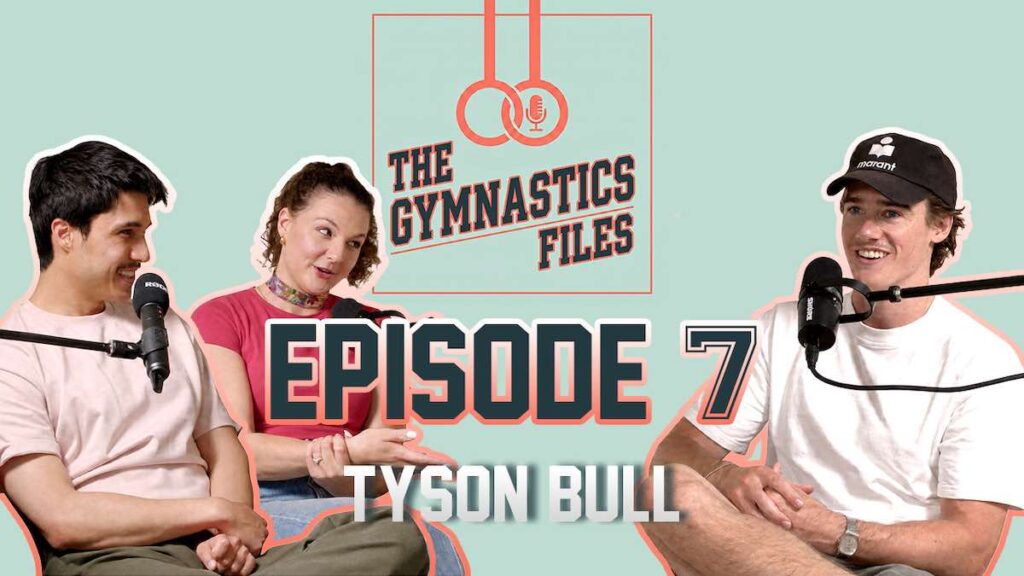
Olympian Tyson Bull nearly didn’t get the chance to write the story we all know him for. In this episode, Tyson joins us to unpack the twists behind becoming one of Australia’s most successful men’s artistic gymnasts, from injury-heavy early senior years to the decision that changed everything: pursuing NCAA college gymnastics in the United States.
We talk through how college recruiting actually works for international gymnasts, why weekly NCAA meets build a different kind of competitive toughness, and what “hit percentage” and judged training can do for consistency under pressure. Tyson also shares a mindset we wish more athletes heard sooner: the Olympics can inspire you without becoming the only measure of whether your career mattered.
Then we rewind to the 2019 World Championships in Stuttgart, where Tyson Bull makes a bold difficulty choice on high bar that helps launch his Olympic qualification, only for COVID to delay the Games and stretch the mental challenge even further. He gets honest about Tokyo with empty stands, missing family in the arena, the emotional crash after an Olympic final, and what it takes to reset your identity when the goalposts keep moving.
We also dig into funding in elite gymnastics, the hidden cost to families, the role of social media for athletes, and Tyson’s next chapter as a physiotherapist working in education around sleep health and chronic pain. If you care about Olympic sport, athlete mindset, NCAA gymnastics, high bar performance, or life after competition, this conversation goes deep. Subscribe, share this episode with a teammate, and leave a review with the moment that hit you hardest.
Watch the video below
Key Topics
About the guest

Tyson Bull
Tyson Bull is a retired Australian artistic gymnast and Olympian, born in Wantirna, Victoria, in 1993. A horizontal bar specialist, he competed for the University of Illinois before becoming Australia’s only male artistic gymnast at the Tokyo Olympics, where his fifth-place finish on the horizontal bar made him the first Australian man to reach an Olympic apparatus final. He went on to win horizontal bar silver at the 2022 Commonwealth Games despite an ankle injury, and retired in 2025.
Transcript (click to expand):
Read the full transcript
Emma Nedov: Hey everyone, welcome to another episode of The Gymnastics Files. Today we are very excited to have none other than Tyson Bull here with us, who happens to be one of Australia’s most decorated male gymnasts, which is incredible, because I just know you as Tyson. When I was doing my research and I looked that up, I was like, oh my God, that’s awesome.
Tyson Bull: Yeah, it feels weird to hear that, I suppose. I don’t necessarily think of myself in that line.
Emma Nedov: Well, I think you should, because I think it’s very impressive. So thanks so much for coming in and having a chat with us today.
Arman Liew: Yeah, thanks for having us. And I think we’ll refer to you from now on as that: the most decorated male Australian gymnast.
Emma Nedov: Very warranted.
Arman Liew: You’re obviously no stranger to gymnastics, in Australia and in the world. You’ve had a very successful, long career, which is very, very impressive, and obviously a testament to your talent. You’ve experienced so much, so I feel like we have so much to go on, and it’s a matter of where to start.
So I think maybe we bring it back to basics and start with your senior career. When did that all happen? What year was it? Because when I did my research, it was coming up that you’ve got a brother who was a gymnast as well, and I think ChatGPT is getting confused. Tyson Bull and, is it Jaden? Yeah. It’s like, who are you referring to? And I’m like, the one that went to the Olympics.
Tyson Bull: Gonna have to be more specific. So for us, around 18, 19, moving into seniors. I think I was always a gymnast that had a lot of potential and maybe a lot of talent. I could pick up skills quite easily, and as an 18, 19-year-old, I was just throwing all of those at a wall and seeing what would stick. So I might not have been a consistent, refined gymnast at that time, more just trying to put out big skills. And for Australia around that 2011, 2012 time, our difficulty wasn’t good enough to really be on a competitive level with international gymnasts, so there was this massive push for skills. That was great for me, because I just loved throwing big skills. But it was a bit of a detriment. I was really injured from about 18 to 20. I didn’t have a lot of muscle to rely on, as just a skinny, talented gymnast. It was around that time, when I was injured and not really competing at nationals or anything like that, that I started to look into college gymnastics.
So being injured around that time was almost a blessing in disguise. Around 19, 20, I think I’d withdrawn from one or two nationals in a row, just with some chronic, niggling injuries. At the time we had two American coaches at my gym down in Melbourne. They were both ex-college gymnasts themselves, so I was coming into the gym every day and just picking their brains on college gymnastics. I’m like, this sounds like the coolest thing ever. What do you mean you get to study, be supported, compete with 20 other seniors, travel around America? Why have no other Aussies done this? This is my dream. So I started to put some feelers out about what ways I would go about doing this. I think that was the big transition for me: taking those few down years where I was a bit injured and looking at what the future could look like, to extend my career and jump into some really exciting opportunities.
Arman Liew: That’s so interesting to see it like that. If we go back to when you were researching this whole process, did you have to reach out to universities yourself, or do they advertise somewhere, all the different unis saying, “We’re looking for gymnasts around the world”?
Tyson Bull: Typically, in the college system, the coaches themselves are almost like scouts in their own right. If you think about basketballers, they might be scouting guys through high school, going to the games. Same with gymnastics competitions. The coaches are all very well versed in the junior competitions and who they want to recruit. Obviously, America has a gigantic talent pool to choose from, so they’re not necessarily always reaching out internationally.
So, speaking to the coaches in Melbourne, they were like, “Look, I think the best thing for you to do is put together a reel of all your skills, competitions, results, that sort of thing.” And through them, I was able to get the emails of a bunch of head coaches of different programs. It was purely a case of putting together this video. I was filming for six months or something like that, at a few different competitions. I put some Eminem on in the background, thought I was pretty cool. Americans would appreciate that. It’s all about the track that goes with the gymnastics, I think.
I sent that around to a bunch of college coaches, and fortunately I heard back from Justin Spring at Illinois, who’s a former Olympic medalist for the US. He was always an idol of mine. He’s a really amazing high bar worker, one of the guys doing all the big releases and the big dismounts. So hearing back from him was crazy. I think I was at a pool party on a Saturday or something, and I get a call from an international number. I pick up the phone and it’s, “Oh, hey Tyson, how you going?” And I was like, one of my idols just called me on the phone. It was a super surreal moment of all this coming together.
We had a great chat. We think alike in a lot of ways. We were both talented, a bit lanky gymnasts. He was definitely a better all-arounder than me, but we just thought alike and had a lot in common, and they had a spot open up for an all-arounder to come onto their team. Straight away I was like, yep, this is where I want to go. I had an offer from Penn State as well, but I was just so taken with Justin Spring. And immediately, all the guys on the team reached out and messaged me as well. It’s like they’re recruiting you too, in a sense. I just got this family vibe from the team, and straight away I was like, yeah, I really want to go to Illinois. So that was how that came about. Such a surreal, cool experience.
Arman Liew: It’s funny how it works out. At a time that’s probably not the best, when you’re injured and not competing as much, an opportunity comes up, and it’s a whole different world in America. You’re competing. Is it weekly or fortnightly?
Tyson Bull: Weekly. The season will usually be January to April, and you’ll be doing a meet every weekend, home or away competitions, maybe 10 to 12 competitions. The final two are your conference championships, so for us, Big Ten Championships, and then NCAAs, which is like the nationals for the collegiate system. It’s a competition season unlike anything we’re exposed to in Australia. There’s not really any system here where we might get a few back-to-back club competitions in the lead-up to internationals, but not at that standard, not at that level, and not with the excitement that college is able to give you. So managing yourself through 12 weeks of back-to-back competitions, and keeping up your hit percentages, is a massive part of being a good college gymnast.
Arman Liew: When you say hit percentages, do you mean every time you hit a routine?
Tyson Bull: Yeah. Preparing for a competition season in college, what Illinois would do, and what most college programs do, is once you get into preseason, pretty much every time you salute, your routine is being judged by one of the three coaches, and they’re all qualified judges. All of those scores get tallied and logged in Excel, essentially, and what it spits out is the lineups for every week. The coaches have access to your hit percentage, your score average, your mean score, all that sort of thing. It’s not a hard and fast system that spits out a team, though. They obviously have their discretion: “Oh, actually, this guy’s a bit more in form,” or “His score’s not quite realistic for where he is right now,” or “We want to give someone an opportunity.” But basically, every time you salute in your gym, you’re saluting to earn your lineup spot every week.
Arman Liew: Wow. And would you know before the competition what you’re competing, or would you turn up and they’d say, “Oh, you’re not competing today,” or “You’re actually doing parallel bars”?
Tyson Bull: It might be a Saturday competition and you might get the lineup on the Friday. Some guys might still be putting in routines on the Friday before competition, and they go into the system and change the averages. Then the coaching team will present the lineups: “Hey guys, this is what we’re going with,” and pass the sheet around. You’re welcome to have a chat with the coaches if you feel a bit hard done by, but typically it’s hard to argue with statistics when they’re so concrete. At the same time, like every sport, you have guys that are gamers. They show up for competitions, they handle the pressure, they’re not going to shrink under the lights. And you have guys that are the opposite, so that’s a big thing coaches have to take into consideration as well.
Emma Nedov: It’s so much intentional practice and preparation. So we’ve spoken about college, but I think what’s worth noting is that before you went and quite literally made history in men’s gymnastics at the 2021 Olympics, this is when you experienced college. If we take it right back to the start, where you spoke about Justin Spring being a bit of an idol for you: when you started gymnastics, was your goal to go to the Olympic Games, and then along that pathway, managing your injuries, you fell into college? Did that Olympic dream go away, or was it never really there?
Tyson Bull: Honestly, I was certainly really inspired to chase the Olympics when the 2000 Olympics were on. I think I was seven. I was on holiday in Queensland at the time, getting up in the morning to watch the trampoline and watching Ji Wallace win his medal, and that’s when it clicked a little bit: oh my God, this is amazing, I want to do that too.
But moving on from that and through the junior ranks, the Olympics was this amazing thing in the far distance. More than anything, I just had a love for doing gymnastics. I wasn’t going to the gym every day with the goal that the Olympics is the thing. It was more like, I want to make a national team, I just want to get the uniform and wear the green and gold, and all those little special moments in between. It never felt like a make-or-break achievement for me. It was all the little things, like going on trips with teams, or hearing from the senior guys in the gym how amazing their trip was, and the little stories they’d have coming back from competitions.
Then when I was 18, 19, the college opportunity came up, and same thing, I threw myself into college with every intention of still competing for the national team. If the cards aligned for an Olympic qualification, then obviously I’d throw myself into that like I would any other national team spot. But it still wasn’t the main focus of my senior career, I would say.
Arman Liew: That’s really healthy, actually. I was thinking that, because you hear about so many athletes, not just in gymnastics, who don’t make a team. Making an Olympic team in any sport is so difficult, and you hear interviews with them afterwards and they’re like, “I’m not 100% satisfied with my career because I didn’t make the Olympics.” I think your mindset is such a refreshing and rare one to have.
You mentioned how you kept nationals and the Australian team in the back of your mind. How does that work? Does a college let you come back for nationals, or trial for other competitions like Comm Games or World Championships, or are there rules around that?
Tyson Bull: They’re more than happy to be as flexible as possible with national team commitments. The only competitions they really won’t budge on are the two major ones at the end, the conference championships and NCAAs. Largely, those fall in a good part of the year. In April there’s usually not a World Championships, Comm Games, or Olympics, which is good. But the Gold Coast Commonwealth Games was a lot earlier in the year, so that was one I couldn’t qualify for or compete in because of those commitments. I wasn’t necessarily a shoo-in to make that team, but I think I probably had a good shot.
If it was a choice between four years in college and the Comm Games on the Gold Coast, it’s not even a question which one I’d choose. Putting aside how special and amazing the Gold Coast Comm Games looked, and it looked incredible, and I obviously would have loved to compete there, I was quite content doing my thing in college at the time and competing for the national team in whatever other capacity I could.
Emma Nedov: Well, it’s very clear that you chose well. Whether you see it or not, your ability to go to college, then make it to the Olympics afterwards, and juggle that with still being an Australian national team member has opened up so many doorways for other Australian gymnasts, both women and men, to pursue that college pathway. Because at least my understanding from WAG was that if you go to college, it means you’re finished with Australia. So that’s a really incredible experience that you’ve had and been able to share.
I want to touch on all-around, because you’ve obviously achieved horizontal bar success at the Olympic Games, and a lot of people might know you primarily as an apparatus specialist. But when I was reading through your career, you won rings at the Youth Olympics or something in 2011. So you did all-around until then?
Tyson Bull: Yeah, I think it was the Youth Commonwealth Games, actually.
Emma Nedov: That was one of our first competitions together. There is a photo.
Tyson Bull: That was quite an experience. Where was that again?
Emma Nedov: Isle of Man.
Tyson Bull: Isle of Man, Youth Commonwealth Games. I think Emma will know this quite well. Small segue, but we had to catch a ferry from Liverpool, UK, over to the Isle of Man. A quite big ferry, maybe a three-hour boat ride. The whole Australian team stayed in Liverpool the night before getting on the ferry. We get on in the morning, and the swell is quite large, but the ferry is still going ahead, so the Australian team jumps on the boat. Maybe half an hour, an hour into the ride, almost 80% of the Australian team is throwing up off the back of the boat. There’s throw-up running out of the bathrooms, down the hallways. Almost 80% of the boat was seasick, and the whole Australian gymnastics team is just chilling, playing cards, while everyone else is throwing up or completely boat sick. It was just so crazy.
Emma Nedov: I just remember I think it was only Declan Stacey…
Tyson Bull: Yeah, maybe one of us was vomiting.
Emma Nedov: The rest of us were doing handstands.
Tyson Bull: I don’t think it was something in the Australian water that kept you guys fine. I think it’s just the nature of what we do. We don’t get motion sickness or boat sickness quite as easily. Anyway, it’s just a funny little story from that competition.
To get back to your question, I did all-around until I was maybe 24 or something like that. It was usually an all-around battle between myself and Mitch Morgans at nationals.
Arman Liew: Mitch Morgans did all-around too? You would not think it. It’s great that you’re bringing it up.
Emma Nedov: I think at the moment, you guys have all moved towards being apparatus specialists. But at that time, maybe with social media and stuff, people only thought of men’s artistic gymnastics as apparatus specialists.
Arman Liew: That’s actually a really good point. You see guys just posting that they only do bars.
Emma Nedov: But it is so hard to do all-around, so that’s why I acknowledge it. It’s like, no, you did that till you were 24.
Tyson Bull: Even training for competitions in Melbourne, a lot of the junior guys didn’t know that I did all-around as well. So it was like, no, I actually can still do rings. I think I maybe had four all-around national titles. But I was an okay all-around gymnast. I struggled very heavily on floor, rings, and vault, typically. Bad ankles, and long arms are not amazing for rings.
Arman Liew: But you were still good at rings.
Tyson Bull: I could swing, so I was hopeful enough.
Emma Nedov: With the current cohort, we obviously have a lot more all-arounders in both of our teams, which is something a little bit newer. If I think about the teams I was on and maybe the teams you were on, we had such a World Cup focus, which was apparatus specialists, which is where you then went. Did you only do high bar from then?
Tyson Bull: I was doing three events, pommel, P-bars, and high bar, mainly from when I was 24 until about 30, and then maybe my last year was the only year I was only doing high bar. I dropped P-bars a little bit because of some injuries, shoulders and that sort of thing.
I was recruited to college as an all-arounder, then decided to specialise more in college, where they have a lot of guys brought onto the team purely to specialise. America has amazing specialists in every event, and they can’t all fit on their Worlds team, so you don’t necessarily get to see the full scope of what some of their specialists can do on the world stage. More recently, you would have seen Stephen Nedoroscik at the Olympics, which was rare for the Americans to do.
Arman Liew: A specialist, yeah.
Tyson Bull: I thought it was a bold move by the team selectors, but it paid off, so really good on him, and good on the selectors, I suppose. I think you’ll see that a bit more often going forward. The Aussie team might typically have used Prashanth in that kind of role, maybe just pommel and rings, because Australia was typically so bad at pommel, and we had Prashanth scoring a 15 or something like that to help bolster those lowly all-around pommel scores.
But I think the specialist approach was really that block when me and you were competing together, Em, around 2017 to 2022, 2023. Australia and the selectors realised, look, right now we just don’t have the all-around talent to push really good team results and qualify to a Games by making the top 12. Typically, you’d want at least two very high-level all-arounders and then some specialists placed around them. Right now we obviously have Jesse, who’s world standard and an Olympic finalist in the all-around, and if we can flank him with another all-arounder of a similar level, that’s probably the best chance we have of making an Olympic team. But in that 2017 to 2022 block, it really became about individual qualifications to the Olympics. Can we qualify three athletes to the Games purely by qualifying them individually?
Arman Liew: Sorry to interrupt, but is the limit only three?
Tyson Bull: I think it might have changed, but at the time, if you were qualifying individual athletes, it was a max of three, I thought.
Arman Liew: So you couldn’t technically have six specialists, one on every apparatus?
Tyson Bull: It was a bit unclear, a smaller rule, because no one does that, I suppose. But a country would 100% be capable of qualifying six specialists. Turkey, for example, qualified three individuals from the 2019 Worlds.
Arman Liew: It’s fascinating how it works out, and it’s interesting to get your take on that period, because I was always curious, and I know a lot of other people were curious: why is Australia going with this method? And you’ve just highlighted it for us. Why try to qualify a team when it isn’t really an option, when we’ve got options with individual athletes?
Tyson Bull: Exactly. The 2019 Worlds team was purely selected for qualifying individually. We still had a minimum of three guys on every event, so we did put a score together for the team event, but we didn’t have any backups, essentially. We had amazing potential to qualify a few people. Gabby Swan on floor was one landing away from qualifying to the Games on floor. He was probably about to qualify fourth or fifth with the routine he was putting together. An insane floor routine: triple double, a 0.1 step, double double. An insane Australian floor worker who maybe never got his flowers for being so talented and so good. James on vault was putting together two world-class vaults, me on high bar and P-bars, and then Clay and the guys in the all-around. We had some amazing specialists at the time, and it was a very real opportunity for us to qualify more than one person.
Emma Nedov: So take us back to the 2019 World Championships in Stuttgart. With your background of being so intentional with your preparation in college, did you go into those World Championships understanding what your role was and how you were individually going to make it to the Tokyo Olympics?
Tyson Bull: I finished college in 2018, so from there it was a decision about the next steps. Either move back to Australia, and if so, where do I train and compete, or stay in the US and maybe keep training at Illinois. Those were the decisions I was weighing up at the time. A few of the Aussie guys were still based at the AIS in Canberra, so it became a fairly easy decision to train around like-minded individuals, train with Vlad, my coach at the time, who was an amazing, highly respected coach, and have the support of the AIS: the sports med department, amazing facilities, and all the team and resources they can support you with.
At that point, it became about the Olympics. That was the decision where I was like, no, okay, now we’re going to buckle down. I realised this is something I really want now, and I’m going to throw everything into it. I was reflecting with my coach at the time that at every World Championships from 2017 onwards, my placing on high bar was increasing. I think I was 25th at my first Worlds and 11th at my second, and I just felt my trajectory was top eight. I knew that in my bones.
So I moved to the AIS and trained there for nine months leading into Stuttgart, and I felt I had the difficulty and the skill level to do what we set out to achieve. I felt really confident that my ability was of a world standard at that time, and that’s something I think maybe Australians struggle to find: the belief that they’re worthy of being in that top echelon. Em, you might have had the same kind of thinking about yourself on beam, and then you win a World Cup gold and it changes your mindset a little bit. I had a few competitions like that where I started to believe and know that I belonged in that group. Having that belief went a long way towards competing with the level of confidence it took to put out a qualifying performance.
Arman Liew: There were a lot of media reports at the time about a strategy. I don’t know if it was a strategy you took, but you changed your routine. You made the event final for high bar, but you did a more difficult routine. Was it in finals?
Tyson Bull: No, I actually threw my most difficult routine in qualification, so it was high risk, high reward. It was no holds barred: I’m not playing safe here, we’ll see where we go. I did feel quite confident in the routine, but it had a certain part that could be quite tricky to nail in a competition, with back-to-back releases. Finals was meant to be the same routine, and it had the difficulty to compete with the top guys if I nailed it similar to qualification or slightly better. But I put a release a little bit close, and it just wasn’t quite on in the final.
I could put that down to a bunch of things. My first World Championships final. It was a surreal feeling. The goal of that whole competition was to make the top eight and qualify for the Games, and having that massive high of, oh my God, I’ve just done this, and then barely sleeping for two days, it was the biggest high I’ve ever had, I think. Then coming back down to prepare for a high bar final a week or so later. So inexperience, a little bit of nerves, a little bit of everything. It was a really hard one to focus back in on and have that same belief that, actually, no, I’m not just a top-eight guy, I’m a top-three guy, 100%.
Arman Liew: The numbers speak for themselves. You had the difficulty, and to make the final in itself is such a huge achievement. Did making that final guarantee your spot at the Olympics? Is that how it worked?
Tyson Bull: At the time, it would take the top two or three guys in the top eight who weren’t already qualified via a team. Of all the guys who made the high bar final, only two of us hadn’t qualified, so we were automatically through. That took the pressure off, which was nice. But I know there were a few other events in the competition where it wasn’t settled already. I think maybe in the rings or the pommel final, there were five or six guys who weren’t on teams that had qualified, so they were battling it out in the final, which is probably a cool thing the audience should have been made aware of.
Emma Nedov: I was going to say, that’s so exciting to watch. Not as exciting to be an athlete on the inside, we can all speak from experience. But what you touched on is that when the goal is to go to the Olympics, or to achieve success in whatever you’re doing, there are two pathways. You have to qualify first, and then you have to be able to handle yourself once you’ve qualified. Because qualification sometimes feels like the most difficult part, and then once you’ve got it, it’s like, oh, actually, my job is far from finished.
And then the Olympics was supposed to be the following year, and it ended up being two years. How on earth? I fully checked out once I knew the pathway to qualify was just going to be too hard. I was like, I’m out. Absolute kudos to you for sticking it out for the next two years and then actually going to the Olympics and doing such an incredible job. How did you train? How did you mentally prepare for 2021, when it was supposed to be 2020?
Tyson Bull: It was such an odd time, as you’ll know. I think you and I were at a World Cup in early 2020. We’d just had qualification, and that night everyone was running around the hallways: what’s going on? The competition’s been cancelled, get on the first flight home before the quarantine sets in. No one knew what was going on. So the competition was cancelled and we got flown back to Australia, and Mitch Morgans and I were put into quarantine at this camping ground in Canberra outside the AIS.
Emma Nedov: Horrible.
Tyson Bull: Did you have to quarantine?
Emma Nedov: Gosh, no. I was in Sydney.
Tyson Bull: I see. You were patient zero. So we were in this holiday camp park in Canberra, in April, of all places, coming back from Azerbaijan, I think. It was such a strange two weeks, but it was actually a lot of fun for us, because we were just playing tennis, playing basketball, hanging out.
Then the reality started to set in that the Olympics was actually in jeopardy. We didn’t know if it was going to go ahead, and that whole period of not knowing was really tough. Having already achieved this amazing result in Stuttgart, it might just go by the wayside. And that was probably my chance. I didn’t necessarily think I had another Olympic qualification in me. So there were a lot of emotions running through my head: I’ve qualified for the Olympics, and it’s not going to go ahead. What a shit show, essentially.
But you just had to put that on the back burner. There was a period of maybe three or four months, in the heat of COVID when everything was locked down, where our coach was taking us to the park, and we were just working out in the park. It was so strange, but it was fun in its own way, being out of the gym and seeing what we could do, staying fit and ready in case something changed.
We were fortunate that the AIS was able to bring in some protocols and allow people back into the gym, which was a great first step. We still didn’t know what was going on with the Games for quite some time, but that period just became about experimenting. Okay, we’ve got this opportunity now, what are we going to do with it? Last World Championships, great, we made a final and came seventh, but what are we going to do to crack the top three? We’ve got this extra time now, hypothetically, if it goes ahead. It became a period of trying to up my difficulty and doing everything I could to take another step, and treating it as an opportunity rather than, “Oh, I have to train for another year.”
Arman Liew: Do you remember when they announced the postponement of the Olympics? I think it was quite early on. How long was it until they said it was going ahead again, but at a new time?
Tyson Bull: I reckon it was maybe seven or eight months. I don’t think we found out until maybe October 2020 or something like that. There were all these whispers, and the media obviously jumping on that: “Oh no, it’s not going ahead, there’s no hope,” blah, blah, blah.
Arman Liew: So horrible. I feel like the day after everyone went into lockdown, they were telling everyone, “Oh, we found a vaccine.” So take everything they said with a grain of salt.
Tyson Bull: I was tuning out of any Olympics talk as much as I could. And the head of the Australian delegation was always steadfast in his belief that it would go ahead, so we had that in the back of our heads anyway. It gave us an idea that we weren’t pushing everything in vain. But at the same time, that year of just training, where I was able to have so much fun exploring what my ceiling could be and trying things I hadn’t tried before, is a really fond time I look back on now. It’s maybe when I had some of the most fun in gymnastics.
Emma Nedov: That is cool. Your ability to be so narrowly focused and to just enjoy what you’re doing and enjoy gymnastics is so admirable. I don’t feel like I’ve heard you talk about it that way before.
Tyson Bull: I can be very serious around the competition floor, but I genuinely wouldn’t have done it until I was 30, 31 if I didn’t enjoy it. There are certainly low periods and highs, but for the most part, I just loved what I was doing. That extra year was just another year to explore it in a different way. I think it’s so easy to get locked into your routine and doing the one thing, and having those small windows where you can break out of “I’m a one-track gymnast” or “I only do these kinds of skills,” and ask, “Why can’t I do these?” There are so many different ways you can go in gymnastics, which is the beauty of it, I think.
Arman Liew: That’s so impressive. Before Tokyo, were you still planning to go to the Olympics just on high bar, or did you have the option to do everything if you wanted because you’d qualified?
Tyson Bull: At the time, for Tokyo, even having just qualified on high bar, I could have done all-around if I wanted to, I think. I think they’ve changed that now, so if you qualify on a certain event, you only have the option to do that event.
Emma Nedov: Very smart not doing all-around.
Tyson Bull: I should have run down and done a handspring on vault, just for the photo. Or jumped up on rings, had the cameraman get the fast speed, go through a bad cross, and get them to pause it. That definitely crossed my mind. Men’s competition in Tokyo started on high bar as well, so I had the opportunity. I should have just run wild with it.
Emma Nedov: You should have. I’m interested to hear how the Games felt for you, because there was no one watching.
Arman Liew: That’s what I was going to ask. What was the athlete village and the experience like? Japanese people in general are the most polite people, and I know they had cameramen and support staff there who would probably have gone out of their way to clap for every single thing. How was that experience?
Tyson Bull: The COVID Olympics. I think going into the Olympics without expectations of what you’re going to get from these amazing, beautiful stadiums they’d put up, having empty seats around is probably not the most unfamiliar thing for a gymnast to see. Some empty chairs occasionally. So maybe it just felt right at home.
Emma Nedov: You’re right, it’s very weird to have people in the stands.
Tyson Bull: But the Australian team does such an amazing job of bringing Australian pride to the building, as you would know. Everything’s decked out in green and gold. There are so many aspects around the building that create that Aussie culture and that love of, oh my God, we get to do this, we get to have this opportunity and do what we love. And who cares if no one’s in the crowd watching? It was never about that. This is the pinnacle. We’ve worked so hard to get to the mountaintop, and now we just want to show it off.
So it didn’t necessarily bother me that there was no crowd. It would have been nice, sure. But the biggest thing was probably not having family and friends there. For me and every gymnast, family is the pillar that gets us to that point. It’s almost an achievement for them to be able to sit in the crowd and watch, because they played such a huge part. Having that taken away was harder than the crowd, I would say. I wanted it for them more than I wanted them to sit there and watch me.
Competing in that environment, there were some support staff in the crowd, but regardless, you’re in your zone doing your thing, and you’re blocking that out anyway. It would have been nice, after landing a great performance, to be pumped up by the crowd and have that support. That would have been a fairly surreal feeling for sure. What was it like for you?
Emma Nedov: You talking about family, that’s the biggest thing I thought of for you guys, not having them there. Because getting to have Mum and Dad and Jules there, and Julian made a surprise appearance in front of everyone, that was the most special part. As you said, and I fully agree, you do it so your family can be along for the ride for something epic, and they get to shout it from the stands, because they’ve been on every single part of the journey with you. So I can imagine that would be hard. But I’d be so interested to see what the viewing numbers were, because everyone was locked in, so hopefully everyone was tuned in as well.
Tyson Bull: I don’t know who told me, but I think it was maybe one of the most viewed Olympics from a viewership standpoint, especially for Australians, because the time zone was so good. So family and friends were able to have some secret watch parties. Let’s make sure the Victorian government’s not listening to this.
Emma Nedov: They should have done a Gogglebox situation with your family.
Tyson Bull: I saw the footage afterwards of all the watch parties, which was so cool to see. Everyone had Bull shirts made up.
Emma Nedov: I was in the Bull shirt.
Tyson Bull: Exactly. And the small bakery up the road from where I grew up had Tyson Bull baked goods and all that sort of thing. So you certainly felt the support more than you saw it in the crowd. We knew everyone was tuning in, and the overwhelming number of messages you get afterwards is insane as well. But I think the biggest thing for the Olympics was just being there, soaking up the atmosphere, and celebrating how hard it was to get there.
Arman Liew: Of course. And you had an insanely successful competition, the most successful Australian male artistic gymnast. You literally made history.
Tyson Bull: Making the final was crazy. I think everyone treats an Olympic qualification day differently. For me, waking up that morning, I had massive butterflies. I’ve never felt so nervous during the day before a competition. I went downstairs, went about my normal routine, stretching, visualisation, all that sort of thing, with this big weight in the middle of my stomach the whole day. But then I got to the gym and started warming up, and I’ve never felt more locked in in my whole life. That weight was gone, and everything I was doing felt like a bit of a flow state. It all came together at the right time: preparation, confidence, body feeling ready to go. Some of those skills we were able to work on during the COVID window made their way into the routine, the difficulty got harder, and hitting a PB on the Olympic stage is something I’ll never forget.
I was watching Jesse in Paris, and watching Em in Paris, and seeing those guys go through all that just brought back so many memories. I’m obviously so proud of them.
Arman Liew: You set the pathway, though. It’s not a forgotten achievement. If you ask all the younger guys now, Ritam and James Hardy, all of them, you set a standard for them to try to achieve, a proof that it’s possible. To touch on something you spoke about earlier, you making a final has given that belief, even at World Championship level. A lot of the media, when they do their predictions, say the Australian men’s team will be somewhere between 15th and 25th or whatever. It’s never talked about finals, either team or individually. So having proven that, when Kate McDonald made a final last year at World Championships, it wasn’t like, “Oh wow, this is a unicorn.” It’s something a lot of Australian gymnasts should achieve, because it is achievable.
Tyson Bull: Absolutely. Growing up, for me, it was seeing Philippe Rizzo do his thing and win World Championships gold, and Prashanth with multiple World Championship finals. I think he had a medal as well. In between those guys, there was maybe a bit of a gap where it was more team-focused. The guys were trying as hard as they could to qualify the team and didn’t quite, and the individual success maybe wasn’t as strong as it had been in the past.
Like I said, when I was first making finals, it was about having the belief that you deserve to be there, and the belief that an Aussie deserves to be there as well. I think Australia maybe lost that a little bit, with a bit of tall poppy syndrome and that sort of thing. So it’s really nice to hear that Aussies do deserve to be on that world stage, and you’re seeing it with Jesse. I think he just qualified to a high bar final overnight. And all the other guys have that belief that they deserve to be in the final and to push for medals.
And going further than that, there’s the judges expecting good gymnastics from Australians and expecting to score them highly. I always felt Australians were a bit hard done by for quite a few years in terms of judging. But I think the standard of our gymnastics now is such that it’s undeniable, so I think the trajectory is going to continue.
Emma Nedov: That’s a good point. Judges are human, so their perspective is going to have an impact on their judging.
Arman Liew: 100%. The statistics don’t lie. There’s a lot of commentary asking why the Australians are getting hit on execution, comparing them to another routine at a very similar level that scores a point and a half higher. It doesn’t make sense.
Tyson Bull: Say there are three times during a routine where it could be this or that, a 0.1 or a 0.3. If you get the benefit of the doubt three times versus zero times, that’s a 0.6 difference or whatever. So with judges expecting a good routine, they see a great routine, and when that moment comes of, is it a 0.1 or a 0.3? Well, we know Australia’s a really good team now, and we know they’re good gymnasts. Maybe it’s a 0.1. That’s my opinion, but it’s many people’s opinion.
Emma Nedov: Quickly touching on post-Olympics. You would have had the COVID lockdown, I assume, because a lot of the Tokyo Olympians talked about experiencing this high of going to the Olympics and then being in two weeks of lockdown or something like that. But what strikes me as even cooler is that you then went to the Commonwealth Games in 2022, the World Championships in 2023, and you were thinking about the 2024 Paris Olympics. How on earth did you bounce back? How did your mindset go from experiencing this awesome high to “I’m going to keep going”? How did you manage that Olympic low that people talk about?
Tyson Bull: Coming back from Tokyo, obviously the final unfortunately didn’t go my way. I had a fall in the final, and I experienced a bit of the low that night.
Emma Nedov: Could you even go to an after party? Was there an after party?
Arman Liew: Did they put a beer outside your door? Japanese beer’s great, though, so at least it was a good place to have it.
Emma Nedov: Post-comps, you wouldn’t need low carb.
Tyson Bull: Coming back from the competition, I got back to my room and had a full-on breakdown. I think the weight of the whole week, the highs of making a final and the lows of falling in a final, all hit me at once. I had a full breakdown for maybe an hour or two, crying uncontrollably. That had never happened to me before.
I think it was going from such a high to such a low in such a short amount of time, and not being able to put perspective around what you’ve just achieved. It’s another moment of the goalposts moving: you didn’t make it. I had visions of, okay, you’ve made the Olympics, that’s amazing. That was all you wanted to do at the time. Then, making a final would be amazing. Yes, let’s make a final. Then it’s, let’s medal in a final. And I wasn’t quite able to put it together, so it all came crashing down pretty hard. I’m sure that’s a super common story among Olympians who didn’t have the result they were after at the Games. I’m sure you can attest to this. Mine just came in the final.
Arman Liew: It’s difficult when you talk about goalposts, because they change, right? Your success changed throughout the competition. You go into it having made the Olympics, you’re there. Make a final, you’re there. And it was the high bar final where a lot of people had issues.
Tyson Bull: It was a high bar final for the books, guys just falling left and right. At the time, the rules were still that you warm up in the back gym with no one-touch warm-up, and compete straight on the competition equipment. Literally every one of the guys doing Kovacs connections fell in the final. Whether that’s because it’s a higher-risk manoeuvre or combination, or just the difference between the bars, it’s hard to say. But without that one-touch and feeling the equipment, it really throws off those moves. At the same time, guys have been able to handle that in the past. Not many, but some.
For us, maybe five guys fell in that final, so it was a bit of a basket case for everyone. That was crazy in itself, because I was something like fifth in the order. I’m one who doesn’t look at scores when I’m competing. So I’m finishing up warming up in the back gym, one or two people have competed, and I’ve got an idea that they didn’t do too well. I’m walking out into the gym, sitting and waiting for my turn, trying to block everything out, but in my peripheral vision I’m seeing guys falling, and I’m feeling like I’m coming out of my flow state a little bit. You start to overthink things and get ahead of yourself.
Arman Liew: That’s human nature, right? When someone falls, and even more so when a big crowd responds to it.
Tyson Bull: It makes sense. I was like, oh my God, am I going to Stephen Bradbury this?
Arman Liew: That would have been a very different outcome. If everyone fell, you could do a cast to handstand and then a layout dismount or something like that.
Tyson Bull: And then coming back to the hotel room and quarantine. I think I was in a Sydney hotel room for two weeks by myself, just trying to process everything. By then I was managing fine. I was keeping myself busy. I was just starting my physio degree, so I threw myself into that a little bit. It was still nice, too. You were getting lots of support from local businesses sending stuff out to Olympians in quarantine. And it was hard to think “boohoo me” when I got to leave Australia, travel, and do something I love while everyone was sitting at home in their radius without that opportunity. Putting things in perspective really helped. There were so many people doing it a lot tougher than I was.
Arman Liew: So after quarantine, when you were released back into society, is that when you decided, “I’m not ready to retire”? How did that come about?
Tyson Bull: I still felt like I had unfinished business. I didn’t feel like I was waning in my abilities, I still really enjoyed it, and my body was feeling okay. When I was putting the pieces together, I thought, okay, if I can manage study and training and juggle my life in this way, then why wouldn’t I keep going and push for another Games, and see if I could qualify for a non-COVID Olympics?
And coming back from Tokyo, where I competed as an individual, I hadn’t done a Commonwealth Games yet, and competing with a team at the Commonwealth Games was something I really wanted to do as well. So that became the next driver. Having that experience with four or five other guys around you really changes the whole experience. That was a big driver, and that was why.
Arman Liew: So good. And the Commonwealth Games athlete village would have been quite different to your Tokyo experience.
Tyson Bull: It was cool in its own way. It was in Birmingham, at Birmingham University, so we were staying in the dorms, essentially. It was a nice setup, with all the different countries staying around a lake at the university, and the Brits did an amazing job of hosting. Everyone you speak to, all the volunteers, are so friendly and lovely. And competing there, the crowds are so loud, so bought in, and so excited. Going from Tokyo to the Commonwealth Games, you definitely notice the difference in the crowd.
Arman Liew: That’s always the nice thing I noticed about the Commonwealth Games versus the Olympics. At the Olympics, crowds can be quite loyal to a certain country, but at the Commonwealth Games, I feel like they cheer every single team.
Tyson Bull: The crowds there are just amazing. They’re just excited to be a part of it all, I think, more than anything.
Emma Nedov: And you guys came second team overall, right?
Tyson Bull: No, you got second.
Emma Nedov: Right, I knew there was a silver. That’s how much MAG knowledge I have. I was getting us confused.
Tyson Bull: That team was selected on the basis of two missions, I suppose. It was a bit of give and take. There was a bit of pressure that we needed a certain number of medals, and we still didn’t have a group of strong all-arounders to build a good team score around. So it was, okay, we’ll lean into our stronger specialists and see if we can still put together a team score. That’s what we did, but it didn’t give us any leeway for falls. So we fell a few spots, when honestly third or second was probably within our reach on a good day. But gymnastics is full of what-ifs, and you can’t rely on what-ifs.
So that’s how the team was selected. And then the competition went in such a strange way. In my lead-in, I completely busted up my ankle maybe four weeks out: bone bruising and a torn ligament. I went from feeling like I was in the best form of my life, hitting all my routines. I don’t think I missed any high bar routines in the lead-up. But I just couldn’t land. It was a question of whether I was even on the team anymore. Because I was such a high chance for a medal for us, they were able to back me in and back that my ankle would be okay in time, which I was very fortunate for.
In qualification, I hit a very nice high bar routine, but it was maybe only my second or third landing with my ankle heavily strapped, and I stumbled out of bounds. So I didn’t make the final. Jesse and Clay did really well on high bar themselves, and both of them qualified to the final. So I was obviously down in the dumps after the competition. One, we’d missed out on a team medal by a very small margin. And two, I’d missed the high bar final because I couldn’t really land.
But it played out in such a strange way. Unfortunately, Jesse had been battling a shoulder injury in the lead-in and throughout the competition. The day after the all-around, he barely had any strength in his arm and shoulder. He had quite a significant labral tear in his shoulder, and it wasn’t one you could just strap up and get on with. He’d actually lost strength in his shoulder. So unfortunately he had to pull out of a few finals. I think he was in the all-around, high bar, and maybe even P-bars. It was super unfortunate for him, because he had every right to medal in his own right on all those events.
So he withdrew from the high bar final, and everyone moved up a spot. Clay was still in the high bar final as well. He’d had quite a strong qualification. He’d qualified to the all-around final, maybe the floor final, and the high bar final. And the standings were such that if Clay were to withdraw from the high bar final, I would be bumped in. Did you know this?
Emma Nedov: I forgot.
Arman Liew: No, please continue. It’s so fascinating.
Tyson Bull: That happened maybe two days after qualification, and it was maybe another day or two to the high bar final. So it was a bit of an elephant in the room. I fully didn’t expect Clay to give up his spot. No one should expect that of him. He’d busted his butt to become quite a good high bar worker and deserved to compete in a Commonwealth Games final. Those opportunities don’t come around lightly. It’s once every four years, and only if you’re good enough do you make a final.
But Clay being Clay, and the guy he is, he made the decision. He knew he shouldn’t feel pressured to pull out of the final, he’d earned it as well, but he just has such a big heart. I guess he knew that, in terms of medals, he was maybe more of an outside chance than me. He came up to me and we had a big conversation. He said, “Hey man, look, I know this has been hanging over us a little bit, but I want to pull out of the final and give you the chance to medal. And I don’t want you to feel any pressure. There’s no pressure on this at all. This is something I’ve thought about long and hard, and I want to do it.”
All credit to Clay. Everyone who meets Clay knows he has such a big heart, and that was purely in line with his character. So he stepped aside, and I was able to do him justice in a way, which felt really good as well.
Emma Nedov: I also have to say, if someone did that for me, I’d be so nervous. I’d be falling off left, right, and centre. And now I recall: he pulled out, and then you pulled out this absolutely brilliant routine and got second place. Were you stressed?
Tyson Bull: I’d put it to the back of my mind as much as I could. Yes, I really wanted to get that result and do his pulling out justice. I would have felt completely horrible to mess that opportunity up. At the same time, the way the discussion went with Clay, and the way he put me at ease about him stepping aside, was the difference-maker in terms of not feeling this heavy weight on my shoulders. I think if that conversation had gone other ways, or he hadn’t been quite as open and honest about that spot, I might have felt it. But I still felt quite free to go out and compete and do my thing, which is credit to him again.
Emma Nedov: Just before, when you spoke about college and being a gamer versus, I don’t even know what the other one is. There’s no doubt, throughout your career, you have a very, very good ability to perform under pressure. I’m sure he would have seen that too.
Tyson Bull: I think he knew I’d been pushing towards this for so long in my training as well. Not that he didn’t have every right to be in that final too. But the only missing ingredient that I just wasn’t able to train leading in was that dismount. Everything else was feeling super consistent. Like I said, I think that was the period when I felt the most confident in my gymnastics I’ve ever felt, even more than at Worlds and the Olympics. That’s another reason I felt the confidence to be out there and compete.
For me, pressure-wise, being a gamer, so to speak, is different for every person, and even different for each apparatus. I would definitely not be a gamer on pommel horse, or on any other event, to be honest. You might feel the same on beam. But on high bar, as soon as I’m up there, it’s just going through technical things. It’s not nerves so much as smaller things you need to think about, and if you knock those out, you’ll be right.
Arman Liew: Something we’ve been talking about with all our guests is funding, and you’ve been part of two different cycles, one that invested quite a bit in funding and one that wasn’t as proactive. How did you support yourself throughout that time? Because as we’ve learned, gymnastics is not a cheap sport, and having to send yourself to competitions, more often than not, there isn’t funding for it.
Tyson Bull: 100%. It’s such a difficult landscape for every Olympic sport, trying to compete internationally as much as you can while juggling life, uni, work, and all that. Like you say, I went through two different systems. When I was coming up as a junior, we did have a bit more funding, so I was able to get most of my competitions funded and paid for, and that was really good.
What I struggle with now is seeing young guys putting a decent amount of financial burden on their parents and then feeling pressured to compete because their parents have just had to pay 7K for them to go to a competition. That’s such a hard place to be as a young athlete, let alone an older athlete.
Being able to go to college took a lot of that financial load off my parents, who were my support network, which was amazing. Not so much for them as for me not feeling like I was putting a burden on them. Then funding certainly tightened up a little after that, in terms of what GA could provide athletes, and it became very results-based. I guess that can make sense in certain ways, but at the same time, you need to invest in your gymnasts to get better results, and then the results get more funding. So which comes first?
I was very fortunate that I did have some results at the time those funding pathways diminished a little, so I was a higher-categorised athlete and was able to get more funding than some other gymnasts. But while being more fortunate in terms of funding, and being supported at the AIS and in college, I was still doing a bit of coaching on the side, or whatever I could in my spare time, to try to earn a little bit. In hindsight, I would have tried to be a bit more proactive on socials. I think we did the best we could, but it’s not something that comes naturally to me. I probably should have forced myself into that line of work a lot more to try and further support myself.
Arman Liew: It’s a hard thing to navigate. In swimming, athletics, or AFL, for example, they get a social media company or whoever to educate everyone on this. If Gymnastics Australia or whichever governing body is struggling to fund sending athletes overseas, where are they going to find funding for career progression and helping athletes use what they have? People just don’t know how to do it. Emma’s a bit of a unicorn in this situation, because she was able to use what she had, see the value in it, and is now seeing the benefits, rather than being a deer in headlights, which is no fault of these gymnasts. You get a social media following because you’re promoted at the Olympics or the Comm Games, but what do you do with it? It’s a bit of a tough dance if you don’t know what to do.
Tyson Bull: For sure. Credit to Em. She’s used her Games as the springboard and just kept that momentum running. It’s honestly so admirable to see the results starting to come to fruition now.
Emma Nedov: I’m putting my face out there more now.
Tyson Bull: I hate it.
Arman Liew: You’ve got a decent following, but it is a struggle to do that. It’s not natural.
Emma Nedov: I also think that for us, Instagram maybe came out when we were 16 or older, maybe 18?
Arman Liew: 2013, 2014, I think.
Emma Nedov: So it wasn’t a natural thing to ever post anything. And we got told off if we posted ourselves falling. I remember there used to be a meme page that one of us started, and we posted someone falling, and we literally got in so much trouble, because it wasn’t allowed back then. So you’re saying you should have posted more, but that was so not ingrained in our brains at all.
Tyson Bull: I feel like I was at the end of that wave of social media, in a way. I got the biggest boost in my following after Tokyo, when I didn’t really know what I was doing social media-wise. I was doing this or that ad hoc, but not really pursuing it as something that could be a career or support me continuing gymnastics.
Emma Nedov: And if we bring it to now, you’re in physiotherapy. You do multiple things, which is why I didn’t say “this is what you do.” But we didn’t really touch on the fact that you just missed out on the Paris Olympics.
Arman Liew: What was the process with that? If we go back to the 2023 Worlds, you talked about it being more individual-focused than team-focused. When the World Championships pathway didn’t work out the way 2019 did, did you then have to do the World Cup route, or Oceania?
Tyson Bull: At the 2023 Worlds, the lead-in was going fairly well and I felt good. I’d hit my routine essentially up until my ninth skill, and then I missed a catch on one of my one-arm release moves. It’s basically just putting your hand on the bar, and I collapsed a little and went a little sideways, and that was just enough to put me out of the final. I finished the routine and stuck the landing, and I was like, oh no. I think I missed out on the final by 0.2 or 0.3 or something like that. So I missed the chance to qualify then and there, and the process becomes way harder qualifying through the World Cups: four World Cups, and the top two guys on points across the four qualify.
In the first of the series, I think I made a mistake and missed the final. I made the next final and did okay, I think, and then just missed out on the third one, and by then I was already out of contention. It was always going to be an uphill battle after missing out at Worlds. I think that was my biggest shot.
By then I was wrapping up. I was at the point where I was enjoying gymnastics, but I didn’t have the same push, drive, and motivation to be at that top level anymore. My body was feeling its age a little by that time, and I just wanted to see what’s next and move on from there more than gymnastics.
Arman Liew: Was there a moment, maybe during Paris, where you thought, “You know what, I’m calling it a day now”? Or did you still train a little into 2025?
Tyson Bull: Going into the qualification process for Paris, I always knew I was going to finish up either after the Games or during the process if I didn’t qualify. So I almost felt like I’d had 12 months to be mentally prepared for when the time came to stop going to the gym. After that last competition, I felt like I’d hit an okay routine, but it wasn’t anything amazing. I did feel like I still had a little more to give, but I didn’t have more seasons of gymnastics to give, so I was willing to hang it up there, so to speak.
Emma Nedov: Do you miss it?
Tyson Bull: Definitely. I’ve had a few chances to swing around since, which has been great. But more than anything, I miss the trips with the guys. The trips with the national team, all the in-between competition moments, talking shit and all that sort of stuff. I think you remember that more than the competitions. I definitely miss the milestone goals every year, having something so concrete to work towards and drive yourself towards. And those dopamine hits of having an amazing training session and walking home feeling on top of the moon. All the little things, I really miss for sure.
Emma Nedov: You can hear it in how you talk about your pursuit of 2024 versus your pursuit of 2020, or 2021. The joy perhaps wasn’t so much there anymore, and life outside of gymnastics started becoming a lot more of a reality. And I think you’ve been able to go out of gym in an awesome way. You’ve got to do circus a couple of times, and that performer is still there in you, which is what I see, and which is why Tyson’s the MC at my wedding.
Arman Liew: The most difficult performance of your career.
Emma Nedov: Loads of pressure. Before we wrap up, what are you currently doing? And do you ever notice anything in your perspective, created and shaped through gymnastics, that helps you with what you do now?
Tyson Bull: Right now, I’m a physio at a general practice a few days a week. My other physio role is more in education. It’s a startup around chronic pain and sleep. We’re helping physiotherapists treat and recognise sleep disorders, and showing how chronic pain can be addressed via sleep as well. It’s a really interesting area that I’ve always been fascinated with, even back in my gymnastics career, working with some of the AIS sports med staff on the work we did investigating sleep and techniques and that sort of thing.
Emma Nedov: Didn’t you guys track your sleep, and Mitchy fell asleep in three minutes?
Tyson Bull: Mitch Morgans. No, it wasn’t three minutes, it was like 20 seconds or something. His head would hit the pillow and he’d be out.
Emma Nedov: That is amazing. What does your research say about that?
Tyson Bull: It could be a few things. He’s either just naturally a very good sleeper, which is completely normal for some people. Or I’d have to ask him whether his fatigue levels day to day were quite high. If he was doing a normal activity, like watching TV at 3 or 4 p.m. or driving, and felt a high level of sleepiness or abnormal fatigue, then he might have a sleep disorder or something like that that we’d look into.
Arman Liew: He’d have to come in for a treatment session.
Emma Nedov: Okay, should we do rapid-fire questions?
Arman Liew: Let’s do it. Actually, I’ve got one. A caller has come in with a question. Do you remember getting sushi with Clay in Montreal in the morning after a few beers? I hope this isn’t an inappropriate question.
Tyson Bull: Oh, that’s so good. Yes, I do. Clay and I had finished up World Championships maybe five days earlier. It was our first World Championships, and we hadn’t made any finals, so there might have been a few nights where we had a few too many refreshments, back-to-back-to-back nights after the competition, as you do in Montreal. I think it was maybe the fourth or fifth day in a row where we were feeling a little bit dusty in the morning, and we decided, oh, maybe we’ll go get sushi before the gymnastics World Championships after party.
Emma Nedov: My God.
Tyson Bull: So we went and got sushi, and oh mate, we walked out feeling completely ill. No good. Fish burps, the worst of it. We felt ill for the whole World Championships celebration and after party, which was just a funny time, because we were just laughing: why the hell did we just have raw fish right now?
Emma Nedov: Clay always likes to talk about being sick. I don’t think you really touched on it: what’s the hardest apparatus for you?
Tyson Bull: The hardest apparatus to compete is definitely pommel for me, and I’m sure for a lot of people. Nerves-wise, I’d always have to do a full-on breathing routine so my arms wouldn’t be shaky when I went up to do pommel.
Arman Liew: A breathing routine. Fascinating.
Tyson Bull: I’d just try to get my heart rate as low as possible before doing pommel.
Emma Nedov: Oh my gosh, I should have done that on beam. I never knew how to. I did three deep breaths, and then I saw this thing one time that said that’s actually a really bad thing to do.
Arman Liew: Elevates it. Whoops. Are you familiar with the current crop of MAG athletes, junior and senior? Is there anyone you reckon Australia and the world should keep an eye on?
Emma Nedov: Let’s go outside of Jesse.
Tyson Bull: Outside of Jesse, the obvious choice. I’m not fully across the juniors at the moment. Of the upcoming seniors, I think Ritam Malik’s got really high potential. He’s still a younger senior, maybe 20 or 21. He’s just gone to Penn State and is doing the college system as well, which I’m super pumped about, for multiple reasons. Just how great an experience he’s going to have, too. His gymnastics has become so much more consistent and more refined, and all of those competing experiences are going to be amazing for him when he steps up for the Worlds team as well. So he could be that really good all-arounder who flanks Jesse for quite a few years to come. I’m excited to see how he goes.
Arman Liew: That’s good, right? To have that sort of competition. All credit to Jesse, he’s great, but instead of going to every competition and thinking, “All right, another all-around title for me.” Ritam seems hungry for it as well.
Tyson Bull: He does. Super motivated. It’s good.
Emma Nedov: College really does something for that tall poppy syndrome. I feel like you come back not afraid of ambition.
Arman Liew: There are lots of things we could keep talking about, but in the interest of this being a successful episode, I think we should cut it before it goes too long.
Emma Nedov: One of the last things: I know that for me, when I stepped away from gymnastics, I had this moment of reflection where I became really proud of my career, despite the fact that there was a lot I didn’t do that I wanted to do. Have you experienced that, or ever reflected on that? Or are you just ticking along and enjoying your life?
Tyson Bull: I think there are fleeting moments where you reflect and really feel that element of pride, for sure. Especially when talking to younger gymnasts, having great conversations with them and seeing their faces light up at some of the stuff you’ve done. That really hits home more than just reflecting on yourself. But like I said, I think being able to recognise those moments when the goalposts moved, and bring them back to the individual moments you should be incredibly proud of, is super important and a great thing to be able to do. So I’ve certainly been able to reflect in my own way and feel proud of some of the stuff I’ve done.
Arman Liew: Well, we’re really, really fortunate to have had you here today. I think this has been a really great chat. I feel like there’s so much more, so I’ll have to pull you away from your MC duties after the wedding. But thank you so much for being here, and thank you, everyone, for listening. We’ll see you next week with another episode.
Tyson Bull: Thanks, guys. Thanks for having me.