How Clay Mason Stephens Keeps Going After Seven Surgeries | Ep. 6
Seven surgeries would end most gymnastics careers. For Australian gymnast Clay Mason Stephens, they’ve become a measure of resilience, identity, and what success really means. In Episode 6 of The Gymnastics Files,…

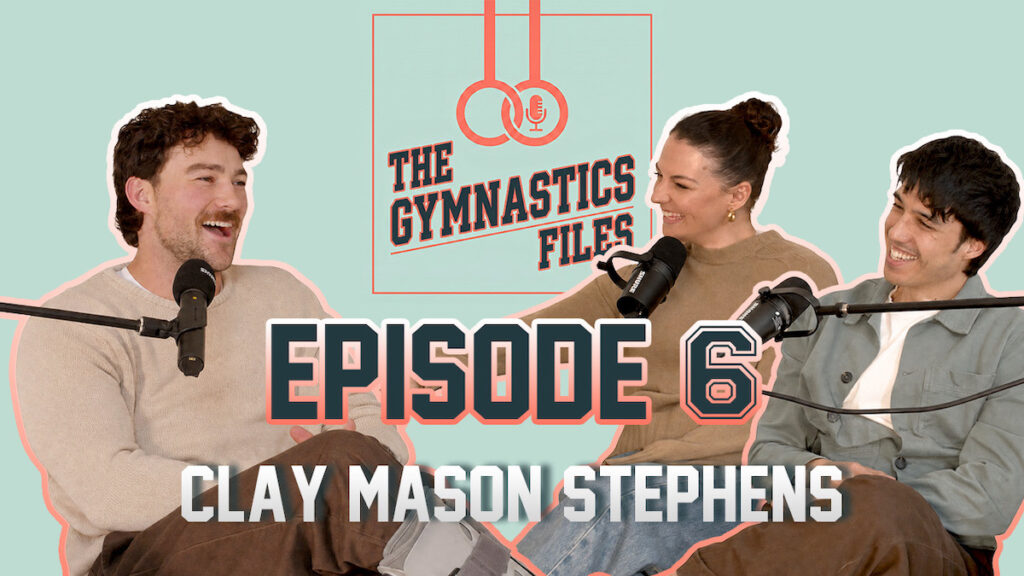
Seven surgeries would end most gymnastics careers. For Australian gymnast Clay Mason Stephens, they’ve become a measure of resilience, identity, and what success really means. In Episode 6 of The Gymnastics Files, Clay joins Emma Nedov and Arman Liew to talk about the Achilles rupture that wiped out a major season right before selection, the six months of rehab still ahead of him, and the mindset that keeps him grounded: the story isn’t only about competing; it’s about who you become on the way back.
Clay’s career has taken him from the 2014 Youth Olympic Games to the 2017 World Championships, NCAA gymnastics at the University of Illinois, and the 2022 Birmingham Commonwealth Games. In Birmingham, he was Australia’s top all-arounder and gave up his high bar final spot so teammate Tyson Bull could compete. He’s also had three ACL reconstructions. In this conversation, he’s candid about the rehab timeline and the emotions athletes rarely share online.
Clay also opens up about growing up with Poland syndrome, a condition that left him missing a large part of his right pectoral muscle. He talks about how it shows up on rings and pommel horse, and why his parents’ approach shaped his confidence more than any physical limitation.
We get practical too: what US college gymnastics does better for development, how tracking base versus stretch routines can lift your scores fast, and how to prepare for competition when you expect something to go wrong. Then we zoom out to Australian gymnastics funding, inconsistent sponsorship, and why working around training in men’s artistic gymnastics isn’t just inconvenient; it can be unsafe.
To round it out, Clay shares his charity work building an earthquake-resilient classroom in Western Nepal, plus an honest “what I eat in a day” at elite training volume.
Watch the video below
ON BEING THE RESERVE FOR THE 2024 OLYMPICS.It sucked. You want to be supportive but you're also disappointed. It's a service position but it's tough.
Key Topics
About the guest
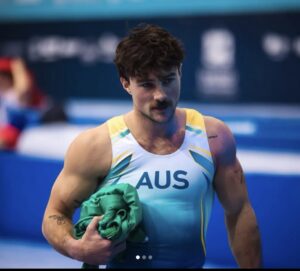
Clay Mason Stephens
Clay Mason Stephens is an Australian men’s artistic gymnast from Adelaide who has represented Australia at five World Championships, from Montreal in 2017 to Jakarta in 2025. Spotted at a talent identification day at age five, he went on to compete at the 2014 Youth Olympic Games in Nanjing, where he finished fourth on vault.
Clay competed in NCAA gymnastics for the University of Illinois, earning Academic All-Big Ten honours while studying kinesiology. At the Birmingham 2022 Commonwealth Games, he was the top Australian in the all-around and made two event finals.
Born with Poland syndrome, Clay is missing a large part of his right pectoral muscle. He has also come back from seven surgeries, including three ACL reconstructions, and is currently rehabbing a ruptured Achilles. Outside the gym, he writes and performs music, and is fundraising to build an earthquake-resilient classroom in Western Nepal.
Transcript (click to expand):
Read the full transcript
Arman Liew: Hey guys, welcome to the gymnastics files. Uh, we’re really excited because today we have a very special guest from ACT via South Australia, Clay Mason Stevens. Clay, welcome to the show. Yeah, thanks a lot for having me. I’m excited. Oh, we’re we’re super excited to delve into everything. And I think the last sort of bit that we’ve seen from you is another injury.
Clay Mason Stephens: Yes. What number are we up to now? Oh, it depends which ones you count. Smaller ones I’ve stopped counting because it’s too many. But uh yeah, well, this one for major injury-wise or surgery-wise, this would be number seven, seventh surgery I’ve had. But the first one on my ankle, so that’s a win.
Emma Nedov: Oh many, how many like my record pales in comparison?
Clay Mason Stephens: That’s not a competition. Yeah, we don’t didn’t want to win that one.
Emma Nedov: You’re just so competitive.
Clay Mason Stephens: You want to win everything you can. I see someone tear their ACL again. I’m thinking, oh, they haven’t beaten me.
Arman Liew: Oh wow. So number number seven in terms of injuries and ACL.
Clay Mason Stephens: This is second time? This is my first time with my Achilles. Okay. Yep. Yep. So I’ve done three ACLs, uh, my MCL, and then I’ve had two minuscule surgeries as well. But uh, but the honestly, the ACLs and the Achilles uh time timeline are pretty similar. So sort of been there, but it never gets easier. It just gets it’s just different. Yeah, each time’s a bit different.
Arman Liew: Wow. So this happened just before before nationals, before we were getting ready for for the world’s team. I think it would have been very, very safe to say you would have been on this world’s team, you know, had had things sort of gone to plan. Um how’s everything going? Like I feel like it’s you’ve had injuries before, but it doesn’t get easier each time, does it?
Clay Mason Stephens: No, no, it’s uh it’s had a rough start of the year with with competitions and stuff. So I was really starting to find my grooves, which was nice nice and really excited for nationals. It was again all the last year I didn’t compete all-round, so I was back into all-round this year, so really pumped to to have a good crack at it at nationals and then hopefully qualify for worlds team. But yeah, just on floor, my my body had different plans. So um, but yeah, like you said, it was difficult, um, especially missing out on com games team and then not being able to trial for worlds. Uh, it’s just been a rough, a rough year. Um, but again, I’ve sort of been through it before, which is nice. Uh in a way, it’s nice because I’ve sort of prepared in in a way, but the other the other side of it is I know what’s coming, which is a lot of hell. It sucks. So it’s it’s sort of also scary knowing what’s coming and how much rehab and how slow and frustrating it can be. So um yeah.
Arman Liew: And like it’s such a testament to like your resilience. You’ve it come back from multiple sort of injuries, but how do you sort of keep motivated? Because as you said, it it’s a long timeline. You know what the it’s even speaking before, you sort of mentioned that it’s six months from today where you’ll be able to start training again.
Clay Mason Stephens: Yeah, it’s uh it’s tricky, and each time has been a little bit different. So my first ACL, I was pretty young, and there was, you know, so my whole career is in front of me. So I was almost like straight away going, right, I’m back in the gym the day after the surgery, I’m I’m getting back and stuff. I’m I’m pumped because my goals at that point I hadn’t achieved much, you know. So everything was still in front of me, so it was still a lot of things to look forward to. The second one, the second ACL was a little bit like, oh God, I have to do that again, which was that was really tricky. Um, but again, there was, you know, Worlds was in, I think at that point the Worlds was about 11 months, 10 months away, which is pushing it, but it it was close enough for it to be doable. What year was this? That was 2019. Yeah, right. Yeah. Um yeah, 2019 I did it. Uh wait, 2018, I think.
Emma Nedov: Yeah, because we were on 2018 together. 2018, yeah, yeah.
Clay Mason Stephens: Sorry, this was the start of 2018, was the second one. Um, or something around there. I honestly loop strack of the day. It’s been doing gymnastics. Yeah, long time. But um, but yeah, so there’s still the motivation of competitions um and really trying to. I always I’ve always felt like I’ve got a certain amount of potential and there’s things I want to achieve. And there’s a lot of the times the motivation is proving to myself that that’s not a delusional thought. I think that’s been pretty strong with me is going, right? I believe I can do this. I want to prove to myself I can do that so I don’t feel like a crazy person. Um, the third ACL was really hard because it was in the middle of COVID as well. So at that point, I was sort of thinking I effectively retired at that point. Um, and we’re just like, this is this is me done. Um, I had a couple extra surgeries that I had to get with the knees. So um, yeah, so I finished finished up there, but then I there’s a I’ve told the story a couple of times, but there was a uh guy that I was training with over in America, his name’s Will, and he’s just such a positive, fun dude to train with. Anyway, I was doing rehab again in the gym because that’s where the physios were. So I was rehabbing in the gym. It’s the best place for me to get fit and healthy, but I wasn’t really thinking about continuing. And I was doing some chin-ups or something, something simple. And he was about to get on the P bars, and he looked at me, he was like, dude, how awesome is gymnastics? Like, this is the coolest thing ever. And I looked at him and I was like, You’re a crazy person. I was like, I’ve never thought about that. Like, gymnastics is for since I was really young, it’s been my job. So it’s I haven’t really, you know, uh reflecting on that comment afterwards, I was like, I want that from this sport, I’ve been a part of it for so long. So almost that was the the kickstart to get me back, going, all right, I don’t the goals are less important to me now. I just want to enjoy the sports of it, it it’s been such a massive part of my life. I’ve done it for so long. So I want to try to enjoy it, and then by enjoying it, I got good again. And I was like, all right, we’ll may as well utilize this and start going to some more competitions and things. So um, but yeah, then now this one again was coming at a critical point was um a pretty big hit. But it’s it’s sort of come to the stage where the way that I have you have to look at it is sort of like all right, this is now it’s a comeback story, it’s about how I perceive the next thing. This story is not about the competition, it’s about who I become in the in the uh lead up to it and sort of pursuing the goals is it’s about who you are aiming to become, not what you’re aiming to achieve, I think. So that’s been a really important thing for me. And knowing that I do have people that look up to me or that that follow my journey, it’s it’s nice, it’s a weird, nice thing to be able to go through these injuries because you can, you know, enact the sort of person that is is resilient enough to get through these things, and hopefully people can sort of emulate that or just show people that it’s it’s it’s okay to get injured, everyone gets injured, but there is a way back, and beyond sport, you can become so much bigger and so much more whole as a person when you go through things like this. Um yeah, one of the things I like to say is that the obstacles aren’t in the way, they’re part of the way. So if you’re not if you’re not getting stopped by something, uh you’re probably not doing something that’s truly hard and meaningful. So um, yeah.
Arman Liew: It’s really such a great way to sort of look at it. Um, and I think I think you’re right, and I think that’s such an underrated sort of point is whether you like it or not, you’ve got you’re influencing so many people. Um, and goes back to when I talked about Jesse, like when I used to do gymnastics, I really wish I had someone to look up to. Back then, you know, no social media. I think Phil Rizzo was the only sort of guy at the time. Um, but you know, with social media now, with everything that’s going on, there’s so many young boys and girls at the gym that are seeing this and not seeing it as like a career-ending thing, which you know, 10, 15, 20 years ago probably was a reality.
Emma Nedov: Yeah. But I also think it’s worth noting, like, you know, you’ve got your injuries and everything. In amongst all of that, you’ve been what representing Australia for a long, long time. You’ve done like five world championships, first reserve for Olympics in 2024, um, Commonwealth Games, how many times? One, two?
Clay Mason Stephens: Just one.
Emma Nedov: One, almost two, one more than me. Um, and so it’s like it’s not all doom and gloom. There’s like these scenarios, but you’ve achieved so much success. So then if you look at what’s your next goal, and I love what you said about the obstacle. I mean, we have similar beliefs. We always have we have way too long of chats, honestly. It’s ridiculous. But um, so in terms of what you’d strive for in gymnastics now, do you have any idea what you want to do? Or are you kind of just like, I just want to make it back and then I’ll make a decision?
Clay Mason Stephens: I want to get fit and healthy. I want my body to be fully functional. I want the ability to be able to continue at a high level. So the first six months is just getting my body right and my mind right. Um, because I also don’t want to pretend like it’s not been difficult either. So I mean, you I can talk about all these different ways that I get through them and they are the positive way to look at it. But also it would be uh remiss of me not to sort of point out that there are times where I’m going, screw this. You know, like I don’t I don’t want to do this. Yeah. And when I say I don’t want to do this, this meaning the rehab and that sort of stuff, but you don’t have a choice. So even if I want to get back to just being a fully functioning adult, I need to do the rehab. So I don’t have a choice here. So you’ve got to do it. If you’re gonna do it, you may as well do it well. Um, but there’s definitely times where I’ve been upset and sad and frustrated and angry and sort of, you know, why me again? You know, you still it’s hard to not look at other athletes and go, well, how they had a clean run the whole time. And again, the truth of the matter is they haven’t. Yeah, you know, it’s just what you see. No one, no one has a clean run. Um, so you know, my injuries have been sort of spectacular in in in a bad way. Um, but everyone struggles with their own stuff and whether whether it be mental stuff or um physical, physical things or that sort of stuff, technical. There’s a lot of different issues that go on within sport and within gymnastics as well. So um, yeah, I just want to make sure that I’m not uh pretending like it’s not been hard. It’s been really hard. So um, which is it’s really important to note because you don’t want people to get injured and think, oh, well, that guy said he just thinks about this, this, this, and this, and he gets it done. It’s like, no, no, that’s that’s what you try to think about, and uh that’s what you aim at, but it’s not always the case. There’s lots of highs, lots of lows, um, and the lows can get real low.
Arman Liew: So and I guess for some of our listeners or that wouldn’t know this, and I only found this out when, again, sort of didn’t did a bit of research, but you’ve grown up with something called Poland syndrome, which affects a certain part of your body, so like the pectorial muscles and things, and you try and fathom that you’ve gone into gymnastics, you’re probably missing a really vital muscle. I I’m not really physiological, but I just I’m just skeptical that sound part, yeah. Like that would be really handy. Yeah, the Lego set came in one less piece. Yeah, like how you you got diagnosed at a at a young age, like you sort of found that out, and then you still continue with gymnastics. And like has that been an impact at all, or you know, can you explain to sort of our listeners what it is?
Clay Mason Stephens: How you do rings? I don’t do rings particularly well to be honest, but um yeah, so I was I was born with Pollen syndrome, which uh to be honest with you, I don’t know exactly what it is, whether it’s a lack of oxygen or blood flow in a certain stage of the pregnancy. Um my parents are both physios and they didn’t really notice it to begin with because I was a chubby little baby, so it’s hard to tell. But as I got a little bit older, I think I was two or three, they noticed something, took me to the doctor, um, and yeah, it was just I’m missing my right pectoral muscle, which can it can be worse. So pollen syndrome ranges any from anywhere from missing half a pec to missing your whole peck to having a shorter arm to missing ribs, having collarbone um and bone sort of it’s mostly upper bodies, yeah. And it’s I think I think it’s predominantly on the right side as well. I think if I’m not correct, but I could be wrong, but it sort of sounds like I don’t know a whole lot about it because I don’t, and that I don’t know it’s honestly the only reason that I’m in gymnastics and doing what I’m doing is because there was never any emphasis put on what was wrong with it or what the problem was. And there were times when I was younger when I got when my parents got told that that’s what I had, I was young, but they were told listen, he he’s gonna be fine, but he won’t be able to do XYZ gymnastics being well, gymnastics, swimming, tennis, like these are some of the things he won’t probably be able to do because of it, but he’ll be fine, you know, there’s no no big problem. But uh sort of credit to my parents is never they just let me do whatever I wanted to do. Yeah, so and that was the cool part. And when when things got difficult in the gym, when I was younger, there’d be times where I might come home and think I can’t like talk to my parents, I can’t do this, I’d be upset, like the other kids can do this, and they’d be like, Well, do you want to keep doing it? I was like, Yeah, and they’re like, Well, and if do you want to do it competitively? Like, it’s it’s all your choice. I said, Yeah. And they said, Well, they’re the people you’re gonna compete against. So there was nothing we can do about it, and nothing you can do about it. You’ve got what you’ve got, they’ve got what they’ve got. So if you want to be competitive with them, that you’re not gonna get a handicap like golf. Like, it’s just it just is what it is. So, um, and I think them not they never brought it up with me. It was only if I brought it up with them, they’re happy to talk about it. But I think that was key for me. It was it it wasn’t a a point of focus until I got a bit older and you know, teenage years, teenage boy. I wanted to be like a big strong boy, but then get a bit nervous about taking my turt top off because I’ve only got one pair, like that sort of stuff. Um and you guys all just walk around the gym all the time with no shirt on. So that would be exactly. There was a period of time where I put my shirt on because I just you know, there was that time where boys well, I don’t know about girls, but boys just get nasty when they’re when they’re 12, 13 years old. Girls are always nasty. Honestly when they’re 12, 13. Um, but yeah, it’s it’s all short-lived. I’ve had an amazing support and all that sort of stuff. And just like I said earlier, honestly, my my opinion is I was born without my peck, which is obvious when I’m not wearing a shirt. But there are other people that are born with other issues, whether they be mental or family issues or that sort of stuff, that they all affect you in different ways. You can’t measure them, there’s no comparison. So this is just my reality, and I’m gonna do what I I’m gonna do what I want to do with it, you know, regardless of what’s what’s going on. And yeah, I’m not a victim. You can’t be a victim. No, you have to step up and step forward. For sure.
Arman Liew: And I guess if we look at the six apparatus, um, I everyone would safely sort of say that you are an all-arounder, but is there an apparatus that you like that’s where it sort of is more evident to yourself that uh it is a bit more tough for you to do?
Clay Mason Stephens: Rings and pommel horse. Pommel was is an interesting one. I’ve always been a bit um we’ll say less talented at Pommel.
Emma Nedov: It’s just a hard apparatus. It’s a different one.
Clay Mason Stephens: Yeah, it’s just it’s ridiculous, really. So is rings. Seeing the guys on rings crazy, but um, yeah, but I not until more recently in the last sort of five, uh maybe a little bit longer than that, but I’ve been talking to coaches and stuff and realizing that pommel was one of the only apparatus where you’re on one hand, you’re never on two hands. So it sort of makes sense that I struggle because when I’m on my right arm, one of the major muscles that keep your shoulder stable and help you push down your peg. So um, so we’ll just say that I would have been a world champion on pommel if I had two pegs. We’ll just leave it at that. No, but uh yeah, so pomel pommel’s been difficult for me, but rings is a very obvious one, is like the amount of strength you need in your shoulders, which I’ve definitely noticed a difference. And sort of when I’m in certain uh strength positions, I’m sort of a little bit lopsided and stuff like that.
Emma Nedov: But um have you ever had shoulder injuries?
Clay Mason Stephens: Not big ones.
Emma Nedov: Interesting, yeah, isn’t that which is yeah, it’s great. Yeah, yeah, well, sorry.
Clay Mason Stephens: Don’t jinx me.
Arman Liew: Touch the wood.
Clay Mason Stephens: Oh man.
Arman Liew: Wow. So I guess you won’t be working on them the more anytime soon on on Palmwood.
Clay Mason Stephens: That’s well and truly just not in the uh in the skill bucket for me, I don’t think. Happy to leave that up to the big man.
Arman Liew: Yeah, oh no, that’s that’s yeah, it it it’s really inspirational to sort of see that, you know. And you’re right, like you your example of bringing it back to other issues that not necessarily physical, like mental and family issues that could affect you, it’s just sort of how you go about it. And I think it’s such a testament to your parents to not make it a focus. If we sort of, I think it will be really interesting, um, and I didn’t really get a chance to delve into a little bit more before, but um, you had a college experience which is which is very different to the Australian university sort of experience. Um, I did exchange uh gosh, I can’t remember the year, but like it was to New York um to do their college, me being an idiot thinking it’s like, oh, I’m gonna be in Manhattan and going to college and stuff like it was upstate New York, which was closer to Canada than actual New York, so it was not what I perceived everything. But cold or what? Really, really cold. It’s next to like a lake. Um, but it was completely different to an Australian university experience, but you go in, you do your classes, you get out. How was that experience for you having probably you did you experience any university in Australia first, or you sort of that was your first thing?
Clay Mason Stephens: So yeah, it was my first experience. So, but it was awesome. Yeah, it was great. Sort of the um opportunity was sort of put forward to me pretty much when I did my first ACL. So honestly, my my first thought was well, I’m sort of out of the game for 12 months. If they’re happy for me to come over and give me a scholarship while I’m injured, well then they’ll hate me saying this, but I was like, I’ll just test it out for a year. If I don’t like it, I’ll leave. Which is they would hate because I’ve dumped some money into you. But that was sort of that was it was a little bit of an emergency exit for I had an exit plan if I wanted one. Um, but as soon as I got there, I was like, I’m not leaving. This is awesome. Yeah. So I mean, the the college experience was great as far as the school side of stuff, but I was there for gymnastics. I didn’t know what I wanted to study, I was interested in medicine and that sort of stuff. So I did a a sort of pre-medicine sort of degree, but I was there for gym. So and the the support over there is amazing. The gym culture was was was awesome, and it was uh a big team, 20 plus guys in there, which you know, coming from Australia, the biggest team I was part of was 10, but that was only for a year and it’s shrinked. So you don’t usually have the experience of being around 20 other gymnasts, and one of the one of the most important parts of that for me was that there was someone there was someone in the gym better, better than me at everything. It wasn’t always the same person, but there was always someone better than me at the skill I was learning. So you’re always constantly pushing, you’ve got someone pushing you. So that was awesome. But the college experience as well is just just cool, you know, just being around a big university, a lot of students, all aged, like similar ages. It was just um a really unique and cool experience that yeah, I would definitely tell people to look into, especially in the gymnastics world. I think there’s limited options within Australia as as what to do. Sort of you go into a club, a sort of club high performance route, and that’s it’s about all you’ve got, unless you go overseas. But college is an opportunity, firstly, to develop your future beyond gymnastics, but at the same time, while you’re getting supported in a really healthy environment to get the best out of yourself in the gym. So it’s pretty yeah, it’s pretty cool.
Arman Liew: Did you go to any frat parties? Yeah, I did.
Clay Mason Stephens: Yeah. Oh actually, no, no frat parties. The frats don’t like any other guys.
Emma Nedov: Why?
Clay Mason Stephens: Well, just because you’re not part of the frat party. So I went to some sorority party. Sorority party. Yeah. They didn’t mind having us. But um, yeah, the frat party. I got kicked out one time. I was walking into walking in, I was with a couple of my friends that were on the uh women’s soccer tape. Yeah. And they got invited to this frat party, and they were like, just come along. I was like, okay. Walked in, they all sort of went past, just to like 10 of them, 15 of them or something like that. And then I’m sort of walking in behind them, and then I basically get palmed at the door in the chest. They’re like, who the hell are you? I was like, Oh, I’m Clay, nice to meet you. And they’re like, get out. I was like, Oh, it’s all good. Like, just letting you know, if I leave, probably gonna take those 15 girls that just walked in with me. They’re like, Oh, yeah, yeah, right. I was like, okay, like called out the girls, they’re like, Oh, we got, yeah, we’ll go. It’s probably felt pretty baller to be honest. It’s okay with the place, but yeah, no, no, on the side of the street, yelling at like bring them back, sort of thing. Or like it’s pretty, it’s yeah, I don’t know. It’s the frat and sorority uh culture is a bit interesting. I didn’t really get involved with that stuff too much. But there was lots of parties and lots of having having fun as a young adult. So group.
Emma Nedov: I feel like like as uh the longevity or the lifespan of being a gymnast like extends. I’m such an advocate for college. I mean, I didn’t go, but I just watch, you know, you guys, uh Tys also went to college, some of the girls like Maddie Leyden, and I noticed that coming back well, actually, what’s your opinion? Did you feel like it gave you a better competitive edge having been over in college and like competing more often, being around that environment, sort of like a bit more like drive for ambition and all of that?
Clay Mason Stephens: Yeah, what just gives you another perspective to look at gymnastics from. And that’s what I found within gymnastics or outside of gymnastics. Whenever you travel, meet new people, new cultures, new teams, you just learn. I feel like it’s like you learn more about them, but which makes you learn more about yourself. So you just have a little bit more of a holistic understanding and perspective of who you are and what gymnastics is and how you fit in that. Um, and just learning the way that they ran the team over in America was a massive learning curve for me that I brought back and tried to sort of help install a little bit of that in the gymnastics, Australian gymnastics culture. Um, but yeah, I think so. Well, you also compete every weekend, so you get a lot more competition exposure, which I think is something we miss here in Australia, is you we’ve got sort of state championships, national championships, and then if you don’t get selected for an international competition, you have nothing else. Yeah. Um, so you might have four or five competitions a year if you go to all of the state championships, which you know we’re trying to do a little bit more of, but no one really goes to the different states.
Emma Nedov: I know that that is something that would be so good if we could just follow people around at the state. But at the moment, it’s something like three of the states are all on the same weekend.
Clay Mason Stephens: Yeah. Yeah, I think they’re trying to change that, which I think would be cool. Yeah. If they can get a little bit of a circuit going, it would be great. But yeah, typically you go to your own home state championships, you go to nationals, and maybe you go to national clubs. And then if you’re lucky enough, you go to international competition with it. Um, but yeah, in college it was sort of twelve, fourteen or something weeks, not all back to back, but you know, sort of in can consecutive order sort of thing. Yeah. Are you competing? So you just you learn a lot more about yourself in a competition environment, which is very different from yourself in a training environment.
Emma Nedov: Oh, two different types of gym.
Clay Mason Stephens: Yeah, sure.
Arman Liew: And you were because that’s the the different part about the college experience is you know you’re there for gymnastics, so you are competing quite regularly. Are your routines what we sort of see you training here or competing at like Worlds or Olympics? Is that the same sort of routines that you were doing at college, or is it like a different scoring system there or like routine composition?
Clay Mason Stephens: Yeah, it’s all this it’s all for the MAG side of things, it was all the same at the time. The only difference was they had stick bonus back then, which they now have in men’s as well. So it’s the same now, but back then we didn’t have stick bonus on the international stuff. Um why don’t WAG have stick bonus? They should. They should. Yeah, they should. That would be cool. Some people don’t like it in MAG, but I I love it. But mainly because gymnastics is such a difficult sport to understand. Yeah. So one of the things that people that don’t know gymnastics understand is stick is a stick landing. So if you’re giving a bonus for that, you’re hopefully encouraging more sticks, which makes it a bit more of an interesting sport to watch when you don’t understand it because it’s it’s like solving the Da Vinci code and watching gymnastics if you don’t know what you’re looking at.
Clay Mason Stephens: Genuinely.
Arman Liew: Oh, literally. I still think many people still think there’s the 10 scoring system. Like you see all the commentary on on social media where people are like, oh, what was the th where did the 13 come from? What was this three points? Where did they pull that out of? And yeah.
Clay Mason Stephens: But having the score that they actually show. So having a basically anything, let’s just say, from a 14 to a 14.4 equals a 10.0.
Emma Nedov: Ah.
Clay Mason Stephens: So then what you show the crowd is the 10, 9, 8, 7, 6 system, so then the crowd understand it, but then your actually recorded score is still the proper score, which again would just make it more interesting for the crowd to watch. They didn’t end up doing it, but um, I thought that was a cool idea. Yeah.
Emma Nedov: Well, it is a good idea because I mean, uh when you talk about, I guess, like getting more viewers, or how can we like sort of improve the commercial side, funding, blah, blah, blah. It all comes from eyes. And the eyes are gonna come from understanding.
Arman Liew: Understanding, absolutely, yeah. I think that’s why with like uh bigger skating, I feel like they’ve got like such a complicated scoring system that has not changed, and it’s always the biggest feedback from that. It’s like, oh, it’s pretty to watch, but I you couldn’t I couldn’t tell who won. Until you sort of see the scores and gymnastics after the 10 system, I it was I don’t even know how many years it’s been now. Uh 20, 2006, 20 years. It’s been 20 years since we had the you know, out of a 10. So um having a competition experience every weekend would have, you know, given you an opportunity to like test out new skills and things in front of an audience or see what works, what doesn’t work, and bring it back to training. Did you do all around every every weekend?
Clay Mason Stephens: Or no, so the the cool thing about where I was at Illinois um was our coaching staff had a pretty cool system where we basically in the gym with training, when this helped with competition preparation as well, they would judge every single routine. So they’re all judges, like qualified judges as well, and I’ll put into a system. So basically the the system would pick both what routine you did, but then also who was in the lineup to compete that weekend because they had you know 10 score, like a running average of your last 10 scores of training. The cool thing about that is what they had is they sort of had clay, base, clay, um stretch routine. So they’d put me in as two different athletes, and whenever I did my base routine, they would put it in this one. Whenever I did my stretch routine, they put it in this one, and you can compare the two. So you then you go, and this is one thing that I think we’ve been getting wrong in Australia is it’s all about you know how high can you start? But it’s a gate, gymnastics is a game. Yeah. And the winning the person who wins is the person who finishes with the highest score, not who starts with the highest score. So I think a lot of the time we get stuck by wanting to do the highest difficulty routine, which again pushing higher difficulty gives you more sort of room for error. But if you’re consistently making mistakes and you’re scoring lower, really the only reason you’re doing the high routine is pride and ego. But but you it really just it it needs to be more less emotional than that. It needs to be a numbers game, and which they were very, very good at in um Illinois. And I think there’s a balance, but um, but yeah, so basically, if I wasn’t hitting my stretch routine, they would say you have to do this routine. The the computer is telling us that’s the routine you need to do because you will score higher. But then eventually, your higher start value routine, because you’ve done it enough times, starts the average starts peaking above the other routine, and then you switch. And now that’s your base routine. So it’s sort of it was a pretty systematic um approach, which was yeah, really interesting, frustrating because sometimes you wanted to do the big skills, but at the end of the day, the college system is about teams, not about an individual. So you have to do what’s best for the team, not just for yourself. So um it was a yeah, cool, cool learning experience for me.
Emma Nedov: Do you do that for yourself now? Now that I guess it’s not yeah, yeah.
Clay Mason Stephens: Well, I’m much I’m older and my body’s falling apart, so I have to be a bit careful with what I pick anyway. But I’m much more about knowing how important being confident in your routine at a competition. I know how important that is now. Before, sometimes you’d go out and be like, you know, fingers crossed, pray this works, you know, and sometimes it does, and you feel amazing, but 99% of the time it doesn’t. Yep. So now I know the importance of going into a routine and going, all right, not am I gonna hit or am I gonna not or not gonna hit? It’s how good am I gonna hit this? You know, is it gonna be you know the best routine I’ve ever done or just a little bit worse than that? Because I’m so on top of this routine, and going into a competition with a confidence like that is very, very beneficial.
Emma Nedov: I I remember one time they told me this story of like you went up, it I think it was too high bar or something you were telling me, and you know, your brain just said to you, like, or something about like you falling, possibly, and you just had this sort of like internal laugh, and you were like, Oh, okay, that’s a weird thought. Let’s go.
Clay Mason Stephens: Yeah, well, it’s uh one of the things that I try to tell some of the younger athletes if they ask for tips when they’re traveling um or going to their first international competition with my experience, something always goes wrong.
Emma Nedov: Yeah.
Clay Mason Stephens: So, like in my preparation for a competition, almost with all the things that I’m preparing for, like take my guards, take this, take that, you know, this is my schedule for the day, on the side, there’s always a side note of like, when’s it gonna happen? You know, it’s almost exciting. It’s like when’s the I don’t know what it is, when’s the thing that’s gonna mess me up gonna happen? And if you actually plan for that and prepare for that and know that something’s coming when it shows up, you can just go, oh, there it is. But if you don’t prepare for it, it throws you off. So if you leave your guards or you’re late to the competition, or you don’t get the proper warm-up you want, or your hand rips and you get a rip, or you know, someone’s annoyed you or pissed you off, or something like that. It’s sort of, you know, and that’s one of those moments, sort of in my head and visualizing high bar routine, high bar routine, high bar routine, and then my brain decides to show me landing on my head, which you sort of open your eyes and go, Well, all right, there it is. Like it all the way up to right before I presented everything goes well, and then that happens, you go, Well, that’s I knew it was gonna come. Yeah, it came late this time. So it feels like me with wedding planning, it’s the same mentality.
Arman Liew: So it’s I mean, that’s that’s great. You sort of bring that experience back to Australia. And you talked about how when you were injured you had a friend that told you that they really loved gymnastics. Do you think that made an impact when you came back in terms of not so much your performance, but like your mentality in in the gym and how you trained?
Clay Mason Stephens: Yeah, 100%. Help me outside of the gym as well, to be honest. A lot of my time outside of the gym was spent thinking about what was going on inside of the gym, but that made my time inside of the gym less enjoyable. So, you know, even just the perspective of I’m going in here to have at that point in time, I’m going to have fun. So if I’m not having fun, I said to myself at the time, if I’m I’m gonna keep doing this until I stop having fun, you know, and the the reality is you’re not always having fun, it’s hard work, but it’s sort of the net average has to be fun-ish. I’ll say that. Because our performance sports hard all the time and it’s difficult. Um, but yeah, no, it changed my perspective on training a lot, and again, still not perfect, still have bad days, I still get frustrated, but it has made me appreciate what we do a lot more. And I’m able to sit back a little bit more and look at it and go, all right, bad day, but just threw myself over a metal bar and caught onto it again like that. No one does that. This is this is pretty cool. Yeah, it’s it is cool. So um, there are other parts of gymnastics that I find less cool, but but it’s uh like wearing a leotard. But um and you don’t like it? Yeah, I actually wear them in my spare time.
Emma Nedov: Walk around the house and it’s like you arrived yesterday there, sorry.
Clay Mason Stephens: Yeah, uh, but yeah, no, it makes you appreciate the good parts. And honestly, community, community within gymnastics is massive. I didn’t I always was a beneficiary of it, but never appreciated it consciously to how much of an impact that has on who you are and um how you act and how much fun you have, really. And then eventually how good you get at gymnastics. Yeah.
Arman Liew: Absolutely. And I guess if we can sort of go back to let’s say 2022 after COVID, um, do you want to talk us through like your you know, your career between then and and up to now? Because you’ve had a lot of success in terms of teams and competitions at 2022. I remember a famous hat that you wore at at Com Games being like, oh, this is the definition of Australia. Yeah, yeah. That one image of you. Um and then you know, you did worlds and um even training, uh, you know, competing for Olympic trials and everything like that. Like, do you want to walk us through a little bit of of that time period?
Clay Mason Stephens: Yeah, yeah. So I mean 2022 was a pretty cool year because my first ACL was 2017, 2018 Commonwealth Games in Gold Coast. I was on track to hopefully make that team, did my ACL, so was out of commission for a home Commonwealth Games, which was tough to swallow. But like I said, I was young and dumb and motivated, so sort of powered through it, but it sort of did affect me not being able to do that. So then going to the Commonwealth Games and getting onto the team in 2022 was a little bit felt like a redemption, coming of age, like all right, I’m I’m I’m back, you know, um, which was cool. But that was also off the back of a lot of these realizations of me just getting back into it because I want to enjoy myself. That’s what the hat was. It was it was a a fun play on the Australian culture, but also, first of all, it’s pretty hard to take yourself seriously when you got cork smacking you in the face. Um, but they’re just a reminder to stay present, like and and you promised yourself you would only do this to have fun. There’s a lot of pressure, but you can have fun under pressure as well. And it doesn’t mean that you’re not focused, you can be focused, but you can enjoy your time. It was the best, it was the most enjoyable competition I’ve had. So um testament to the the core cat.
Arman Liew: Yeah, and it was it was probably one of the big sort of comp after you know all the precautionary competitions since the Olympics where you had to no socializing, wearing a mask before you compete, all that sort of stuff. Whereas Commonwealth Games, that was probably the yeah, the first sort of big one where you had an athlete village experience, that sort of thing.
Clay Mason Stephens: Yeah, no, that was awesome. It was multi-sport events are the best. I mean, uh the university games and commonwealth games, and they’re um they’re just awesome events to go to because you’re mixing with like elite athletes from all sports. So that it was an amazing, amazing experience, and just the the vibe in Birmingham was it was pumping. And the the competition venue was just going off. It was sort of packed pretty much every single session. Um, it felt like there was just as many Australian supporters in the crowd as there were British. Yeah. So it was just it was just a really cool, cool experience. And I’ve made three three finals there, so that was just awesome to get more opportunities to compete. And um yeah, that was it was it was a pretty epic one. And then obviously post that I had yeah, world championships, Liverpool 22, and then in Belgium in 2023. So they went well. Um and yeah, was stoked. 2023 was tough because I was really fit and healthy, and I went really well at world championships, but that was Olympic qualifications. I missed missed the the all-round qualification position. I was one of the reserves for that, and then I was reserved for the Australian spot, the Oceana spot, and then I was also one of the reserves for the floor spot. So I was actually reserved for the Olympics in three different capacities.
Arman Liew: So how for I guess our listeners that don’t know, if the team doesn’t qualify the traditional means of top 12 teams, there’s other avenues in world championships that you can still go to. And that’s is it if you make the all-around final and make a an apparatus final? Is that how it works?
Clay Mason Stephens: Yeah, not totally over um what it is now, what it is for the individual apparatus stuff, because I was always going for an all-round spot. Is it um but I think it was if you meddled on an apparatus, there was an automatic spot to the Olympics, and then there’s eight extra all-round spots. So basically you have to come top eight in the all-round after the the people are thrown out that have already qualified through the team. Um, so that was the one.
Arman Liew: Because I think a lot of those all-arounders would have if they’ve already qualified a team, they’re not counted as part of the top eight. So there’s a that’s it.
Clay Mason Stephens: Yeah, there’s a good there’s a good chance of getting, yeah. So I mean, I had a I had a I was out of belter of a competition, but it wasn’t enough. So I mean it was there was more difficulty that I could have put in, but again, it’s sort of the risk worth reward, yeah, you know, versus reward. So it’s again, if I put a higher difficulty in and I hit the routines, maybe I would have qualified, but there was no guarantee I was gonna hit the routines. So you would have coulda shoulda. But I was pretty proud of that competition. I didn’t did a did my job. I was told the other day actually by um my coach that and I had no idea until literally last week that my performance in 2023 was the highest ranked Australian all-round performance in 10 years at the point. And still didn’t get me the games.
Emma Nedov: Like that’s such a valid point though, right? It’s like it’s so hard to actually make it to the Olympic Games. You know, we talk about uh going to the Olympics and then like winning a medal, like in oh, that’s hard. Well, no, it’s actually just really hard to get there.
Arman Liew: Get there, get there, yeah. But I mean, like, even first reserve for a world’s final is not an easy feat. Like, and to to make the floor final, which I don’t know, from an outsider looking in, I would always always assume that high bar and floor are probably the most competitive in terms of like difficulty and how many athletes are talented on those at those events for MAG, and to make like Fest Reserve at a final, like that is that is huge, like absolutely huge. Um, and again, you just sort of touched a point, like you can be so so close, but just to qualify to the Olympics, it’s it’s it’s so difficult. And then there’s the added pressure going into the next year of like, all right, how can we make the most of getting someone in Australia to get there?
Clay Mason Stephens: Well, that that that’s the one sort of after 23, you go into the the Oceana uh qualification process, so it’s one person gets the spot. So that’s difficult because it’s Australia versus New Zealand, but really it’s all Australians versing each other, all like you’re versing everyone, you’re not a team team at that point, which is difficult because from 22 coming back from America, all I’ll preach was team. So then going in and going, actually, I hope you do well, but I hope I do better. You know, that’s sort of you you’ve got to be fighting for yourself. So that competition was brutal. That was it was so there was so much pressure. It’s hard because you’re again you’re you’re competing against your mates. So and again, that was the competition where you know me and Jesse was first, I was second. He he got the Olympic spot, which as far as anyone getting the spot, I wouldn’t want him to be anyone else but but that guy. But uh, but yeah, it’s hard, you know, sitting after the competition going, and I made mistakes, like we both made mistakes, but there was a wide, wide open door for me on high bar. Like he had made a couple of extra mistakes, and it was mine for the taking, and I couldn’t do it. But that just shows you pressure, you know, and that’s after after all this experience I had of just um you know whether whether it was the pressure or whether it was just a mistake, mistakes happen. Uh but yeah, that was a tough pill to swallow.
Arman Liew: But that that goes back to sort of what we were saying again, the best does the best best athlete win on the day. It doesn’t come down to who’s the most difficult, like one little error can just you know open the door for an athlete to to get somewhere. Yeah, and I guess from that competition, you were the traveling reserve um for Australia. How how is that sort of experience for you? Because it’s like it it’s still such a great position to have to be able to go over there and still train and everything and be be there in case something goes wrong. But mentally, like sort of how is that?
Clay Mason Stephens: Yeah, it sucks. Yeah, yeah, it sucks. It’s it’s again, it’s finding the balance between being proud of what you’ve achieved because there is achievement in that, but also missing out on what you’re going for. And a reserve is you know, you’re preparing for yourself because if something happens, especially because in my position, I was reserved for three different spots. So it wasn’t just if Jesse happened to come out, if one of the other all-rounders that was in came out, or if some of the floor workers, you know, I was sort of waiting on lots of different fronts for someone, you know, in your head, and this is it’s horrible. But you’re sort of thinking, well, I’ve had a couple of injuries, like one of those got you know, you don’t want it to happen. But at the back of your mind, it’s it’s it’s impossible not to think about it. Absolutely. Um, so yeah, that it was it was really hard, but it’s also a service position as well. So, like my the way that I looked at my position over in Paris was the better I am, the harder I’m pushing Jesse, the better Jesse does, you know. And again, that comes back to the team stuff. At that point, I’m not competing against Jesse. My job is to be the best support I can be for Jesse, which was it’s just it’s a really rough slog. It’s really, really hard. And you’ve got to try to be as selfless as you can. Um, but I also when we’re in the staging camp, I had, I think it was frog legs or something. I don’t know if it was that, but I was the food frog legs. Yeah.
Arman Liew: Yeah, okay.
Clay Mason Stephens: And I was I also didn’t know.
Arman Liew: I was like, Is that a gymnastics good that we don’t know? Yeah, I should have spent my legs.
Clay Mason Stephens: I just trying to think in my head, I don’t remember think like do frog legs. What would that even look like? Yeah, there’s frog hops across the floor. Um but no, then I went, I got sick for like I think it was that’s just the only thing I ate that was weird.
Emma Nedov: Wouldn’t was I still there?
Clay Mason Stephens: Yeah, this is when cooking I’d you were probably locked in to be honest. I was I wasn’t in the gym for four days. I was I was there were things coming out both ends for four straight days.
Arman Liew: I think that that country frog legs would be or that region, so don’t want to be basis on this. That region, um, frogs legs is something that they’d be quite good at cooking. Yeah, well, again, I’m assuming it’s frog legs.
Clay Mason Stephens: It was I’m just assuming it was the I know it was like the chocolate or something. It could have been anything, to be honest. Whole pack of snakes that you eat and yeah, the two kilograms of lollies I have each night. But I’m conditioned for that. So until you hear this. Yeah, but uh, but no, but it’s oh honestly, at the start of that, it was like I got sick and I was already just it’s a hard spot to be in. Oh the first day, people are knocking on the door. I’m thinking, no, don’t come in, like I’m on the bathroom floor, it’s a mess. By the third and fourth day, I was like, get in here. Laying on the floor, like just naked, just vomiting, all the other bits everywhere, just like help me. It was just horrific. And then getting back off that and then having to get back into routines and it was it was a pretty rough experience. I’m so grateful. I didn’t know that. Yeah, yeah. I think it everyone knocked on the door, left some um hydrolytes, hydrolite there, just dipped, just less.
Arman Liew: Gosh. Um, did you go to like their version of intensive care or something? Or were you they left you in the room?
Clay Mason Stephens: Well, they left me in the room. I was on the phone to the doc Richard, and he was sort of like, we should probably go to the hospital. I was like, no, I don’t think I could get there without people being able to follow the trail of the excrements that I’m leaving behind. I couldn’t move.
Arman Liew: I think that here, like if if you if they suspect oh, what is it? Um, gastro. Yeah. They wear full PP and here in any of the Australian hospitals. Like, I think that’s protocol. I don’t know what they would have done with you if they saw any of that. They might have just kept you in that room and yeah. I didn’t want to move.
Clay Mason Stephens: Yeah. Well, I did want to move. I wanted to just rove all my experiences from like sit on the beach in I don’t know, Spain. That’s actually what I did after the other fast forward.
Arman Liew: But um yeah, it’s pretty rough. Yeah, hopefully you weren’t rooming with Jesse at this point, or he had to find alternatives.
Clay Mason Stephens: I think we had our own rooms. Right, that’s or yeah, and I was pretty sure we had our own rooms, actually. So Yeah, yeah. Yeah, we had our own rooms, didn’t we? Which is good. Yeah. Yeah, it would have been a a mess. More of a mess. All right, next.
Arman Liew: Um did you go from Belgium to Paris as well? And were you in like the you got to spend time in France or?
Clay Mason Stephens: Yeah, so I was I was in the staging camp. Where were where was the stage camp?
Emma Nedov: No, it was in Paris. It was in Coomville Coomsleville.
Clay Mason Stephens: Oh, so that was actually from Oh, that wasn’t Belgium, that was France.
Emma Nedov: No, yeah, we were in France, yeah, yeah.
Clay Mason Stephens: Yeah, yeah, yeah, yeah. Um so yeah, but I mean the honestly, one of the toughest parts were when we so Kate and I, the two reserves, we were sort of there with a full team. But then when the team went into the village, we stayed there. So everyone leaves, but we have to maintain our fitness. But it’s sort of you’re left by yourself, sort of. It’s it’s a pretty brutal situation. But again, it just is what it is. So it’s um but yeah, we stayed in Paris for a bit and then I I went up to watch I can’t remember if I watch two of the Quallies and the All-Round Final, watched Jesse in a couple competitions. Right. Yep. Um and then as soon as they finished I dipped a Mallorca. You should. Yeah, I went for a little holiday.
Emma Nedov: So did you I I remember in after I sat my Achilles in 2017 and then 2018, I went to go watch Gold Coast Commonwealth games. And I didn’t think it was gonna impact me, uh, but I sat In the stadium, and I don’t often get super emotional when I got really teary watching the comp only just because I was kind of like, oh, like this sucks a bit. Obviously, you know, how did you feel watching Jess? Like, not about Jesse. How did you feel going and being like, oh my god, are so close?
Clay Mason Stephens: Yeah, yeah. It’s so hard. It’s really hard. Especially when, you know, I think when I was six years old, I wrote on a piece of paper at school, I want to have a happy family, I want to go to the Olympics. There’s my two goals as a family. As a as a kid. So it’s like, you know, and you just so close and you didn’t quite get it. But um So LA then is tricky. Yeah, yeah.
Emma Nedov: Wait, okay.
Clay Mason Stephens: Manifesting.
Arman Liew: Yeah, yeah. Absolutely. I was doing the maths in my head when we were talking before you’re like, oh, yeah, six months I can start training again. I’m like, okay, we’re now in September, and then the boot comes off then, and then you’ll be training, you’ll make the world’s team, and then team for LA, let’s let’s manifest that. Jesse’s manifesting it, so yeah, yeah.
Emma Nedov: Was um were you ever trying for the 2020 Olympics?
Clay Mason Stephens: Yeah, yeah, I was.
Emma Nedov: I went to uh because we were at World Cups together, that’s how we got to know each other quite.
Clay Mason Stephens: Yeah, well the the 2020 is when I 2020 it was 2021 when I told my third ACL, which was so we did we did a in-house trial, and then we did the second trial, which was Continentals. So the first trial was to peak the Continentals team, so you had to come top four, I won that. Second competition you had to win, I didn’t win that. So like I again, just for that Olympics, I was so close. So it’s just two Olympics back to back that were super close, especially especially having won the first trial where I didn’t have to win. Oh my god, why did I put all my eggs in that basket? But uh but that was that was that was hectic because I again maybe it was 2020. I get the 2020 and 2021, I get so messed up because I came back from America for both trials, but then the 2021 didn’t happen because COVID then got postponed. But um, but I had to do the two-week quarantine. So I did the two-week quarantine, and then a week later I had to do the trial, and that’s the trial that I won after spending two weeks in a hotel without training. Wild. Yeah, but I think what happened was I had such an adrenaline spike and was just so locked in to do that. And then when I won that one, I couldn’t maintain it because I didn’t have the base behind me. So you can spike it quick, but it drops again. I think that’s probably what happened. Um, but no one’s really done anything about that situation, really.
Emma Nedov: Okay, third time lucky.
Arman Liew: Yeah, absolutely. And do you it was really interesting to hear Jesse talk about the current crop of athletes who are gonna 2027 Worlds is gonna be like the big one. Um do you have the similar mindset that this is a really strong Australian men’s team right now? Making a team for LA is not out of the question.
Clay Mason Stephens: I think we we have always had strong athletes. I think the support systems and this the culture and um the the plan has never been strong enough. And I think right now we’re going into a a period where we do have a better plan and we do have great athletes. But we’ve again I wouldn’t want to put shade on the previous athletes because we’ve just we’ve had amazing athletes in the past, but we’ve just not had we’ve not had the I don’t know whether it’s the the collective mission or the structures around us to really help us push for a team, and I think that’s what we’ve got this time. So I think we have an awesome group of athletes. Um we have a lot of there’s a heap of potential in the in the up-and-coming guys, and and yeah, for sure. I mean just we just need to just go hard at it, really. And if we fall short, if we go for top 12, if we fall short within top 15, we still get an extra spot than what we’ve had previously. So it’s almost, you know, you get a consolation prize if we get close to it but don’t quite get it. So it’s it’s a worthwhile mission pushing for, um especially with Jesse leading the way, like in the all-around, he’s just a weapon. So having him for all of us is awesome.
Emma Nedov: Yeah, I don’t think the athletic ability has ever been the reason. Yeah, you know, like ever, right? Like if I look at Wag Mag from that sort of like 2012 time up, where there was a bit of the dead period.
Arman Liew: No, there’s no the chapter dean, 20 the 2012 to 2018 year after.
Emma Nedov: Yeah, it’s uh it’s like um it would the athletic ability was never the the issue, it wasn’t like the systems in globally, globally, systems in gymnastics were questioned, and so then the systems weren’t in place to support the athletic ability. Yeah, you know, and so it’s like perhaps starting to come together. It’s not perfect yet, it’s not right yet, but we’re working it out. It’s more of like this mindset of like how do we make it work, rather than like, oh, everything’s just up in the air right now. Let’s see.
Arman Liew: Yeah, that’s a really good point. How it was like the system, because you you’re absolutely right. All the athletes um have been have been really, really great. Yeah, like historically, they’ve always been great. Um, but from an outsider looking in, you’ve got this perception in men’s gymnastics industry that oh, come Olympic cycle, one person’s gonna go, they’re gonna just try to get like the Oceana spot or even like the World Cup circuit. So to have a mentality that’s like, no, we are gonna do whatever we can in place to get the team because it’s it’s a real reality, it’s realistic, it’s not like we don’t have talented athletes or anything like that.
Clay Mason Stephens: And it’s it’s not just sorry to it’s not just an external viewpoint, it’s the athletes believed it for for forever. Who’s gonna be the one that gets it? It’s it’s and I think that’s changing. It’s how do we get everyone there? We want people there. And just speaking, well, from my experience, but also talking to Jesse about him being at the Olympics, he just it was like it was awesome. Who was I sharing it with? Like, I want to share it with a team, like we want to do this together. Um, and that’s my experience with team competitions as well. It’s lovely, you know, achieving things by yourself, and it’s great. Uh you work really hard, it’s an individual sport for the most part. But doing that with someone on your side that you know has worked just as hard as you and you’ve done it together and you’ve sort of grown up competing together, it’s it’s different. Sharing that sort of thing is super special.
Emma Nedov: That’s what makes worlds so fun. Yeah, you know, like worlds is the most competitive competition you can do in gymnastics, right? Like it’s got everyone, but it’s like you you will always have a team there. Yeah, I think.
Arman Liew: Yeah. And you just sort of touched on, you know, gymnastics is very a big commitment and everything like that. I think a lot of people don’t understand that behind all of this, someone has to pay for it. And we were talking before about how when you were in Sydney, and I yeah, I don’t know if our listeners would know all of this. I I assumed that you were in AIS in Canberra this whole time, but you actually, you know, spent a lot of time in Sydney. Um, and you talked about working, and it was just really difficult to fathom because it’s like, well, you’re training 30, 40 hours a week. How do you make room for for work, for social life, for that sort of stuff? Like, do you get support from any from gymnastics at all to fund like your training and all this sort of stuff? Or with like living expenses, or is it how much money do you have?
Clay Mason Stephens: Heaps of monopoly. We couldn’t catch it. Um yeah, it’s it’s hard. You gotta work. I I do get support from gymnastics Australia, but it’s um it’s not much. I can’t live off of it. We can’t yeah, can’t even nearly live off of it, which is fine. I mean, it’s it just it’s not fine, but it is the way it is. Yes. Uh, and I think that’s you know, when I was younger, there’s a lot of uh say complaining, it’s not complaining because we deserve the money. You know, we’re we’re working super hard, we’re doing a full-time job. How do you expect us to sort of keep afloat? How can we how can we compete with China, Japan, USA, Great Britain, you know, all these massive, awesome powerhouses if we’re you know spending our recovery time working, you know, or of cutting cutting hours from training because we have to work, because we have to pay the bills. So uh it’s it’s really tricky. Um, but I do I do I’m I’m lucky in the sense that I’ve been able to find some flexible work that I do a little bit of, uh, but the and and some sponsors, small sponsors, but it’s yeah, it’s a it’s a balancing act. It’s really tricky. It’s it’s the it’s the biggest thing that I’ve been trying to fight against for my whole career and never really made a whole lot of leeway on it. I’ve put a lot of time and energy into trying to find find sponsors, but again, gymnastics isn’t a sport that’s on TV every weekend. It’s really hard to give a a value proposition to someone when you might see me on TV twice a year.
Arman Liew: Yeah, well, which is such a an odd sort of thing to think about because look at the statistics, right? Like gymnastics is the number one watched sport in in the Olympics. That’s why they purposely sort of, as I learned, put it first, get the people, get the viewership in, and things like that. And it was really interesting that you brought up China, Japan, and in particular Great Britain. And this is not throwing shade on gymnastics or any country’s gymnastic funding, but it’s not a coincidence that once Great uh is it gymnastics UK or whatever the governing body is there invested in them in 2020 or 2009, and you can sort of see the success that they’ve sort of had.
Clay Mason Stephens: Yeah, and i I think it’s really interesting to look at the different funding systems. I don’t know what China and Japan looked like, but I know that there’s a lot of money in it, but they’re very successful, so and it as they deserve, but as all athletes across the world deserve. But if you look at Great Britain, I think they’ve got a lottery, a national lottery system that funds it. And then you look at a lot of the successful European countries, and they’re all supported by the military. So they’ve got military money that comes in, they basically sign a thing for they support the military after they’re done, and they do time in the military. It’s kind of like uh in Australia you can do the reserves where you study through the military, but you just have to do the same amount of years after what they’ve paid for your study serving. Similar sort of thing. So there are different ways that different countries are actually funding their athletes. So it’s just Australia hasn’t been able to find that yet. Because we don’t we we have, I think from what I understand, we have state-run uh gambling laws, so it’s also state operated, so they can’t do a national lottery, which is why they can’t, the government can’t do that. I think I think that’s that’s the reason that’s not a possibility for them.
Emma Nedov: Yeah, well, but that’s a good point, right? Is like I think there’s a lot of ideas. Everyone has a lot of ideas, bringing the idea to reality. There’s so many hoops to go through. And that, yeah, that that’s really interesting, actually.
Arman Liew: And it’s it’s just so hard to sort of fathom because I think it’s not just gymnastics, I think it’s a lot of other sports where you hear about oh, we didn’t perform well at whether their world championships or their Olympics or their Commonwealth Games, and they’re like, Oh, we we lost some funding based on that. But it’s like, well, you just mentioned before, like, if you have to choose between recovery and working, it’s it’s you’re in in a tough position. Yeah, like it just you’re not gonna see that level of success compared to an athlete that is like, all right, we’re giving you some funding so you don’t have to work and your recovery, everything kind of goes to plan.
Clay Mason Stephens: Yeah. And the other aspect towards that as well is what sets us a little bit different from other sports as well, is if you’ve got a swimmer that works and then they go in the pool, they might swim a little slower because they’re at work and they’re tired. If I have to go do a triple backflip of high bar after a full day of work, if I miss my leg and slip or if I’m not focused completely, I land in my head, I can die. So it’s not it’s not comparable between sports either. So it’s the ability to work within gymnastics or extreme sports, it’s just different. And that’s not to say that it’s not hard to swim probably and actually make the the um the performance gains that you need in swimming or those sort of things if you’re working. Like it’s really difficult to actually be good at anything if you’re not dedicating all your time towards it. But specifically for gymnastics, we can’t I can’t just go work eight hours and then go to training and throw these skills because it’s it’s dangerous. I’m gonna hurt myself. Definitely not when you’re like above 25. No thanks.
Arman Liew: Especially knocking on 30 to 30 door two times, variety, and it’s it’s it’s also difficult to find a job that will be like, all right, you can work 12 to 2 and after six. Yeah, you know, it’s exactly what is sort of out there and and stuff like that.
Emma Nedov: But that’s why, that’s why you know gymnastics was always done as a school sport, because you could do it around school, and even then you need to some extent, because you know, you’d hope that you’re still living with your mom and dad. Yeah, yeah. And then you get older and you get into like, you know, a relationship, or you want to start sort of like progressing your life, but you also have these gymnastics goals and dreams you want to achieve. It’s like, oh my gosh, what do I do?
Clay Mason Stephens: 100%.
Emma Nedov: You know, and that’s kind of where you find yourself now, right? Is like, okay, how old are you? 29? 29. Yeah, yeah. It’s like, okay, um, you’ve still got your goal of, you know, when you’re a little boy, want to have a happy family. That can come. The Olympics. Is that still something that you’re like factoring in now? Are you kind of juggling, like, okay, do I move on?
Clay Mason Stephens: Yeah, it’s it’s the it’s the age-old question. When do I stop? Yeah, I don’t know when to stop. I’m never not gonna want to keep going. Yeah. That’s the hard thing, is I’m gonna always want to do it. And I don’t want to finish because my body’s told me to finish. I want to finish because I’ve decided it’s time. Um, which might be when an injury comes, but at the moment I don’t feel like that. I feel like I want to keep pushing. Yeah, but at the same time, if I want to have a happy family, you know, I’m almost 30. I’m not gonna have kids with someone after a month. So I need some time. And I also I also need um but you need to generate some money, you know. I need to have money. If you want to have family, you’re gonna have money. And you can’t like you, I want to be able to develop a little bit of uh money and and um affluency before I have kids or I have a family. So it’s it’s a tricky one because can’t find like a really wealthy wife.
Arman Liew: I mean, you can ask that question when you first meet someone, be like, how much money do you have? Rule people out straight away. That’s right. That’ll go down well for that.
Clay Mason Stephens: Oh, it’s a bit of an inside jack.
Arman Liew: Yeah, yeah, yeah. Put it in the show notes. Um it goes back to what we talk about, like the gymnastics fun and something that I mean in some small way, if we can sort of work something out that we can do, because it just doesn’t make sense. Not does it make sense, it makes sense, but it doesn’t seem fair that you’d have to choose something like that.
Emma Nedov: Um and especially when you’re such an asset still to Jurassics in Australia, just 100%. It’s kind of like if you would get not, then we’d probably be like, oh, time to retire. Yeah, yeah.
Arman Liew: The numbers speak for themselves, you know. We we see your and I think you underplayed it a little bit before, like, oh yeah, maybe it would have made the common game you you your results you were like second or even yeah, top two for um all the results sort of this year that’s publicly available. So you can’t be like, oh no, it wasn’t that good. It you are a huge asset to to the gymnastics team in so many ways. Like so many ways.
Emma Nedov: Like both from your athletic uh yeah, results, the metrics that you can track, you know, every team very worthy and and uh and also just the leadership. And I think the wisdom that you have had from how long have you done gymnastics actually?
Clay Mason Stephens: Like just in total? Yeah, yeah, since it was five, so 24 years.
Emma Nedov: Yeah, yeah. Like that is a huge asset for these young guys, because this team now that’s going to world championships, for some of it, it is it their first worlds for some? Yeah, that you know, that leadership, that guidance, um what people that’s underestimated.
Arman Liew: Yeah, for sure. Undervalued, absolutely. Yeah, there’s so much value having just someone that can keep everything together, had the experience, um, especially going to such a daunting competition. You kind of just want someone to be like, oh, look, I’ve done it before, it’s normal how you’re feeling. This is how you mitigate it, or how to sit with those feelings without being overwhelmed. Yeah. Um, because you’ve proven time and time again, you know, how like a mindset coach and things like that it’s is so so helpful.
Clay Mason Stephens: Yeah. Well, first of all, you guys just make me blush. The last couple of minutes.
Emma Nedov: I appreciate all the we wouldn’t have brought you on if we didn’t think you were very good.
Arman Liew: Yeah, it’s so I guess that that that’s a that’s a tough position to sort of be in to be questioning all of this. And I’m guessing like it changes every day.
Clay Mason Stephens: Yeah, and it was sort of month by month. Speaking of my psychologist, I was sort of meeting her, meeting with her after obviously the Achilles and just talking through stuff. And I’ve been seeing uh her for years. I think it’s really important to see someone before something gets bad. So then something happens, they know you already. So it’s awesome to have that asset um in my psych, and she’s been yeah, super valuable for me. But I mean her advice was just keep track of how you feel month by month. And my goal again, like I said earlier, is to get healthy. So the first six, nine months of this rehab looks the same no matter what I decide. Um, so yeah, just tracking it month by month, trying not to think too much about it day to day because it can sort of eat you up a little bit, but sort of week by week or month by month, just tracking it. Sometimes I might be more leaning towards staying or going and that sort of stuff. But right now, I’m you know the more I’m in the gym, the more I want to stay in the gym. So I’m I’m pretty pumped at the moment and sort of probably pushing it a little bit far with what I’m doing with the boot on. So um, surgeon wouldn’t be stoked. Hopefully he’s not listening in, but uh but yeah, no, it’s uh it’s it’s fun. I again it’s just come back to the whole perspective thing. It’s fun, it’s a cool sport. I don’t never get to go into the gym for 30 hours a week with my mates and flip around ever again once I give it up.
Emma Nedov: Yeah, there’s nothing really that you quite like gym when you get out, that’s for sure. And you’d like to think that I remember thinking like, oh, I’ll make some time to just still go in the gym. No.
Clay Mason Stephens: Yeah, it’s not easy.
Emma Nedov: I simply don’t.
Clay Mason Stephens: Yeah.
Arman Liew: Oh, it you’ve got because you’re you’re training at AIS now. Um, you’ve got a good group of of guys that you’re sort of training with that makes makes going in fun and excellent. Imagine if he said no. Yeah, actually breaking all of them.
Clay Mason Stephens: Especially that I don’t know if you guys heard of him, but that Jesse guy.
Arman Liew: We’ll cut it from the next episode where Jesse actually called you one of his idols. Oh no. Put it like back to back.
Clay Mason Stephens: No, well, I live with him and I train with him, and he’s a weapon, like both in the gym, out of the gym. He’s just such a good dude. So he’s amazing. And then we’ve got James, um, who’s you know, his actually he’s gonna hate me saying this, he’s older than me, so I’m not the oldest in the gym. So that makes me feel good too, so we can keep him around. Um, no, but he’s awesome and just a weapon on vault. Um, and then we have some younger guys. Well, we’ve also got Chris who’s training with us at the moment, so I’m back into stuff, which is awesome. And I’ve known Chris since forever.
Emma Nedov: Yeah, you and Chris have always been like little dynamic dubs.
Clay Mason Stephens: Yeah, well, we moved to Canberra together when the the AIS program started back up, so just lifelong friends.
Emma Nedov: You these two would always be um on the dance floor at every single after party.
Clay Mason Stephens: Mainly I was just like shepherding and security guarding Chris while he was cutting shapes. I was just like always encouraging a dance battle because I knew Chris would win. And I just loved being on the winning side. I can’t dance, but you can sing and play guitar instead.
Arman Liew: Oh, so yeah, Chris is back now, right? Like that’s it’s sort of nationals just casually sticking a couple of volts.
Clay Mason Stephens: Yeah, I know he did an insane job, didn’t he? Again, I didn’t to be honest with you, that was soon after my Achilles. That was the comp where I was like, I don’t want to watch this, to be honest. Not because I didn’t want to watch, but just I was like, it’s too much energy to watch. But um, but yeah, Chris is back, so which is awesome. It’s been awesome having him in the gym. Um, but then we also got young guys uh like Nick’s been training.
Emma Nedov: Yeah, yeah.
Clay Mason Stephens: Yeah, so it’s great to have it’s great to have a um a wide berth of experience within the gym. Lots of different experiences. So I uh yeah, within within the athlete cohort. So it’s nice to be able to draw from different experiences, different perspectives, to be able to teach, to be able to learn. It’s sort of it’s a nice, it’s a nice environment to be in.
Emma Nedov: Do you know what I find fascinating though? Because obviously in WAG they had a national training center at the AIS, I think like pre, I want to say pre-2008. Yeah, I think it’s closed down in 48. Yeah. Uh and then it it went to just club-based model. And then they trialled out having two national training centres, like one in Perth, one in Melbourne. I moved to Melbourne in 2015 to do that, and I absolutely hated it. Moved home. Anyway. Uh so obviously they’ve had the MAG NTC at AIS now since when?
Clay Mason Stephens: 2015.
Emma Nedov: Oh, really?
Clay Mason Stephens: Yeah.
Emma Nedov: So I assume they’re gonna keep it till 28.
Clay Mason Stephens: Yeah, hopefully.
Emma Nedov: But some of the guys on how many guys on the world see it are not even from there.
Clay Mason Stephens: Uh the only guy on the team is Jesse from AIS.
Emma Nedov: Yeah, right. Anyway, not till I think it’s like a it’s just like an interesting thing, right? It’s like it’s like its own center. Yeah. It’s not necessarily the only center, which is I think a pretty positive thing.
Clay Mason Stephens: Yeah, I think so. I th honestly, I think with limited funds, pulling the funds makes sense. So I think that’s why they’ve done it. I think it does make sense. And I do, having experienced training in Adelaide, training at the center in Canberra, training in America, training in Sydney, I do think if you’re willing to commit solely to gymnastics for a period of time, it is the best place for us, for the guys, from what I’ve experienced personally, the best place to be. Yeah. Because there’s so much support around uh nutrition, physio, doctor, recovery, obviously the training bomb, all that sort of stuff. So I think it is very beneficial and cost effective because we don’t have money to be giving every program a lot of money. You know what I mean? But like you said, it’s definitely not the only route and it’s not for everyone.
Emma Nedov: Um, I think no, but I think it’s a good option because even speaking from WAG, uh, I remember back in like 2019 when George Rose, George Godin, and myself were like really locked in, wanting to make 2020, we wanted to advocate for a WAG program at the AIS. And it’s kind of like If you’re older and you have the ability to do so, and it’s gonna make your life a little bit easier to be such close proximity, because we were discussing, you know, the the tolls of Sydney Trump and draining the bank account. Yeah. Uh like it makes sense to have that as an option. And I think that’s a really positive thing in Mag. And I think that it’s something that has actually spurred on the creation of really good high perfor high performance programs in clubs in other states.
Clay Mason Stephens: Yeah.
Emma Nedov: At least that’s what I’ve seen.
Clay Mason Stephens: Well, I think my my opinion’s always been if they’re gonna do it, then do it properly. And I think there’s been this nervousness to do it properly. And what pro for me, what properly looks like is the center’s the center and everything filters into it. Yeah. And you encourage it, there’s other options as well, obviously, because it’s not for everyone. But I think the problem is it was like we’re gonna have a center, but we’re also gonna try to do this other stuff on the side. The center sort of isn’t people are worried about putting the national training center on a pedestal, but for in my opinion, there need it needs to be on a pedestal so when you get there, it feels good. And so you’ve got something to aim at that’s not a competition. It’s like, well, I need to do training there, and then what that then does is that you’re at the training center, you’ve got a whole lot of people that want to take your spot, so it keeps you accountable as well. And if you drop off, you’re out. Yeah, it’s like is it professional? Is it that’s the way professional sport works? Yes. You want to get back on, prove that you’re worth getting back on. Like that’s what that’s that’s the competition that actually drives success and performance. And I think that may be something we’re missing, but also it’s very, very tricky for us because Australia is so big. Yeah, it’s really hard to travel. Like there’s a lot of financial, um, yeah, there’s a lot of financial issues that we have to try to deal with and and roadblocks that just make it tricky to make that process seamless. And in England, the National Training Centre is like an hour and a half, two hours, two and a half hour drive from wherever you are in England. Yeah, it’s like everyone is it’s not a very big country. You everyone can get there. So they can do training camps every second week if they want, and you have to pay for fuel to get there, and it’s not that much. Whereas if we want training camps for people to come in, it’s hundreds and hundreds and hundreds of dollars, if not a thousand dollars.
Emma Nedov: So expensive to go to Canberra, yeah.
Clay Mason Stephens: Damn Canberra.
Arman Liew: It is oh actually, yeah, it is uh even like for us that we have to go to Sydney, not on any weekend of any note. There’s no Gromprey, there’s no public holiday. It’s still like $700 return, and this is like economy, economy red or whatever, the cheapest parent. You know, you can’t, you’re like the last aboard and don’t get to know your seat number until you get there. Like it’s it’s not a sharing a seat with someone else, probably it’s it’s become such an expensive thing. So I mean, my gosh, I wish it was hundreds of dollars to travel. I think a lot of people would would wish to to do that, but that’s we forget how big it is in Australia.
Emma Nedov: I think that’s an interesting point though, right? Because when we talk about athlete funding and and and how do we make things more accessible for athletes, and it’s like the reality is as well, like the economy outside also dictates that. Yeah, you know, back in the day when I was like 13, 14, we were going to Canberra every month for a camp for a week. Wow. Yeah, and like that would not be so viable. Yeah. Flights used to be like $79.
Clay Mason Stephens: Yeah, yeah. Imagine that. I’m pretty sure I remember when flights, I’m sorry, when fuel ticked over to a dollar from 99. I mean, that was before I could drive, but now I’m looking at it going, that can’t be that can’t be the price of fuel.
Arman Liew: That made a mistake. If we go back to sponsorships, which was an interesting one, and it’s I guess with like any sport, like with any anything, getting a sponsorship for something providing a value and things like that, gymnastics, it does seem to be limited, you know, unless you’re Simone Bars and you can get like a Nike or or something like that. Slightly so. It is difficult here to do that. So do you you have like a management company that helps get you some get you some gigs, or do you do outreach yourself, or is there like a couple of brands or companies that you are like, oh, you know, I’ve I’ve worn unique pants for 20 years, Japan. I’m you know to me.
Clay Mason Stephens: Yeah, I’ve got management um that based in Sydney, which reach out for social media stuff, um, trying to get sponsors. But again, sponsors is really difficult. Like all the companies at the moment, they want to give you cash for a post and then leave. They don’t want to be associated with the same person for a long period of time, which is tricky because you know, getting paid for a social media post or for to go to an event or to speak at an event, it’s great, but it doesn’t give you any consistency for planning and financial sort of uh security over the long term, which is where where a sponsor helps a lot. Because if they go, we’re giving you X amount of dollars for the year, you’re like, okay, well now I know I’ve got this much money for the year. Yeah. Whereas the social media stuff comes sort of ebbs and flows, um, or the events and that sort of stuff. So they’re very, very useful and they’re awesome. And my management do a great job at at getting me stuff, but yeah, the sponsorship stuff’s just difficult. They want to sponsor the the guys that are gonna be on TV every weekend, which I you can’t fault them for. It’s it makes sense.
Arman Liew: But there’s also value in consistency, right? And I think your followers or anyone’s followers can see if one day you post something and you just never see that post again. Like the return on an investment for a brand is actually quite low. Like it actually benefits them to be like, all right, I’m gonna work with Clay, you know, for the next 12 months. Every month I want you to do a post, mention our brand, or you know, where I’m at, whatever it might be. There’s so much more value in that than a one-off post.
Clay Mason Stephens: Yeah, for for both the company and for and the athlete. Absolutely as well. That’s what I’m craving. I’m craving to be able to align with with companies that have similar values and purposes that I do that I can proudly promote because then I’m associated with a company that I’m proud, proud of or that have similar values to me, and vice versa. And it doesn’t it it doesn’t make sense to me so much. I’m thinking, well, if if you like me enough to do one post, just let’s do a thing over the over a course because I’ve got much more to give you than just a post. Like I’m actually more than just that. Um yeah, if they just want to do one post, it’s sort of it’s hard to hard to convince them otherwise. And you take it, and it’s very you’ll also have to be thankful for the opportunities to get those things. So you can’t ever not be grateful for them, but you can’t help but think like just do it for a year, man. Yeah, just help me out for a yeah.
Arman Liew: Um it’s alright, it’s uh just the way it is. Are there any like dream like brands or companies that you’re like, oh, it’s great to do something with yeah?
Clay Mason Stephens: I mean, I’ve always thought about bonds. Oh, okay, yeah, yeah, yeah. Just it’s an important um you know, piece of equipment, we’ll say, yeah, for us when we’re flipping around. Um, but yeah, I mean Australian brands, uh bonds is awesome. Um, I sort of did a little bit of work with budgie smugglers, which was kind of fun. Okay. Um it’s a speedo, is it? Yeah, it’s like a speedo brand, yeah. Um I actually did a video, it’s it’s uh I might delete it to be hectic, but Straddlecatch Evon Harbor and a speedo. Yeah, that was a while ago.
Arman Liew: So might be getting a certain group of audience exposing it at certain points.
Clay Mason Stephens: Um, but yeah, yeah, I mean, Australian brands really again right now I don’t have a massive list of stuff. I the the difficult part is there’s certain things that I use and can get for free already, but then I also like fashion and I like doing other things outside of the sport. So some of the cool partnerships that I’ve had, my like Urban Surf was awesome. So going to surf at Urban Surf in Sydney and having them um support me and do some stuff with them was awesome. So little things like that. I’m a bit of an adventure junkie, so I like experiences. So um, yeah, honestly, any company that approaches me, you vet them for their their values and their purpose and that sort of stuff. And if they’re willing to work with you, and if you’ve got aligned values and stuff, it’s like, all right, let’s do it. Let’s create, I want to create something. I want to go on an adventure with a company or with a um with a sponsor. And and yeah.
Arman Liew: That’s so good. And I think there’s and what’s so good is that you have all these interests that you show as well. You know, as you said, fashion, adventure sort of stuff, which is great. You’re not boxed into one certain thing like food. Gymnastics files, this is a different box. Yeah, no, it’s it’s I think that’s really, really great. And there’s so many Australian brands and companies out there that you know, come come knock on on Clay’s door. There’s there’s the stuff. Urban surf, that would have been quite sick. Yeah, it was sick. It was so cool.
Clay Mason Stephens: Yeah, and I love surfing, I’m not great at it, but that was because then I got better at it. You know, it’s always something I love to do, and it’s almost like fitness training as well. It’s hard, it’s hard work. Yeah. Which is really, really great to see us.
Arman Liew: You give back a lot as well. And do you want to sort of go through with us like this is Nepal? The things you do with with Nepal, you were sort of telling us about climbing the mountain, but there’s a bit more to it than that.
Clay Mason Stephens: Yeah, yeah. I mean, in 2023, um, or 2022, a guy we basically my stepbrother, he’s not officially my stepbrother, but he passed away by suicide at the end of 2022. Um, so after that, in 2023, I had um obviously it was a difficult period dealing with that. Um, very special guy. And I wanted to make sure that I was in touch with myself, my own mental health. So I decided to plan a trip to Africa. I wanted to climb Mount Kilimanjaro. Um, ended up doing it with my other two brothers, which was epic. Um, we climbed it, we got down, it was great, um, really hard. It was the first when I got to the top of that mountain, sort of as I’m approaching the peak, again, it’s freezing, it’s pretty much pitch black, like the the sun’s coming up over the horizon. You’re the the biggest freestanding mountain in the world. Um, no other mountains around you. So really special experience. And I had the first time I’d ever felt accomplished a true accomplishment like deep in my soul outside of gymnastics. So it’s like this weird experience where I was like, oh, like I can get meaning and purpose outside of gym. Like, that’s awesome. That’s great. Anyway, so that was one of the things, and there was a lot of refresh reflections that I did. Me and my brothers journaled together every day, and then I journaled by myself each day. Again, just lots of reflection to make sure that I was maintaining my own mental health, but um, yeah, do something cool in the meantime. Finished that trip. I felt so much self-development, but then I got home and was like, I feel like I’ve just stolen my self-development from Africa. I was like, I needed, I didn’t do anything again. You pay the guides, you tip the guides, all that sort of stuff. I was like, I didn’t give anything back. So I was like, first of all, I want to climb another mountain because I was epic. Um, but I was like, when I do this, I want to do it, you know, and be able to give back. And my strength condition coach uh at the time, well, actually now again, um, he’d been in Nepal before, he’d done some charity work through um through the Reach for Nepal Foundation. Um, and he was kind of keen, we were both keen to go out and do some mountain climbing. So we planned a whole charity um sort of initiative together. Um and yeah, so we decided we’re gonna build a classroom over there. We we went up and we summited, we did it was three passes, which is a pretty famous walk, and then there’s two summits. Uh so summiting two 6,000 plus meter mountains, which was just out of control. Wow. Um, yeah, just next next level. Honestly, as you’re going up the mountain, it’s pitch. So you start at 11 p.m. You start then.
Emma Nedov: Why?
Clay Mason Stephens: I don’t really know. I think partly I think it’s partly because if you say a.m. Yeah, no, I think it partly it’s because if you get stuck, you’ve got the whole next day to get back down. I think I don’t I average I have no idea. Anyway, you start at 11, 11 p.m. or 12 p.m. uh 12am, like you start and you walk through the night. I think it’s also so when you get to the top, it’s morning. Oh no, because it’s not uh daytime sunrise, but you’re halfway up the mountain, it’s pitch black, and then it starts to get a little lighter, and you look behind you, and you’re in the middle of the Himalayas, and you just see the tips of all these mountains start going bright orange because obviously the tips of the mountains, the first thing is to get sunlight on them because they’re so tall. And it it feels like you’re in the middle of a birthday cake with all of these um little candle lights going off. It is insane, and then you look down and you’re thinking, I am so high up. I mean, what am I doing? You know, you you you’re switching between I can’t breathe, this is beautiful, I’m gonna fall. And it’s but it’s just the most amazing experience. But um, yeah, off the back end of that, we went and visited a couple schools, we fundraised uh we ended up fundraising forty thousand dollars. We built an earthquake resilient classroom over there. Um, and then I went back uh the following year and actually built it as well. So hands-on stuff, which is awesome. So I don’t know, I think personal development for me is linked with giving back in that sense. I don’t it’s not that I it’s not that I don’t deserve the self-development without giving back, but they pair really nicely together. So I think I don’t want to send a message that you have to give back if you’re gonna do something for yourself. I think you should do something for yourself if you want to do something for yourself. You deserve it.
Arman Liew: And I think the worst thing when you see people being like, oh yeah, you you donate something, and then you tell the whole world about it. Like, I donated it. I think there’s so much selflessness in that.
Emma Nedov: So I think what’s really cool is like, um, and and a big also reason why I I wanted to take this mindset into gymnastics was in I did kung fu for like a year. Grade one. Kung Fu. Anyway, uh what I found out is that the masters that teach us are volunteered, volunteers, right? Yeah. Because in order for them to maintain their status as a black belt, they have to contribute back to the kung fu community. And and I had a mentor that taught me a lot about the contribution to others and how that is, yeah, that sort of like backwards reward system where it’s like you get it and you give it, that kind of thing. And I thought to myself, I don’t know that we harness that in gymnastics at all. There’s not like there’s some people that go from training to coaching, um, but they kind of just do that because it’s their only path or it’s like what they want to do or something like that. There’s not a lot of that give back, I don’t think, culture in gymnastics. And I fell in love with that in Kung Fu. And it’s kind of similar to what you’re saying, where I think that to really solidify what you get, there’s a level of gratitude for you receiving it, and you want to be able to express that gratitude in some way, shape, or form. You know, it’s similar to when you were saying, like, I just I want to contribute back to something that I’m passionate about. You’ve been so, you know, yeah. So I think it’s really beautiful.
Clay Mason Stephens: For sure. No, 100%. It’s that weird thing where you don’t do it, feel good. But if you if you truly do it without the intention of it just making you feel good, that’s when you feel the best. Yes. So it’s like this weird backwards thing is like if you expect to feel good, you don’t you don’t feel as good. Yeah. Or you never appreciate it for it. But if you do it truly for the sake of doing it, then you actually do feel good. So it’s like it is a win-win if you do it properly.
Emma Nedov: Yeah, we’ve had a quick, we’ve had a quick um change of shirk because they were cooking.
Arman Liew: Change into the same outfit. We did. We thought it was appropriate to dress the same for today.
Emma Nedov: We all we’ve all connected so well now. I didn’t get the memo, obviously.
Arman Liew: No, yeah, so future guests will have to match one of us. That’s a third episode now. That’s why you get to walk through a closet before you get in here. Um all right, Clay. I think we might uh I feel like we could chat with you for for ages. Um, but maybe we end with some some rapid fire questions.
Emma Nedov: Wait, we didn’t do what do you eat in a day.
Clay Mason Stephens: Oh yes, we do only because you have to you have to tell almond with the highest snakes and chocolate.
Arman Liew: Yeah, or this is it, I think it’d be fascinating to hear what people want to know what an elite athlete eats in a day or anyone, right? And if you can eat steaks every night, like I think that’s motivation technically. Yeah, it’s not yeah, I’m motivated now.
Clay Mason Stephens: I think that’s what I’m gonna try to do tonight. It’s um yeah, probably not the it’s not it. Don’t take any of this as nutritional advice. Um well, one of the things, the funny things I say is I work hard so I don’t have to focus on what I’m eating. If I wasn’t working hard, I’d probably have to focus on what I’m eating. That’s not quite true because obviously we still have to focus a lot. I eat pretty healthy um up until approximately 8 p.m. And then uh yeah, I think honestly, it’s I I think the reason behind this, and we’ll go into what this is in a second, but um, it’s probably because I don’t fuel enough. And I eat a lot, but the amount of energy we burn in a day, the amount of training I do is really hard to keep keep I used to hear the famous stuff about Michael Phelps and how much food he ate. Um, it’s just hard to eat that much. And I’ve got a massive sweet tooth. So I just for as long as I can remember, was I I I’ve been known to put down a family pack of Alan’s lollies and a family block of chocolate every night of the week for months at the end.
Arman Liew: Wow. And this is keyword there’s family bag, right? Family bag of big.
Clay Mason Stephens: It makes a big difference. But look, it’s a lot of training goes into being able to put that much down. So I didn’t just jump straight into the family bags. You know, you start small bags and you slowly, slowly work your way up. But yeah, no, it’s just a sweet tooth and Allen’s honestly, Allen’s. If you’re out, oh if you’re out there, Allen’s, please hit me up. I’m your biggest fan. Allen’s, yeah, wow, and Cadbury, Cadbury. A little team, a team of me, Cadbury and Allen’s would be out of control. Um, but yeah, no, it’s it’s it’s terrible for for my actual health. It’s it’s not good. Uh, but it is true, and I’m not not about to lie. So and soda water, honestly. So soda stream. I’ve been smashing it. I used to be a juice guy, again, sugar. I weaned off the juice. Yeah, and replaced it with a rehab for the juice and just yeah, but uh no, I love some soda water.
Arman Liew: Okay, and I guess that’s from 8 p.m. How does the the rest of your day sort of stack up?
Clay Mason Stephens: Uh, I have the same smoothie that I have every morning. So that has uh mixed berries, banana, milk, chia seeds, chia seeds or peanut butter, depends what I’m feeling, um, spinach, protein powder. Nice. And I’ve been doing uh having creatine recently because I wanted to try to maintain the muscle mass in my in my leg. Uh obviously, creatine’s not focused to any specific point, so I’ve just gone so as you probably can see the shirt’s a little bit small, but it’s it’s not I didn’t buy it this small. It’s just I’m I’m growing. I’m growing. But yeah, I’m swollen with water because of the creatine at the moment. So um, yeah, so yeah, so that’s that’s breakfast. And I I love it. I don’t even know if I got to the end of my smoothie, but yeah, I I absolutely love that. And I bet it’s a stable for me and I have a coffee. And then lunch can sometimes be eggs um with Avo on toast um or sushi. Absolutely love sushi. And then Jesse and I do meal preps for the evening. So um have you been eating gluten-free? Oh, it’s that’s a battle. Don’t get stuck. It’s a it’s a it’s a domestic issue we have technically. No, no, it’s a honestly, the stuff like pasta is we cook separate pasta, although I could eat gluten-free pasta’s okay. Yeah, gluten-free most everything else is terrible, but um, and it costs more. Oh honestly, RIP to the uh celiacs out there. Yeah, um, but uh yeah, pasta is usually what we do, or some sort of curry or uh stir fryer or something like that for dinner. Um and then in between you snack. So snacks might be yogurts, up and goes, chocolate milk after training is good, replenishes sort of carbs and protein, um, and then muesley bars and that sort of stuff. So the idea is to just honestly, we couldn’t probably we couldn’t eat enough, really. Hence the reason I put down 10,000 calories of an evening, is because I haven’t eaten enough, but I still I eat a lot.
Emma Nedov: Because how many hours in a day do you usually train?
Clay Mason Stephens: Depends on the day. Um, but some days will be two gymnastic sessions and a weight session, so it might be six to eight hours. Yeah. And uh it’s hard because training is contact hours versus training time. So like there’s also physio appointments, there’s a recovery, we’ll be in the recovery center for 45 minutes.
Emma Nedov: Well, you’re in you’re an athlete, 24-7.
Clay Mason Stephens: Doctor, yeah, 24-7, exactly right. So it’s hard, but the actual physical aspect can be yeah, up to six to eight hours in a day if if it’s a big one. Wow, that’s so so impressive.
Arman Liew: Gosh, I think that’s I’m trying to work out how much I lift weights in a week. I’m like, maybe I hit eight in a week, eight hours.
Emma Nedov: Well, it’s it’s such a it’s tricky to replicate in any sense when you stop training. Like, yeah, I I I now try to make like a two or three hour block that I’m moving in some capacity so that my body is because you are so used to it.
Arman Liew: Yeah. We should do recording sessions on like this walking desk you guys.
Emma Nedov: Let’s get out of the wall gospel.
Arman Liew: Around the corner of the review. Excuse me, walking here when we we talk. Um, where I just it’s just amazing to think that I mean it makes sense you need that much fuel and those snakes are going somewhere, you’re burning them.
Clay Mason Stephens: Yeah. So now did I’m gonna have to stop that, but when I stop gym, or else I’m gonna look like the Michelin man.
Arman Liew: But was it what is it like you hear? I don’t know if it’s oh probably there’s some truth to it, but like you know, your body when you’ve got lots of muscle, it burns. So you you might get a couple of years after stopping gym that you can still eat like that. And then mine took a don’t tempt me.
Emma Nedov: Mine is about, oh no, less than less than a year. Oh no, maybe a year. Maybe a year before I started noticing.
Clay Mason Stephens: I’m gonna get into like surfing and paddle and something. I love that.
Emma Nedov: Get into yeah, you love your team sports.
Clay Mason Stephens: Yeah, I do. And competitive sports. Um I miss going head to head with someone, really looking them in the eye and going, I’m gonna you know what I mean? Yeah, that’s right. That was really interesting.
Arman Liew: But like, yeah, so I’m gonna I’m looking forward to switching it up. I’m done with you. I mean that screams paddle. If any spot I can think of get aggressive at. Yeah. Um sure. Let’s yeah, let’s go into it.
Clay Mason Stephens: Do I get it?
Arman Liew: Yes, I should. Oh, so the Yushenko Domatus question. Um boy. We did uh okay. So what what do you reckon is the hardest apparatus in Mag to be the best at or to do?
Clay Mason Stephens: Because I mean that I do probably have two different answers to that. Okay, you go through both of them. Well I think rings for me is the most I don’t understand how the best of the best are doing that. Um it might just be because I’m not as strong as them, but some of the things the best of the best are doing on rings is ridiculous. It doesn’t make any sense. And I’m in the sport, so like I understand it and I don’t understand it, you know. So that’s that’s an interesting one. Then Pommel Horse for me, I think as far as getting someone to learn pommel horse, anyone can grab the rings and start swinging on them. No one can just circle on pommel horse. It’s really hard, like it’s it’s crazy. Yeah, so um, but yeah, those bias happen to be my worst two events as well. So probably fix it. Flipping over a high bar doing a double out 360 catchback on for a casino on high bars, you know, pretty tricky too, I guess. But I’m closer to that sort of stuff than I am the rings and possible.
Arman Liew: So because for yourself, like if you look at like across the six apparatus, besides all around, like your strengths are like I feel like I I did ask Claude and ChatGPT this to verify for one another, and it said floor, vault, high bar. So yeah, besides rings and pop, which it didn’t say that you were bad at it, but it just said these are it was being it was being polite if it did to us. Saying all those thank you to ChatGPT helps to give me the honest answer. Um, do you is there any of those apparatus that you’d be like, that’s my main sort of event?
Clay Mason Stephens: Floor was my biggest uh or is slash was my biggest opportunity to do the most or have the most success, I think, which is interesting considering the yeah, five knees, uh six knee surgeries and now the Achilles. Uh yeah, but floor, people, high bar, vault again, I don’t do two volts, so I’m not eligible for a final in that. Mainly just I used to do two volts and now it’s mainly because my knees, it’s just not worth the risk anymore. But yeah, I I do yeah, floor people high bar in my three. Yeah, I enjoy the most and I’m probably the best at.
Emma Nedov: Do you think that a a WAG double layout should be valued the same as a mag double double layout?
Clay Mason Stephens: Is this from when you were doing it? It was like an F or a G or something? Wait, you guys are double layout? I remember I think I was learning it and you were like, oh, is that an F or a G? I was like, no, it’s a D. Yeah. What are you talking about? You’re like it’s an F for girls. I was like, that’s bullshit. I was like, that’s not fair. Um difficult question because I can sit, I see so many um WAG athletes doing amazing double outs. Yeah. Like I don’t, I do not believe that there’s much difference like in the double out. I mean, maybe when it gets even harder, but I think we’re at a coin now where there’s so many double outs that but saying that since we’ve had that conversation, mag double out’s been put up. So it’s an E now.
Emma Nedov: Get out.
Clay Mason Stephens: Yeah.
Emma Nedov: Wow.
Clay Mason Stephens: So it’s not as different anymore.
Emma Nedov: So you know I can’t remember when we had that conversation, but that just came to mind.
Clay Mason Stephens: I remember I remember blowing my mind. I was like, I’ve been doing this skill forever and I’m getting three tenths less.
Arman Liew: And now you suddenly see all the Australian female gymnasts that have been training a double layout and now like, oh, I’m just gonna stick to a double tuck because it’s all a shade on it. Oh gosh. I guess we’ll sort of end with um, you know, we’ve got worlds coming up. Um is there anyone that you know we should keep an eye on um in the men’s gymnastics side?
Clay Mason Stephens: Yeah, well, Bo Hang Zheng Bo Hang from China has just put up like an 86 8 or something ridiculous, which is you know, they’re the sort of scores that were coming out in 2012 in the old code when there were 10 skills and everything was valued higher and all that sort of stuff. So he’s an absolute weapon. Um, and then you’ve got um Hashimoto from um from Japan, who’s the those will be the top two. You know, they’re the two two people to look out for. But obviously we’ve got Jesse. He’s not doing all-round, unfortunately, I don’t believe. So um, so he won’t be in the all-round competition, but obviously he’s a freak and everything. Yeah, that’s great. And then also uh Australian shout out to True Um on Pommel. He’s a young, young fella. I think he’s only 19. Yeah, he’s a popular one, and he’s he is very, very good on Pull. So I’m really excited to see how he goes. Um, unfortunately didn’t go as planned for him at Com Games, but again, he’s super young, so he really grew from that as his first big international. So I mean, he did some World Cups, but that was the first big one, so I’m really pumped to see him. But again, the Australian team as a whole, we’ve got Aiden, Jimbo, True, Jesse, Riddham, five weapons. So like they’re gonna be, I’m really pumped to see how they how they do it. Yeah, and then again, see where Australia finishes as a team because that gives us a good um understanding of where we might sit next year, which is the Olympic qualification yeah. Um, but yeah, as far as the all-rounders, it’s uh China-Japan 1-2 from me.
Arman Liew: Always the safe, safe answer to those. But even like when you just sort of said that that really high score, Jesse’s score was in the media that it was probably one of the highest all-around scores that there is, so it’s not so unattainable. Yeah, and you know, even if he’s not doing all-around, like he he’s got you know five or six other five or six, five other scores that he can he can sort of contribute for. Um, the UK guys have been looking looking really good, and they actually, I think it was announced maybe yesterday, Ruben Ward.
Clay Mason Stephens: Yeah, I was gonna say, yeah, so that’s that’s exciting for him. And he is had an unbelievable year. I mean, his Commonwealth Games was exciting. And the fact that he was able to back up Qualys to finals and then the other finals he was in and sort of keep his head and keep performing the whole way through. So um that were that’s a really interesting and cool addition to the Great Britain team. Um, and then obviously you got uh sort of a staple, well, a couple goats on their team. I mean, you’ve got they’re all epic, yeah. But you know, you got Joe Fraser, yeah, super good dude. Same with um Courtney Tullock, both those guys have been around for a long time, they’re both on the team. Yeah, um forget Courtney one time at World Cup 2017 or something when it was in Melbourne and we were at the after party, my friend kept calling him Chelsea because kept forgetting that his name’s Courtney. And then and then you got Harry Helpworth as well, and he’s he’s a he’s like one of my favorite gymnasts to watch. He’s just a he’s a weapon, such a good guy as well. But uh yeah, the fact that his vault, floor, rings, it’s like his the combinations of apparatus he’s got and how good he is at all of them, and just watching him do, he’s just such a solid, strong-looking gymnast. I love watching him.
Arman Liew: So it’s also who’s the last guy, uh Jake Jarman, right? And Jarman, yeah. I mean, obviously, great on floor, right?
Clay Mason Stephens: Like he as soon as I mentioned one of them, I was like, I’m gonna have to. The whole team. I mean, I think we just did meet the whole team. I Mag line up, but yeah, Jake obviously go out and win floor and win vault. He’s they’ve just got a stacked team. Yeah, um, and I don’t know if if has US announced their team, I think they uh I think they did quite early on, right? I think they might have, yeah, I’ve sort of forgotten. But um Fred Richards, I think was one. Yeah, Cameron Nelson, he’d be on there, I think. Anyway, yeah, it’s a lot of good gymnastics, it’s exciting. It’s it always is for world championships. I’m looking forward to it.
Arman Liew: Yeah, and Australia’s in a hectic subdivision, right? But they’ve got China.
Clay Mason Stephens: We have all the big dogs, yeah. Yeah, yeah, which is Japan as well? I think so.
Emma Nedov: And it’s like a late subdivision, right?
Clay Mason Stephens: We’ve got the individuals with Croatia as well. I think where Australia’s following um uh US Ilya. Ilya Kuftan. So who’s obviously he’s a freak and he’s just gone from Ukraine to now he’s competing to both for Croatia. Echo the Croatia, which is which is actually gonna be really interesting because him and Jesse’s gymnastics is quite similar. I think Ilya might have a bit higher side values on some things, but Jesse’s cleaner, but they’re a similar body type. Yeah, right. And the fact that Jesse’s following Ilya is gonna be actually really good for him because he is cleaner than Ilya, I think. So it’s hopefully plays into scoring a little bit.
Emma Nedov: Oh my god, fun.
Arman Liew: Yeah, we’re definitely gonna try and and and live stream some of this. And this is, I guess we haven’t really talked to our listeners much about it, but when Worlds is on, we’re gonna be there for a couple of competitions. And and if you’re around Clay, you’re welcome to join us with your your headphones and awesome commentate with some of this, see how we go. But that’s such a it’s a really interesting part about judging, isn’t it? Like if if let’s say Australia and China were in a subdivision together, it’s always like, oh, how how does the scoring work? Is China always score crazy high sometimes?
Clay Mason Stephens: My first world championships, Australia and Japan went around in the same group. So I’m competing right after Kohei Uchimura. My first world championships on parallel bars. I’m thinking, I always go on up there to talk the bars and he’s about to do it. And I’m like, uh, you go, you go, you go. I think take my one touch as well. Just take my warm-up, you know. It’s just I don’t deserve it. And the Japanese team so they’ll probably really play. I’m like, no, no, you actually go. Yeah, I think he was a bit like, yeah, you’re right. I’m gonna go. I saw your last warm-up.
Arman Liew: Uh I think I’m exciting times for Australian gymnastics. And I think like like many out there, we’re really championing you and seeing how you go and wishing you the success in your recovery. And you know, hopefully we see you wearing the green and gold in in 2028, 2032, yeah, 2036.
Clay Mason Stephens: I love grey hairs, probably by nature, to be honest. But no, thanks, thanks for having me on. It’s been awesome. So good to chat, obviously.
Arman Liew: Yeah, no, thank you so much, Clay. And um, the beauty of us all being in Australia is we always talk about, you know, this is not a one-time thing, and you know, we’re we’re hopeful that you’ll you’ll come on again and we can see how your your journey is progressing. And again, there’s just so much we haven’t touched on that we can we can talk about your music career next. Yeah, yeah, see how all that is all going. Um boy. No, thank you so much for for being here. And um, yeah, we we look forward to to following your journey. Um, thanks everyone for listening, and we will see you next week with another episode.
Emma Nedov: Thanks, guys. Thanks a lot.